Jardin Majorelle, Marrakesh
Gardens in Marrakesh
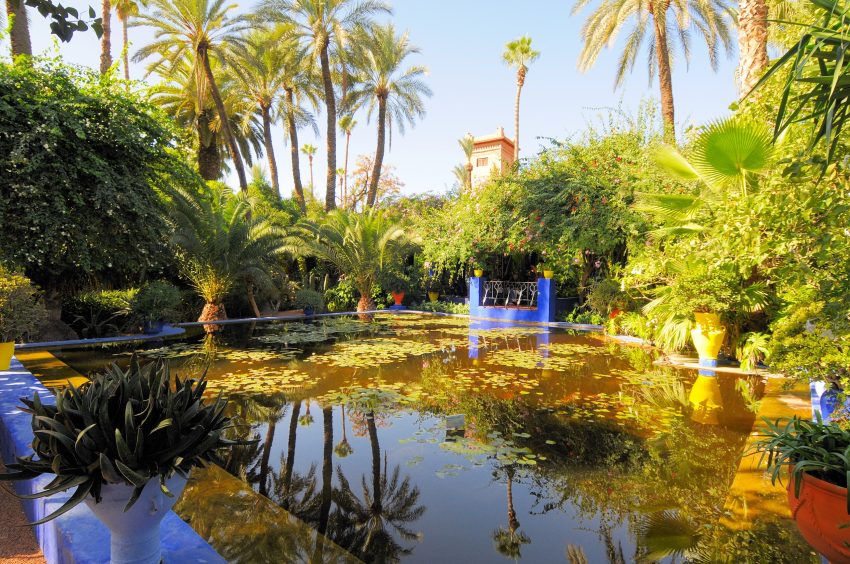
Tucked away in the modern district of Marrakech, Jardin Majorelle is a lush, carefully choreographed garden that feels like stepping into an artist's dream. Created by French painter Jacques Majorelle over nearly forty years from 1923, it combines towering bamboos, dense cacti, splashes of bougainvillea, and the famous Majorelle Blue buildings into an atmosphere that is both serene and intensely colourful. It is easily one of the top attractions in Marrakech for travellers who love art, design, and gardens that tell a story.
As you follow the tiled paths past pools, fountains, and sculptural plantings, you quickly understand why this place has captivated artists, designers, and visitors for decades. The garden is often visited on walking tours of Marrakech, since it weaves together colonial-era artistic ambition, Berber cultural heritage, and the later influence of Yves Saint Laurent. Unlike the crowded souks, Jardin Majorelle invites you to slow down, listen to birdsong, and notice how every corner has been composed like a painting.
Table of Contents
- History and Significance of the Jardin Majorelle
- Things to See and Do in the Jardin Majorelle
- How to Get to the Jardin Majorelle
- Practical Tips on Visiting the Jardin Majorelle
- Where to Stay close to the Jardin Majorelle
- Is the Jardin Majorelle Worth Visiting?
- FAQs for Visiting Jardin Majorelle
- Nearby Attractions to the Jardin Majorelle
History and Significance of the Jardin Majorelle
Jardin Majorelle began as Jacques Majorelle's personal sanctuary. Sent to Morocco around 1917 to recover from illness, he fell in love with Marrakech's light, colours, and street life. In 1923, just after his marriage to Andrée Longueville, he bought a plot on the edge of a palm grove and built a Moorish-style house. Over time he expanded the property, commissioning architect Paul Sinoir in 1931 to design a Cubist villa that still stands at the garden's heart. Around this home he started planting what would become his life's work: a luxuriant garden that fused exotic species from around the world with Moroccan sensibility.
Majorelle was already known as an Orientalist painter, but here he pushed his artistic ideas into three dimensions. The bold cobalt colour you see on walls, pots, and structures throughout the garden was inspired by tiles and textiles he encountered in Marrakech and in Berber homes. He used it so extensively that it became known as bleu Majorelle - Majorelle Blue - and he even patented the shade before his death. The colour anchors the garden, creating a vivid contrast with the greens of the vegetation and the terracotta of the surrounding city.
Maintaining such a dense, irrigated garden in Marrakech’s climate was expensive. In 1947, Majorelle opened the garden to the public and charged an entrance fee to help cover costs, occasionally selling off parcels of land to keep his project afloat. After his divorce in the 1950s he was forced to sell the house and garden; without his care, they declined and fell into disrepair. The turning point came in the 1980s, when fashion designers Yves Saint Laurent and Pierre Bergé discovered the neglected property, fell under its spell, and decided to restore it. Their work saved the garden from redevelopment and ensured it would survive as one of the must-see places in Marrakech.
Things to See and Do in the Jardin Majorelle
Today, Jardin Majorelle is a carefully curated ensemble of garden, architecture, and museum spaces. The planting is dense and varied: towering bamboo groves, palms, yuccas, and a remarkable collection of cacti form vertical layers of green, punctuated by bright yellow pots and cobalt walls. As you walk the one-hectare (roughly two-acre) site, you cross small bridges, pass reflective pools, and hear the trickle of fountains, all carefully placed to create a cool, immersive atmosphere even on hot days. The garden also shelters more than a dozen bird species that are endemic to North Africa, adding birdsong to the sensory experience.
Majorelle’s former studio, painted in his signature blue with sunshine-yellow details, is now the Berber Museum (Musée Pierre Bergé des Arts Berbères). Inside, you will find beautifully presented objects from Amazigh (Berber) cultures: jewellery, textiles, tools, and everyday items that highlight the diversity and depth of Morocco’s indigenous heritage. The studio also retains a connection to Majorelle himself through a selection of his paintings, which help you see how his eye for colour and composition translated into the garden outside.
Just beyond the garden complex, the Yves Saint Laurent Museum, opened in 2017, pays tribute to the designer’s work and his relationship with Marrakech. Exhibitions showcase iconic garments, sketches, and inspiration boards that reveal how the city’s colours, textures, and silhouettes influenced his fashion. For many visitors, combining the garden, Berber Museum, and YSL Museum makes for a rich half-day exploring art, design, and culture in one concentrated area. It is easy to see why this spot is one of the best places to see in Marrakech for travellers who enjoy creative spaces.
How to Get to the Jardin Majorelle
Reaching Jardin Majorelle starts with getting to Marrakech. Most international visitors arrive via Marrakech Menara Airport, which lies only a short drive from the city centre and offers connections to numerous European and Moroccan cities. For the best deals and a seamless booking experience, check out these flights to Marrakesh on Booking.com. From the airport you can take a taxi or pre-booked transfer; asking to be dropped at Jardin Majorelle or nearby Boulevard Yacoub El Mansour is usually understood by local drivers.
If you are travelling within Morocco, trains operated by the national rail company connect Marrakech with major hubs such as Casablanca, Rabat, and Tangier, arriving at Marrakech's main railway station in the new city.Train schedules and bookings can be found on Omio. From there, petit taxis are plentiful and can take you directly to the garden, or you can use city buses that stop within walking distance. Long-distance buses from other regions arrive at various bus stations around the city, from which taxis are again the most straightforward way to reach the garden.
For those arriving by car, the Jardin Majorelle area is easier to access than the tight lanes of the medina, as it sits in the Ville Nouvelle (new town) with wider streets and more structured parking. You may find paid parking lots or street parking nearby, then walk a few minutes to the entrance. Because the site is so popular, it is wise to visit early in the morning or later in the afternoon, when queues and traffic are a little lighter.
Practical Tips on Visiting the Jardin Majorelle
- Suggested tips: Book tickets in advance if possible and aim to arrive close to opening time to enjoy the garden before it becomes crowded and the midday heat builds.
- Best time to visit: Mornings and late afternoons in spring and autumn are ideal, with pleasant temperatures and softer light that makes the colours and shadows particularly beautiful.
- Entrance fee: adult/child Dh70/free, incl Musée Berbère Dh100, incl Musée YSL Dh200
- Opening hours: 8am-6pm May-Sep, to 5.30pm Oct-Apr, Musée Berbère closed Wed
- Official website: https://www.jardinmajorelle.com/
- How long to spend: Allow at least 1.5 to 2 hours if you want to walk the garden slowly, take photos, and visit the Berber Museum; add extra time if you also visit the Yves Saint Laurent Museum.
- Accessibility: Paths are mostly flat and paved, but some areas can be narrow or busy; check for updated accessibility information if you use a wheelchair or have limited mobility.
- Facilities: On-site you will find a café, boutique, and toilets, as well as shaded seating areas that provide welcome breaks from the sun.
- Photography tip: Look for compositions that layer Majorelle Blue walls, bright yellow pots, and cacti or bamboo, and be patient when waiting for quieter moments between tour groups.
- Guided tours: While many people visit independently, some guided tours of Marrakech include timed entry and commentary, which can help you appreciate the history and symbolism woven into the design.
- Nearby food options: The garden’s café is a pleasant stop, and the surrounding streets in the new town offer additional cafés and restaurants where you can linger over lunch or a mint tea after your visit.
Where to Stay close to the Jardin Majorelle
Staying near Jardin Majorelle places you in a quieter, leafy part of Marrakech with easy access to both the medina and the Ville Nouvelle. A convenient option is Hotel Fashion Marrakech, which offers modern comforts and straightforward transport links while keeping you a short taxi ride or a longer stroll from the garden. For a more intimate riad-style stay within walking distance, Riad Kniza blends traditional architecture and attentive service in the nearby Bab Doukkala area. If you prefer to be closer to the garden yet still enjoy a resort feel, Rodamon Riad Marrakech offers a social, design-conscious base within reach of both Jardin Majorelle and the main sights of the old city.
Is the Jardin Majorelle Worth Visiting?
Jardin Majorelle is absolutely worth visiting, particularly if you appreciate spaces where nature and art intertwine. It offers a completely different experience from the bustle of the medina: calmer, more curated, and intensely visual, with every corner revealing another carefully framed view. Between the cobalt-blue architecture, the rich plant collection, the Berber Museum, and the Yves Saint Laurent connections, you get a vivid sense of how Marrakech has inspired generations of creative minds, making this garden one of the must-see places in Marrakech for many travellers.
What Other Travellers Say...

Jardin Majorelle on Rue Yves St Laurent in Marrakech is a compact, artist-designed garden noted for its exotic plants, vivid colours, water features and a small museum of Berber culture; visitors praise its calm, well-maintained paths and plentiful photo spots that provide a peaceful break from the city, though it can get busy and most recommend arriving early and booking tickets in advance to avoid long lines; some visitors found the museum modest and the on-site flow and security restrictions restrictive, and combined garden-and-museum entry can feel pricey for some.


FAQs for Visiting Jardin Majorelle
Nearby Attractions to the Jardin Majorelle
- Yves Saint Laurent Museum: A modern museum next to the garden celebrating the designer’s work and his deep connection to Marrakech.
- Gueliz (Ville Nouvelle): The newer part of Marrakech, with cafés, galleries, and shops that offer a contemporary contrast to the medina.
- Cyber Park (Arsat Moulay Abdeslam): A historic garden turned modern city park with shaded paths and small exhibits about communication and technology.
- Jemaa el-Fnaa: The famous main square of Marrakech, alive with food stalls, storytellers, and street performers, a short taxi ride or longer walk away.
- Marrakech Medina and Souks: The maze of market streets and historic lanes where you can explore traditional crafts, architecture, and everyday local life after your time in the garden.
The Jardin Majorelle appears in our Complete Guide to Visiting Marrakesh!

Moira & Andy
Hey! We're Moira & Andy. From hiking the Camino to trips around Europe in Bert our campervan — we've been traveling together since retirement in 2020!
This website uses affiliate links which may earn a commission at no additional cost to you!
Planning Your Visit
8am-6pm May-Sep, to 5.30pm Oct-Apr, Musée Berbère closed Wed
adult/child Dh70/free, incl Musée Berbère Dh100, incl Musée YSL Dh200
Nearby Attractions
- Musée Yves Saint Laurent (0.2) km
Museum - Dar el Bacha (1.5) km
Historic Building and Museum - Le Jardin Secret (1.7) km
Gardens and Historic Building - Almoravid Koubba (1.9) km
Historic Building - Ben Youssef Madrasa (1.9) km
Madrasa - Marrakech Museum (1.9) km
Museum - Kasbah Mosque (2.1) km
Mosque - Koutoubia Mosque (2.1) km
Mosque - Koutoubia Gardens (Lalla Hassna Park) (2.1) km
Gardens - Souks of Marrakesh (2.1) km
Market