Hohenschwangau Castle, Füssen
Castle in Füssen
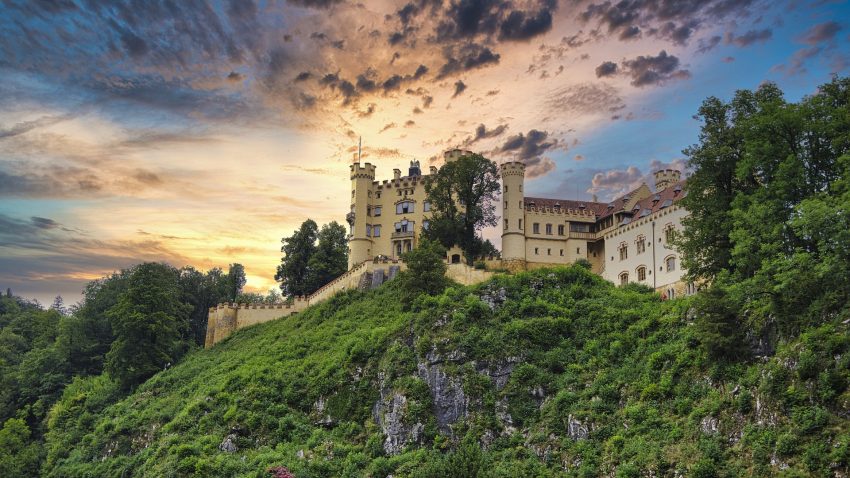
Hohenschwangau Castle stands proudly above the Alpsee, surrounded by wooded hillsides and dramatic mountain scenery. Originally the seat of the medieval knights of Schwangau, the castle fell into ruin before King Maximilian II purchased and restored it in the 19th century. Today, its warm yellow façade, neo-Gothic towers, and lakeside setting make it one of the must-see places in Füssen for travelers exploring Bavaria's royal heritage.
The castle's richly decorated interiors reveal a world of royal childhood and family life, offering a contrast to the fantastical vision of nearby Neuschwanstein. Visitors can tour elaborately ornamented rooms including the King's Bedroom, the Queen's Bedroom, and the Hall of the Swan Knight-spaces that played a key role in shaping the imagination of young Ludwig II. Hohenschwangau is often visited on tours of Füssen and the surrounding lake region, thanks to its scenic location and layered history.
Table of Contents
- History and Significance of Hohenschwangau Castle
- Things to See and Do in Hohenschwangau Castle
- How to Get to Hohenschwangau Castle
- Practical Tips on Visiting Hohenschwangau Castle
- Where to Stay close to Hohenschwangau Castle
- Is Hohenschwangau Castle Worth Visiting?
- FAQs for Visiting Hohenschwangau Castle
- Nearby Attractions to Hohenschwangau Castle
History and Significance of Hohenschwangau Castle
Hohenschwangau’s origins date back to the 12th century, when it served as the stronghold of the knights of Schwangau. Over centuries of conflict, the castle was damaged, rebuilt, and ultimately destroyed in the 16th century, leaving only ruins behind. These ruins remained untouched until the early 19th century, when Crown Prince Maximilian-later King Maximilian II-discovered them during his travels.
Enchanted by the site, Maximilian purchased the remains and undertook an ambitious restoration, transforming the ruined fortress into a romantic neo-Gothic residence. Completed with the help of skilled craftsmen and artists, the castle became the royal family’s summer home and hunting lodge. Its frescoes, detailed woodwork, and decorative motifs reflect both medieval inspirations and 19th-century artistic trends.
For Ludwig II, who spent much of his youth here, Hohenschwangau played a formative role. The stories, legends, and surroundings of the castle influenced his later artistic and architectural visions, including the creation of Neuschwanstein. Today, Hohenschwangau Castle stands as an essential part of Bavaria's royal narrative, offering insight into the family life and early influences of one of Europe's most intriguing monarchs.
Things to See and Do in Hohenschwangau Castle
The guided tour is the primary way to experience the castle’s interior, revealing its beautifully preserved rooms and ornate décor. The King’s Bedroom is particularly striking, with murals depicting heroic legends. The Queen’s Bedroom, adorned with delicate motifs, offers a softer and more intimate atmosphere. Together, these spaces help tell the story of royal domestic life in 19th-century Bavaria.
The Hall of the Swan Knight is another highlight, decorated with scenes inspired by the Lohengrin legend. These artworks reflect the romanticism that dominated the era and offer a glimpse into the imaginative world that influenced Ludwig II's later architectural projects. It is easy to see why Hohenschwangau Castle remains one of the top attractions in Füssen for those interested in Bavarian history and culture.
Outside the castle, visitors can explore beautiful gardens, forested walking paths, and viewpoints overlooking the Alpsee and Neuschwanstein Castle. This scenic setting makes the area a great place to visit on a walking tour of Füssen or the wider Hohenschwangau region. The views, especially at sunrise and sunset, are among the most peaceful and picturesque in the Bavarian Alps.
How to Get to Hohenschwangau Castle
The nearest major airport is Munich International Airport, which provides easy access for international visitors heading toward Füssen and the Hohenschwangau area. For the best deals and a seamless booking experience, check out these flights to Füssen on Booking.com.
Regular trains run from Munich to Füssen, where connecting buses take travelers to Hohenschwangau village, the base for castle visits. Train schedules and bookings can be found on Omio.
If arriving by car, follow the A7 motorway toward Füssen and continue into Hohenschwangau, where several large parking areas serve castle visitors. If you are looking to rent a car in Germany I recommend having a look at Discover Cars, first, as they compare prices and review multiple car rental agencies for you.
Practical Tips on Visiting Hohenschwangau Castle
- Suggested tips: Arrive early, as both castles operate on timed entry and tickets often sell out.
- Best time to visit: Spring to early autumn for pleasant weather and clear views.
- Entrance fee in Euros: Typically around €20-€23 for the guided tour; combination tickets with Neuschwanstein are available.
- Opening hours: Open daily, with slightly reduced hours in winter.
- Official website: Search for “Hohenschwangau Castle official website” for updated information.
- How long to spend: Allow 1.5 to 2 hours, including the 45-minute guided tour.
- Accessibility: The steep approach and interior stairs limit full accessibility; inquire ahead for assistance options.
- Facilities: Visitor center, restrooms, cafés, and gift shops in Hohenschwangau village.
- Photography tip: Capture the castle from the Alpsee shore for a beautiful waterfront perspective.
- Guided tours: Required for interior visits; available in multiple languages.
- Nearby food options: Several restaurants and cafés are located in Hohenschwangau village near the ticket center.
Where to Stay close to Hohenschwangau Castle
Hohenschwangau offers several excellent accommodations within walking distance of the castle complex. AMERON Neuschwanstein Alpsee Resort & Spa provides lakeside views, modern comforts, and superb access to both castles. Closest to the visitor hub, Hotel Müller offers a welcoming atmosphere right near the ticket center. For a traditional Bavarian stay, Hotel Alpenstuben sits close to the walking paths, providing scenic views and warm hospitality.
Is Hohenschwangau Castle Worth Visiting?
Hohenschwangau Castle is unquestionably worth visiting for its blend of royal history, artistic detail, and dramatic Alpine scenery. Its intimate and authentic atmosphere offers a fascinating counterpoint to the grandeur of Neuschwanstein. Whether you're exploring Bavaria's royal heritage or simply enjoying the landscapes, Hohenschwangau provides a memorable and meaningful experience.
What Other Travellers Say...

Hohenschwangau Castle, a New Gothic summer residence of King Ludwig II, sits amid rolling hills, forests and a lakeside setting and offers ornately furnished state rooms that remain largely as they were; visits are by guided tour (an audio guide activated room-by-room is used) and photography inside is not allowed, so book tickets in advance, expect a 220 m zig-zag inclined path from street level, and enjoy peaceful gardens, mountain views and nearby restaurants and shops.


FAQs for Visiting Hohenschwangau Castle
Nearby Attractions to Hohenschwangau Castle
- Neuschwanstein Castle: Ludwig II's world-famous fairytale castle with dramatic Alpine views.
- Alpsee Lake: A beautiful lake ideal for walking, relaxing, and photography.
- Museum of the Bavarian Kings: An engaging museum exploring Bavaria's royal history.
- Tegelberg Mountain: Scenic cable car rides, hiking trails, and panoramic viewpoints.
- Füssen Old Town: Medieval lanes, cafés, and cultural sights just minutes away.
The Hohenschwangau Castle appears in our Complete Guide to Visiting Füssen!

Moira & Andy
Hey! We're Moira & Andy. From hiking the Camino to trips around Europe in Bert our campervan — we've been traveling together since retirement in 2020!
This website uses affiliate links which may earn a commission at no additional cost to you!
Planning Your Visit
Winter opening time: October 16th 2022 to March 31st 2023
Guided tours: daily from 10.00 a.m. to 4.00 p.m.
Summer opening time: April 1st 2023 to October 15th 2023
Guided tours: daily from 9.00 a.m. to 5.00 p.m.
Adults 21 €
Nearby Attractions
- Museum of the Bavarian Kings (0.2) km
Museum - Neuschwanstein Castle (1.0) km
Castle - Benediktinerkloster St. Mang (3.0) km
Monastery and Museum - Hohes Schloß (3.1) km
Castle and Gallery - Linderhof Palace (16.9) km
Palace - Schlosspark Nymphenburg (88.1) km
Gardens, Palace and Park - Botanical Garden Munich-Nymphenburg (88.5) km
Attraction, Gardens and Park - Sendlinger Tor (89.4) km
- Asamkirche (89.5) km
Attraction, Church and Religious Building - Jewish Museum (89.6) km
Museum