Güell Pavilions, Barcelona
Historic Building in Barcelona
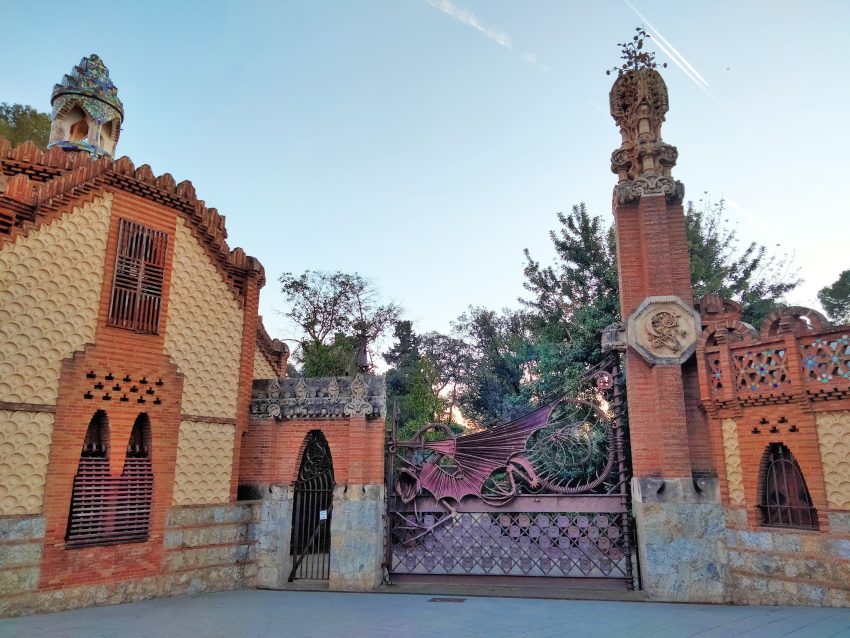
Pavellons Güell (often called the Güell Pavilions) is a small Gaudí site in the Pedralbes/Les Corts area, built as the entrance pavilions and service buildings for Eusebi Güell's former estate. It's famous for the dramatic “Dragon Gate” out front, which turns a simple boundary into a piece of myth-making ironwork you'll remember long after you've left.
This stop works best as part of a quieter walking tour of western Barcelona: pair it with the nearby Palau Reial de Pedralbes gardens and a stroll along Avinguda Diagonal, or use it as a “Gaudí completist” detour if you've already done Park Güell and the central Modernisme hits. Even when access is limited, the gate and façades are still worth a look from the street.
Table of Contents
- History and Significance of the Pavellons Güell
- Things to See and Do in the Pavellons Güell
- How to Get to the Pavellons Güell
- Practical Tips on Visiting the Pavellons Güell
- Where to Stay Close to the Pavellons Güell
- Is the Pavellons Güell Worth Visiting?
- For Different Travelers
- FAQs for Visiting Pavellons Güell
- Nearby Attractions to the Pavellons Güell
History and Significance of the Pavellons Güell
The pavilions date to the 1880s and mark an early, formative collaboration between Antoni Gaudí and his key patron, Eusebi Güell. Before the headline projects that made Gaudí world-famous, this commission let him test ideas in structure, craft, and symbolism on a compact, functional site: gatehouses, stables, and garden elements designed to frame entry into a private estate.
Architecturally, you can already see Gaudí’s taste for bold silhouettes and inventive geometry. Details like brickwork patterns, curving volumes, and expressive rooflines preview the language he would later push much further, while still feeling grounded in a practical brief rather than a monumental showpiece.
Culturally, the Dragon Gate is the “thesis statement” of the site: it’s not just decoration but storytelling in metal, drawing on classical and local references that recur throughout Barcelona’s Modernisme era. It’s also a reminder that some of Gaudí’s most interesting work is scattered well beyond the crowded tourist core.
Things to See and Do in the Pavellons Güell
Start with the Dragon Gate on Avinguda de Pedralbes. Up close, the craftsmanship is the point: the dragon’s sinuous body and angular wings read differently depending on the light, and it’s one of those rare “photo stops” that stays compelling even after you’ve taken the obvious shot.
If the site is open when you visit, spend time with the entrance pavilions and stables rather than rushing through. Look for the way Gaudí shapes everyday functions (guardhouse, service spaces) into architecture with character-this is early Gaudí, so it’s more intimate, less bombastic, and easier to read than his later, denser masterpieces.
Treat the gardens and surrounding area as part of the experience. This corner of Barcelona is calmer, greener, and more residential, so it's a good palate cleanser after the packed sidewalks of Eixample and the old town-especially if you're building a slower, walk-first day.
How to Get to the Pavellons Güell
Barcelona-El Prat Airport (BCN) is the nearest airport; from there, the simplest approach is to get into the city and continue by metro to the Les Corts/Pedralbes side. For the best deals and a seamless booking experience, check out these flights to Barcelona on Booking.com.
If you're arriving by train at Barcelona Sants, you're already relatively close: connect to Metro Line 3 (L3) and get off at Palau Reial, then walk a few minutes to Avinguda de Pedralbes. Train schedules and bookings can be found on Omio.
Several city buses serve the area and can be convenient if you’re coming from Avinguda Diagonal or Plaça d’Espanya; they also work well if you’re chaining this stop with the Pedralbes gardens.
Driving is usually not worth it unless you're already doing a car-based itinerary outside Barcelona, as parking can be time-consuming and you'll still finish on foot for the final approach. If you are looking to rent a car in Spain I recommend having a look at Discover Cars, first, as they compare prices and review multiple car rental agencies for you.
Practical Tips on Visiting the Pavellons Güell
- Entrance fee: €6 (general); €3 (reduced); free for ages 0–6.
- Opening hours: Saturday – Sunday: 10:00–16:00. Closed: Monday – Friday. Closed: 1 January; 6 January; 25 December; 26 December.
- Official website: https://rutadelmodernisme.com/ficha/pavellons-guell-en/
- Best time to visit: Late morning for clear light on the Dragon Gate, or the last hour before closing for a quieter feel and softer photos.
- How long to spend: 20-40 minutes if you’re focusing on the gate and exterior; up to 60 minutes if you get inside and want to look closely at details.
- Accessibility: The street-side gate view is easy, but access inside can depend on what areas are open and the surfaces you’ll encounter; check current conditions before you go.
- Facilities: Keep expectations modest-this is a small site, so plan cafés and rest stops in the surrounding Les Corts/Diagonal area rather than on-site.
Where to Stay Close to the Pavellons Güell
For the easiest logistics, base yourself in Les Corts/Diagonal if your priority is quick access to this side of the city, or choose Eixample if your trip is mainly about central sights with occasional detours.
If you want to stay close and keep transport simple, AC Hotel Victoria Suites by Marriott puts you in the broader Pedralbes/Les Corts area with straightforward metro access. NH Collection Barcelona Constanza is a strong pick if you like being near shopping and business-district convenience while still connecting quickly to the centre. For a well-located mid-range option nearer to Camp Nou and Line 3, Catalonia Rigoletto is an easy base for this stop and others on the west side.
Is the Pavellons Güell Worth Visiting?
Yes-if you care about Gaudí beyond the greatest-hits circuit, the Pavellons Güell is absolutely worth it for the Dragon Gate alone, plus the satisfaction of seeing an earlier, more “experimental” phase in a calmer setting. It's a small site, which is precisely why it works well as a low-friction add-on to a west-Barcelona day.
Honest pivot: if your schedule is tight and you’re only doing the essentials, you can skip the interior visit and simply view the gate and façades from the street; you’ll get the signature moment without spending time crossing the city for a brief stop.
What Other Travellers Say...

Visitors highlight the Gaudí dragon gate and intricate architectural details as the main draw, with the gardens and surrounding areas also described as pleasant to explore. Several note that parts can be appreciated from outside, and entry is free or low-cost depending on access, though one reviewer felt the fee wasn’t good value. Some mention closures or renovations during their visit, and while facilities like toilets are praised, a few areas appear in need of upgrades.


For Different Travelers
Families with Kids
Kids tend to latch onto the dragon immediately, so lean into that: make it a quick “spot the details” challenge and keep the visit short and punchy. Pair it with nearby gardens or a park break so it feels like part of a broader, low-stress outing rather than a standalone architecture stop.
Couples & Romantic Getaways
This is a good “quieter Barcelona” moment: fewer crowds, more space, and a photogenic landmark that doesn't require a big time commitment. Combine it with a café stop around Diagonal and a slow walk through Pedralbes for an easy, unhurried half-day.
Budget Travelers
It’s one of the better-value Gaudí-adjacent stops because the main visual payoff (the gate) is right there from the street, even if you don’t go in. Use it as a free photo stop on a transit day, or as a low-cost add-on when you’re exploring Les Corts anyway.
History Buffs
Go with the mindset that this is “context Gaudí”: an early commission that helps you understand how his craft vocabulary developed before the blockbuster projects. It’s also a neat window into patronage, private estates, and how Modernisme aesthetics seeped into functional architecture, not just grand façades.
FAQs for Visiting Pavellons Güell
Getting There
Tickets & Entry
Visiting Experience
Photography
Accessibility & Facilities
Nearby Attractions to the Pavellons Güell
- Palau Reial de Pedralbes Gardens: a calmer green escape with landscaped paths that pairs naturally with a west-side walking route.
- Camp Nou area: even if you don’t tour, it’s a major landmark nearby and easy to combine if you’re already in Les Corts.
- L’Illa Diagonal: a convenient stop for a quick break, shopping, or a meal if you’re structuring the day around Avinguda Diagonal.
- Monestir de Pedralbes: a peaceful Gothic monastery that offers a very different texture from Modernisme, and works well in the same area.
- Avinguda Diagonal Modernisme stroll: a simple “connective walk” that helps you stitch together west-Barcelona sights without over-planning.
The Güell Pavilions appears in our Complete Guide to Visiting Barcelona!

Moira & Andy
Hey! We're Moira & Andy. From hiking the Camino to trips around Europe in Bert our campervan — we've been traveling together since retirement in 2020!
This website uses affiliate links which may earn a commission at no additional cost to you!
Planning Your Visit
Saturday - Sunday: 10:00-16:00.
Closed: Monday - Friday.
Closed: 1 January; 6 January; 25 December; 26 December.
€6 (general); €3 (reduced); free for ages 0-6.
Nearby Attractions
- Monastery of Pedralbes (0.9) km
Historic Building, Historic Site and Monastery - Col·legi de les Teresianes (1.7) km
Attraction, Historic Building and Notable Building - Bellesguard (2.3) km
Attraction, Castle and Historic Building - CosmoCaixa Museum of Science (2.8) km
Attraction and Museum - Arenas de Barcelona (2.9) km
Bullring, Shopping Centre and Viewing Point - Casa Vicens Gaudí (3.0) km
Attraction, Historic Building and Museum - Fira de Barcelona (3.0) km
Arts Venue, Attraction and Fair - Palau de Congressos de Barcelona (3.3) km
Attraction, Historic Building and Notable Building - Mies van der Rohe Pavilion (3.3) km
Historic Building - Poble Espanyol (3.4) km
Attraction