Roman Theater of Catania
Historic Site, Roman Site and Theatre in Catania
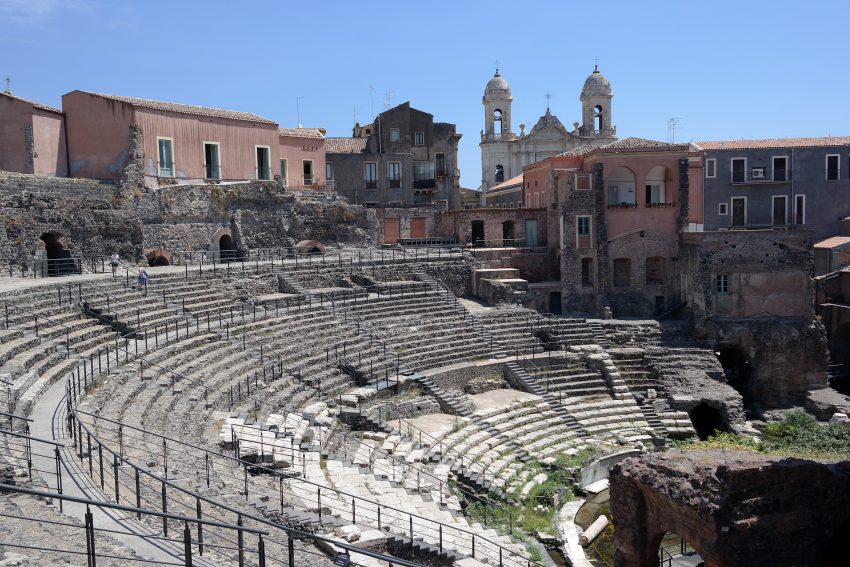
Tucked into Catania's historic center, the Roman Theater of Catania is one of those places you can walk past a dozen times without realizing a major ancient monument is hiding behind an ordinary doorway. Step inside and the city suddenly drops away into lava-stone seating, arches, and stage remains that feel startlingly close to modern life.
It's an easy add-on to a walking tour of the centro storico, especially if you're already exploring Via Vittorio Emanuele II, Piazza del Duomo, and the baroque streets around them. For the best sense of the site, pause at the upper seating to take in the geometry of the cavea and the way today's buildings hover right above the ruins.
Table of Contents
- History and Significance of the Roman Theater of Catania
- Things to See and Do in the Roman Theater of Catania
- How to Get to the Roman Theater of Catania
- Practical Tips on Visiting the Roman Theater of Catania
- Where to Stay Close to the Roman Theater of Catania
- Is the Roman Theater of Catania Worth Visiting?
- For Different Travelers
- FAQs for Visiting Roman Theater of Catania
- Nearby Attractions to the Roman Theater of Catania
History and Significance of the Roman Theater of Catania
Catania has been rebuilt many times, and this theatre is a vivid reminder of how deep the city's layers run. The structure you see today is largely associated with the Roman period, when entertainment architecture was engineered for acoustics, crowd flow, and spectacle, yet it still sits within a much older Greek and pre-Greek story of settlement in eastern Sicily.
What makes the theatre especially memorable is its material and setting. Built with local volcanic stone, it feels inseparable from Mount Etna’s presence in the region, and its survival is tied to the way Catania’s urban fabric grew around it rather than clearing it away.
The site’s “hidden in plain sight” character is part of its significance: you’re not visiting a monument isolated in a park, but an archaeological space embedded in a living neighborhood. That contrast between ancient seating and modern balconies is exactly what many travelers remember most.
Things to See and Do in the Roman Theater of Catania
Start by walking the perimeter to understand the theatre’s shape, then climb to the seating tiers for the best overview. From the upper areas, you can appreciate how the stage zone relates to the audience space and how the stonework changes across restorations.
Look for the details that reveal daily life in an ancient performance venue: worn steps, passageways that guided spectators, and the way the structure uses the slope and stone to create a natural sense of enclosure. Even if you’re not an archaeology expert, the layout is intuitive and rewarding to explore slowly.
If you enjoy context, consider pairing your visit with nearby landmarks on foot so the theatre becomes part of a bigger story: baroque Catania above ground, and classical Catania beneath it. It's also a great stop for travelers who like places where the city's “before and after” is visible in a single frame.
How to Get to the Roman Theater of Catania
The nearest airport is Catania-Fontanarossa Airport (CTA), with additional options via Comiso Airport (CIY) for some routes. For the best deals and a seamless booking experience, check out these flights to Catania on Booking.com.
Catania Centrale is the main rail hub; from there you can connect onward across Sicily and walk or take a short bus/taxi ride into the historic center. Use Omnio to easily compare schedules, book train tickets, and find the best prices all in one place for a hassle-free journey across Italy.
If you’re driving, expect limited parking and restricted-traffic zones in the centro storico, so it’s usually easier to park outside the core and walk in. If you are looking to rent a car in Italy I recommend having a look at Discover Cars, first, as they compare prices and review multiple car rental agencies for you.
Practical Tips on Visiting the Roman Theater of Catania
- Official website: https://parchiarcheologici.regione.sicilia.it/catania-valle-aci/en/biglietti/teatro-romano-e-odeon-catania/
- Entrance fee: Adults: €8; Reduced: €4.
- Opening hours: Daily: 09:00–19:00.
- Best time to visit: Go early for quieter corners and better light on the stonework; late afternoon can feel atmospheric, but you’ll want enough daylight to see details clearly.
- How long to spend: Plan 45-75 minutes for an unhurried loop with time for photos and reading signage.
- Accessibility: Expect uneven ancient surfaces and stairs; travelers with limited mobility should be prepared for partial access only.
- Facilities: Keep expectations modest on-site; plan for restrooms, snacks, and longer breaks in the surrounding old-town streets.
Where to Stay Close to the Roman Theater of Catania
Base yourself in Catania’s centro storico for the easiest walk to the theatre and most major sights.
Staying central lets you visit early, return later for dinner, and build a full day around nearby churches, markets, and baroque streets without relying on transport. If you prefer a calmer feel at night, choose the edge of the historic center so you can still walk everywhere while sleeping a little farther from the busiest lanes.
Palace Catania | UNA Esperienze A polished, comfortable choice on Via Etnea that's ideal if you want a classic full-service stay near the city's main walking axis.
Duomo Suites & Spa A strong pick for travelers who want to be steps from the cathedral area and enjoy a more boutique, design-forward vibe.
Liberty Hotel Great for a quieter, elegant base with character, while still being within easy walking distance of the historic core.
Habitat Boutique Hotel A stylish option that suits couples and design lovers who want a modern feel close to central sights and dining.
NH Catania Centro Reliable and practical for transport connections and a straightforward stay, especially if you’re balancing sightseeing with day trips.
Is the Roman Theater of Catania Worth Visiting?
Yes, it's absolutely worth visiting if you like places that feel discovered rather than displayed. The theatre delivers a rare blend of atmosphere and urban contrast: ancient lava-stone ruins below, everyday Catania above, and a sense that the city is still being uncovered.
Honest Pivot: if you dislike stairs, uneven ground, or compact archaeological sites that require imagination, you may prefer focusing on more open-air viewpoints and baroque landmarks instead. It’s also not the best choice if you’re on a very tight schedule and only want “big, obvious” highlights.
What Other Travellers Say...

Google reviewers rate the Greek – Roman theatre very highly overall, often describing it as a surprising “hidden” site revealed behind an ordinary entrance in the old town. Common highlights include the dramatic contrast of ancient ruins beneath modern buildings, the distinctive lava-stone atmosphere, and the sense of stepping into a well-preserved slice of Catania’s deep history. Visitors also appreciate that it’s central and easy to combine with other sights on foot. The most frequent drawbacks mentioned are lots of stairs and uneven surfaces (not ideal for limited mobility), occasional ticketing slowdowns at the card reader, and the experience feeling less satisfying late in the day when light is fading.


For Different Travelers
The Greek - Roman theatre fits neatly into most Catania itineraries because it's central, walkable, and rewarding without demanding half a day. The experience changes depending on what you value most: quick visual impact, historical context, or simply the thrill of finding something hidden.
Families with Kids
Kids often enjoy the “secret entrance” feeling and the idea of sitting where ancient audiences once sat. Keep the visit short and focused, turning it into a scavenger hunt for arches, steps, and stage areas.
Because there are uneven stones and drops, it’s a hands-on, close-supervision site rather than a free-roam playground. Pair it with a nearby gelato stop to keep energy high.
Couples & Romantic Getaways
For couples, the theatre is a great low-key shared discovery in the middle of the city. The contrast of ruins and modern balconies makes for memorable photos and a conversation-starting stop between cafés and evening plans.
Aim for softer light earlier or later in the day, then continue on foot to a baroque square or a cozy wine bar nearby. It’s romantic in a real-city way, not a staged one.
Budget Travelers
This is a high-value attraction because it’s centrally located and easy to combine with other free or low-cost walks in the old town. You can build a full day by linking it with markets, churches, and street architecture without paying for transport.
If you’re watching spending, consider timing your day so you’re not rushed and can fully enjoy the site at your own pace. Bring water and comfortable shoes so you don’t need to buy extras on the go.
History Buffs
History lovers will appreciate how the theatre sits inside a living city rather than a fenced archaeological park. It's a chance to see how layers of Greek, Roman, and later Catania overlap in one compact visit.
To get more from it, read up briefly beforehand or join a walking tour that explains the city's rebuilding and the role of volcanic stone in local architecture. The site rewards context and careful observation.
FAQs for Visiting Roman Theater of Catania
Getting There
Tickets & Entry
Visiting Experience
Tours, Context & Itineraries
Photography
Accessibility & Facilities
Food & Breaks Nearby
Safety & Timing
Nearby Attractions to the Roman Theater of Catania
- Piazza del Duomo: Catania's main square, ideal for baroque architecture, people-watching, and quick photo stops.
- Cattedrale di Sant'Agata: The city's cathedral, a key landmark for understanding Catania's religious and architectural history.
- La Pescheria (Catania Fish Market): A lively, sensory-packed market experience that's quintessentially local.
- Via Etnea: The city's most famous street for strolling, shopping, and views that hint at Etna's presence.
- Castello Ursino: A medieval fortress-turned-museum that adds another layer to Catania's long timeline.
The Roman Theater of Catania appears in our Complete Guide to Visiting Catania!

Moira & Andy
Hey! We're Moira & Andy. From hiking the Camino to trips around Europe in Bert our campervan — we've been traveling together since retirement in 2020!
This website uses affiliate links which may earn a commission at no additional cost to you!
Planning Your Visit
Daily: 09:00-19:00.
Adults: €8; Reduced: €4.
Nearby Attractions
- Museo Vincenzo Bellini (0.1) km
Historic Building, Historic Site and Museum - Casa di Giovanni Verga (0.1) km
Historic Building, Library and Museum - Roman Odeon (0.1) km
Historic Site, Roman Site and Theatre - Museum of Contemporary Art in Sicily (0.1) km
Arts Venue, Gallery and Museum - Church of Saint Benedict (0.1) km
Church, Historic Building and Religious Building - Chiesa di San Francesco Borgia (0.2) km
Church and Religious Building - Terme della Rotonda (0.2) km
- Church of Saint Julian (0.2) km
Church, Religious Building and Viewing Point - Fontana dell'Elefante (0.3) km
Fountain, Monument and Square - Fontana dell’Amenano (0.3) km
Fountain, Market and Square