Gourgion House, Mdina
Historic Building in Mdina
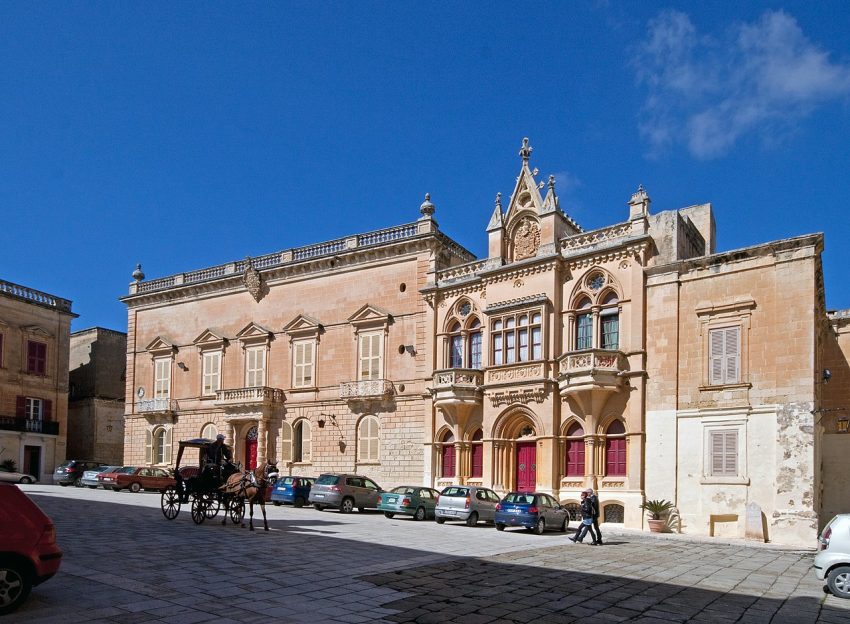
Gourgion House is the building that instantly makes you look twice when you step into Mdina's main square. In a city of mellow Baroque palaces and honey-coloured stone, this neo-Gothic fantasy stands out with pointed arches, ornate stonework, and a dramatic rooftop line that feels more like a cathedral facade than a townhouse. It's a subtle reminder that Malta's “Silent City” isn't frozen in one era, and this is easily one of the top sights in Mdina for anyone who loves architecture.
Designed by visionary Maltese architect Andrea Vassallo in the early 20th century, Gourgion House was controversial from the start. Its richly carved windows, tracery and vertical lines broke away from the city's Baroque norm, but over time locals have grown fond of its character. Today it's a favourite photo stop, a highlight of any walking tour of Mdina, and a fascinating glimpse into how one bold designer tried to broaden Malta's architectural language.
Table of Contents
History and Significance of Gourgion House
Gourgion House was born out of Andrea Vassallo's desire to experiment. At a time when most wealthy families in Malta still favoured Baroque or classical facades, he turned to the Gothic Revival movement sweeping through Europe and translated it into local limestone. The result is a townhouse that looks as if it belongs in a medieval fairy tale, yet is firmly rooted in Maltese craftsmanship and stone-cutting traditions.
Built for a prominent local family on Mdina’s main square, the house signalled status as much as style. Commissioning a design this daring was a statement: the owners were worldly, modern and willing to stand apart. Vassallo drew on the drama of medieval European cathedrals-pointed arches, pinnacles and decorative stone bands-but scaled these elements down to domestic size, creating an urban palace that still harmonises with its neighbours.
Over the years, Gourgion House has become a touchstone in discussions about Maltese architecture. Along with Vassallo's more famous Basilica of Ta' Pinu on Gozo, it shows how a single architect helped move local design beyond a strict Baroque vocabulary. For visitors, it's a tangible example of how Mdina continued to evolve even in the 19th and 20th centuries, long after its medieval walls were built.
Things to See and Do in Gourgion House
Most visitors will experience Gourgion House from the outside, standing in Mdina's main square and slowly taking in the details. Start by stepping back to admire the overall silhouette: the pointed openings, vertical emphasis and decorative cresting along the roofline are pure Gothic Revival drama. Then move closer and look at the carved stone panels, delicate tracery and finely worked capitals that showcase Maltese stone-cutting at its best.
Walk around the square to see how the house contrasts with the surrounding Baroque palaces. From one angle, you get a classic Mdina view with domes and traditional balconies; from another, Gourgion House dominates the frame, giving your photos a totally different feel. This spot is one of the best places to see in Mdina if you enjoy pairing architectural close-ups with wide, atmospheric shots of the Silent City.
Allow time simply to sit on a nearby bench or café terrace and soak up the setting. The main square is one of Mdina's liveliest corners, with horse-drawn carriages passing, groups on guided tours stopping to hear the story of the house, and the quiet hum of locals going about their day. Combine your visit with nearby attractions such as Mdina Cathedral, Palazzo Falson and the bastion viewpoints for a full morning or afternoon in the old city.
How to Get to Gourgion House
Gourgion House is right on the main square of Mdina, an easy stroll from the city gate once you arrive in the Silent City. The nearest airport is Malta International Airport in Luqa, around 10-15 kilometres away from Mdina. For the best deals and a seamless booking experience, check out these flights to Mdina on Booking.com. From the airport, you can take a taxi or airport shuttle directly to Mdina, or head into Valletta first and continue by bus.
There is no train network in Malta, so you’ll be relying on buses instead.Train schedules and bookings can be found on Omio. From Valletta, several direct bus routes head to Mdina/Rabat; journey times are usually around 30-40 minutes depending on traffic. Buses drop you just outside Mdina's walls, from where it's a short, mostly flat walk through the gate and up to the main square.
If you're driving, it's an easy 25-30 minute journey from many coastal resorts, with several paid car parks just outside Mdina's fortified walls. From there, the city is pedestrian-only, so you'll walk the final stretch. Many organised tours of Mdina and Rabat also include a stop in the main square, giving you a ready-made way to see Gourgion House along with other key sights.
Practical Tips on Visiting Gourgion House
- Suggested tips: Treat Gourgion House as an architectural stop rather than a full “visit”: plan 10-20 minutes to walk around the square, photograph the facade from different angles, and enjoy the contrast with neighbouring palaces.
- Best time to visit: Early morning or late afternoon offer softer light on the facade and fewer crowds on the square, making it easier to appreciate the details and get clean photos.
- Entrance fee: Free to admire from the square
- Opening hours: Always visible from the outside
- How long to spend: Around 15-30 minutes is usually enough if you're combining it with a wider Mdina walk, longer if you're keen on architectural sketching or photography.
- Accessibility: Mdina’s core is pedestrian and paved in stone, with some gentle slopes; wheelchair users may find the approach manageable, but surfaces can be uneven around the square.
- Facilities: Cafés, restaurants and public toilets are available within a short walk, but Gourgion House itself does not function as a typical visitor attraction with on-site services.
- Photography tip: Stand at the opposite side of the square and use nearby Baroque facades or balconies in the foreground to frame the neo-Gothic facade, emphasising the stylistic contrast.
- Guided tours: Many Mdina walking tours include a stop here, and a good guide can point out small details in the stonework and explain more about Andrea Vassallo's life and vision.
- Nearby food options: You’ll find several atmospheric cafés and restaurants around Mdina’s gate and main streets, perfect for a coffee or lunch stop before or after visiting the square.
Where to Stay close to Gourgion House
Staying inside or just outside Mdina lets you experience the Silent City at its quietest, once the daytime crowds have gone. For a truly special stay, consider The Xara Palace Relais & Châteaux, a luxurious boutique hotel set in a restored 17th-century palazzo just moments from Gourgion House, with bastion views and fine dining. Another lovely option within the city walls is Palazzo Bifora Boutique Hotel, which combines elegant contemporary comfort with historic character in a beautifully converted townhouse.
If you prefer a slightly livelier base, look at nearby Rabat just outside Mdina's gates. Point de Vue Guesthouse offers simple, comfortable rooms and great views towards Mdina’s walls, making it easy to wander up to the main square in just a few minutes.
Is Gourgion House Worth Visiting?
If you're already planning to visit Mdina-and you absolutely should-Gourgion House is a definite yes. You'll almost certainly pass through the main square anyway, and taking a little extra time to really look at this neo-Gothic facade adds a new layer to your understanding of the city. It's not a full-scale museum visit, but rather a visual highlight that shows how one bold architect challenged the norms of his time. For architecture lovers, photographers, and anyone who enjoys spotting the odd one out in a historic streetscape, it's a small but memorable stop.
What Other Travellers Say...

Villa Gourgion in Lija is praised by visitors for its well-preserved character and charming atmosphere; reviewers highlight a welcoming, friendly experience and consistently positive visits that leave a good impression.
FAQs for Visiting Gourgion House
Nearby Attractions to the Gourgion House
- Mdina Cathedral (St Paul's Cathedral) - The city's majestic Baroque cathedral, with a beautiful interior and small museum, sits just steps away from the main square.
- Palazzo Falson Historic House Museum - A lovingly preserved medieval-early modern townhouse filled with antiques, art and period rooms offering a glimpse into noble Maltese life.
- Mdina Bastions and Viewpoints - Walk the bastion walls for sweeping views across Malta's countryside towards the coast, especially magical at sunset.
- Mdina Dungeons - A small but atmospheric exhibition beneath the city that tells darker episodes of Malta's history with wax figures and sound effects.
- Rabat and St Paul's Catacombs - Just outside Mdina's walls, explore the larger town of Rabat and the extensive underground catacombs dating back to late Roman and early Christian times.
The Gourgion House appears in our Complete Guide to Visiting Mdina!

Moira & Andy
Hey! We're Moira & Andy. From hiking the Camino to trips around Europe in Bert our campervan — we've been traveling together since retirement in 2020!
This website uses affiliate links which may earn a commission at no additional cost to you!
Planning Your Visit
Always visible from the outside
Free to admire from the square
Nearby Attractions
- Saint Paul's Cathedral (0.0) km
Cathedral - Saint Sofia Palace (0.0) km
Palace - Carmelite Church and Priory (0.1) km
Church - Mdina Cathedral Museum (0.1) km
Museum - Palazzo Falson (0.1) km
Historic Building - Mesquita Square (0.1) km
Square - Bastion Square (0.1) km
Square - The Knights of Malta Museum (0.1) km
Museum - Saint Agatha’s Chapel (0.1) km
Church - Torre dello Standardo (0.2) km
Tourist Office and Tower