Domus del Chirurgo, Rimini
Historic Site in Rimini
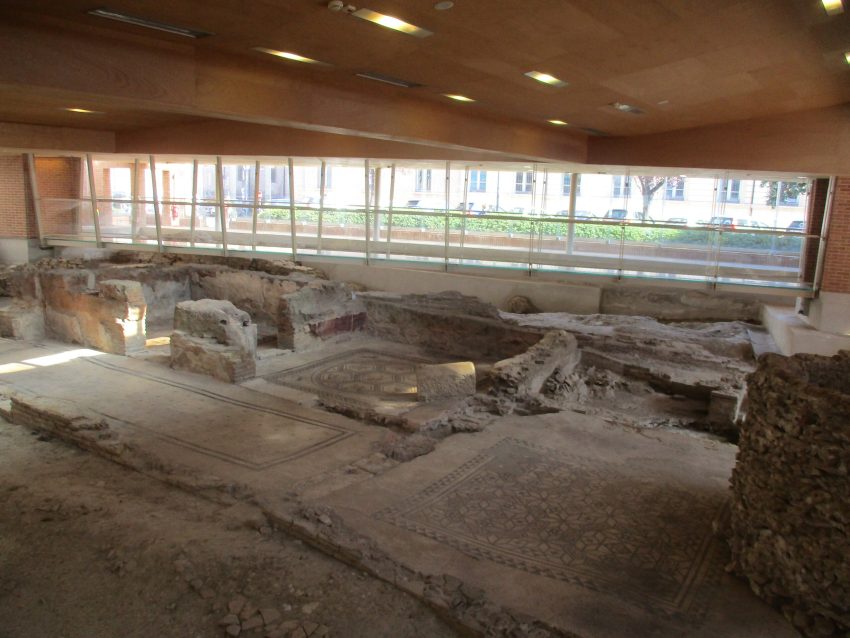
Domus del Chirurgo is one of those rare archaeological finds that feels intimate rather than monumental: a Roman house uncovered right in modern Rimini, where you can stand above ancient floors and trace the outline of real rooms, courtyards, and mosaics. The site sits in Piazza Luigi Ferrari, just a short walk from the old town's main streets, and the glass-and-steel cover makes it feel like a “small Pompeii” you can visit without leaving the city.
What makes it unforgettable is the human story behind the ruins. The domus is linked to a physician whose tools were found here, and the discovery connects everyday domestic life with professional practice in a way that feels immediate and strangely personal. It's one of the top attractions in Rimini, and it fits smoothly into a walking tour of Rimini because it's easy to combine with nearby squares, Roman-era landmarks, and the City Museum.
Table of Contents
- History and Significance of the Domus del Chirurgo
- Things to See and Do in the Domus del Chirurgo
- How to Get to the Domus del Chirurgo
- Practical Tips on Visiting the Domus del Chirurgo
- Where to Stay Close to the Domus del Chirurgo
- Is the Domus del Chirurgo Worth Visiting?
- For Different Travelers
- FAQs for Visiting Domus del Chirurgo
- Nearby Attractions to the Domus del Chirurgo
History and Significance of the Domus del Chirurgo
The Domus del Chirurgo came to light in the late 1980s during works in what is now Piazza Luigi Ferrari, when routine construction unexpectedly revealed layers of Rimini's past. Archaeologists uncovered traces spanning multiple periods, but the Roman phase became the headline: a well-preserved domus near the ancient city walls of Ariminum, not far from where the port once shaped daily life.
The house takes its name from its last known owner, believed to have been a physician with strong Greek cultural influences. Around the mid-3rd century, the building was destroyed by fire, and in the collapse a remarkable snapshot of life was sealed in place-structures, mosaics, furnishings, and fragments that let visitors read the space as a lived environment rather than an abstract ruin.
The most famous discovery was the surgical-pharmaceutical kit associated with the site, an exceptional collection that transformed the domus from a beautiful archaeological stop into a globally significant window on ancient medicine. To make the story complete, the visit naturally links with the Archaeological Section of the City Museum nearby, where many of the finds are displayed and the medical context is brought to life.
Things to See and Do in the Domus del Chirurgo
Begin with the mosaics and floor plans. Even if you’re not an archaeology specialist, the visual clarity here is the hook: you can follow room boundaries, imagine circulation through the house, and appreciate how decorative detail and practical space worked together in a Roman urban setting.
Look for the “storytelling” elements that make this site feel different from many ruins. The domus isn’t just about architecture; it’s about a specific life and profession, and that perspective helps you notice details you might otherwise skip-how rooms relate to each other, what feels private versus public, and how a home could also connect to work and status.
If you have time, pair the domus with the City Museum so you see the artifacts after you've stood above the excavation. That one-two sequence tends to make everything click: first you experience the space, then you meet the objects and context that explain why this discovery matters far beyond Rimini.
How to Get to the Domus del Chirurgo
If you're arriving by air, Federico Fellini International Airport (Rimini Airport) is the closest option, while Bologna Guglielmo Marconi Airport is a common alternative with more flight choices. For the best deals and a seamless booking experience, check out these flights to Rimini on Booking.com. From either airport, you’ll typically continue by local bus, taxi, or a train connection depending on your arrival time.
By train, Rimini’s main station is an easy base, and the walk to Piazza Luigi Ferrari is usually straightforward through central streets and the historic core. Use Omnio to easily compare schedules, book train tickets, and find the best prices all in one place for a hassle-free journey across Italy. If you prefer, local buses and short taxi rides also connect the station area to the city center with minimal effort.
By bus, several local routes serve the central area, and you can usually get within a short walk of Piazza Luigi Ferrari. If you’re driving, it’s best to park on the edge of the centro storico and walk in, since central access and parking can be limited. If you are looking to rent a car in Italy I recommend having a look at Discover Cars, first, as they compare prices and review multiple car rental agencies for you.
Practical Tips on Visiting the Domus del Chirurgo
- Entrance fee: €7 (Includes “Luigi Tonini” City Museum)
- Opening hours: Winter: Tuesday to Sunday: 10am - 1pm & 4pm - 7pm. Summer: Tuesday to Sunday: 10am - 7pm. Closed Mondays.
- Official website: https://museicomunalirimini.it/
- Best time to visit: Late morning or mid-afternoon when the light is clear through the roof and you can take your time reading the site without rushing between other stops.
- How long to spend: Plan 45-90 minutes for the domus itself, and longer if you’re pairing it with the City Museum for the artifacts and context.
- Accessibility: The viewing routes are generally visitor-friendly, but expect typical historic-center surfaces and plan for a slower pace if mobility is limited.
- Facilities: The immediate site is focused on the excavation experience, with cafés, restrooms, and services easiest to find a short walk away in the surrounding old-town streets.
Where to Stay Close to the Domus del Chirurgo
For a culture-heavy itinerary, the best base is Rimini’s historic center so you can walk to the main sights; if your trip focuses on beach time and nightlife, Marina Centro is usually the better choice for evening atmosphere and seafront convenience.
If you want to step out and be immediately in the old town’s museum-and-squares zone, a stylish central option is DuoMo Hotel. For a practical stay that keeps transport links easy while remaining walkable to the historic core, consider Card International Hotel. If you’d like a classic, higher-end base that still makes it simple to reach the center on foot or by a short taxi, Grand Hotel Rimini is a strong pick.
Is the Domus del Chirurgo Worth Visiting?
Yes, especially if you like history that feels tangible rather than abstract. The site is compact, but the impact is high because you can clearly see the layout and decorative elements while understanding the personal story attached to the house.
It's also an easy “smart stop” in Rimini: central, manageable in time, and unusually distinctive compared with the more common lineup of churches and squares. If you pair it with the City Museum, it becomes one of the most rewarding culture blocks you can do in the old town.
What Other Travellers Say...

Domus del Chirurgo on Piazza Luigi Ferrari in Rimini exposes the excavated remains of a 2nd-century Roman house featuring preserved mosaic floors and hypocausts; visitors view the site from glass walkways and can use a combined ticket to enter the nearby City Museum where many finds — including a remarkable bronze box of surgical instruments — and reconstructions from the house are displayed, with onsite signage in Italian and English helping to interpret the ruins.


For Different Travelers
Families with Kids
This works well for families because it’s visually clear and doesn’t rely on long explanations to be interesting. Kids often enjoy spotting patterns in the mosaics and imagining what each room might have been used for.
To keep it engaging, treat it like a short “ancient detective” stop rather than a long museum marathon. Pairing it with a nearby snack break makes the pacing feel easy and keeps attention high.
Couples & Romantic Getaways
For couples, the domus is a great change of pace from the seafront and café rhythm, offering a quieter, more thoughtful experience in the middle of the city. The glass-roofed setting can feel surprisingly atmospheric, especially when you take a moment to absorb the stillness of the ruins beneath modern Rimini.
It also pairs nicely with a slow old-town day: archaeology, then a café, then an evening wander through nearby squares. The experience feels curated without being overplanned.
Budget Travelers
This is a strong value stop because it delivers a genuinely unique experience in a relatively short time. If you're prioritizing what feels “only in Rimini,” this ranks high because the story and the preservation are unusually compelling.
You can also build a low-cost culture route around it by combining it with nearby public squares and Roman landmarks on foot. That approach keeps transport costs minimal and makes the day feel full.
History Buffs
History-focused travelers will appreciate how specific this site is: not just Roman Rimini in general, but a particular household with a professional identity attached to it. The medical angle gives the ruins an interpretive depth that many excavations don't have.
To get the most from it, pair the visit with the museum displays so you can connect the spatial layout to the objects and reconstruction. That linkage turns a visually interesting stop into a genuinely memorable historical narrative.
FAQs for Visiting Domus del Chirurgo
Getting There
Tickets & Entry
Visiting Experience
Tours, Context & Itineraries
Photography
Accessibility & Facilities
Food & Breaks Nearby
Safety & Timing
Nearby Attractions to the Domus del Chirurgo
- City Museum of Rimini (Museo della Città): A strong companion stop where many finds are displayed, helping you connect the excavation with real objects and context.
- Piazza Cavour: Rimini's elegant civic square, ideal for a café pause and a quick architectural loop after a museum-style visit.
- Piazza Tre Martiri: A central square layered with Roman roots and modern history, perfect for understanding Rimini's street plan and daily rhythm.
- Tempio Malatestiano: A standout church that adds a Renaissance layer to your old-town day with distinctive design and strong historical presence.
- Arch of Augustus: An iconic Roman gateway that works well as a simple add-on to round out a compact “Roman Rimini” walking route.
The Domus del Chirurgo appears in our Complete Guide to Visiting Rimini!

Moira & Andy
Hey! We're Moira & Andy. From hiking the Camino to trips around Europe in Bert our campervan — we've been traveling together since retirement in 2020!
This website uses affiliate links which may earn a commission at no additional cost to you!
Planning Your Visit
Winter: Tuesday to Sunday: 10am – 1pm & 4pm – 7pm. Summer: Tuesday to Sunday: 10am – 7pm. Closed Mondays.
€7 (Includes “Luigi Tonini” City Museum)
Nearby Attractions
- Museo della Città di Rimini (0.1) km
Historic Building and Museum - Palazzo Garampi (0.2) km
Palace - Palazzo del Fulgor (0.2) km
Museum - Piazza Cavour (0.2) km
Square - Rimini Caput Viarum (0.2) km
Visitor Centre - Porta Galliana (0.3) km
City Gate - Piazza Tre Martiri (0.3) km
Historic Site and Square - Tempio Malatestiano (0.3) km
Church - Ponte di Tiberio (0.4) km
Bridge and Historic Site - Castel Sismondo (0.4) km
Castle and Museum