Diocesan Museum, Parma
Museum in Parma
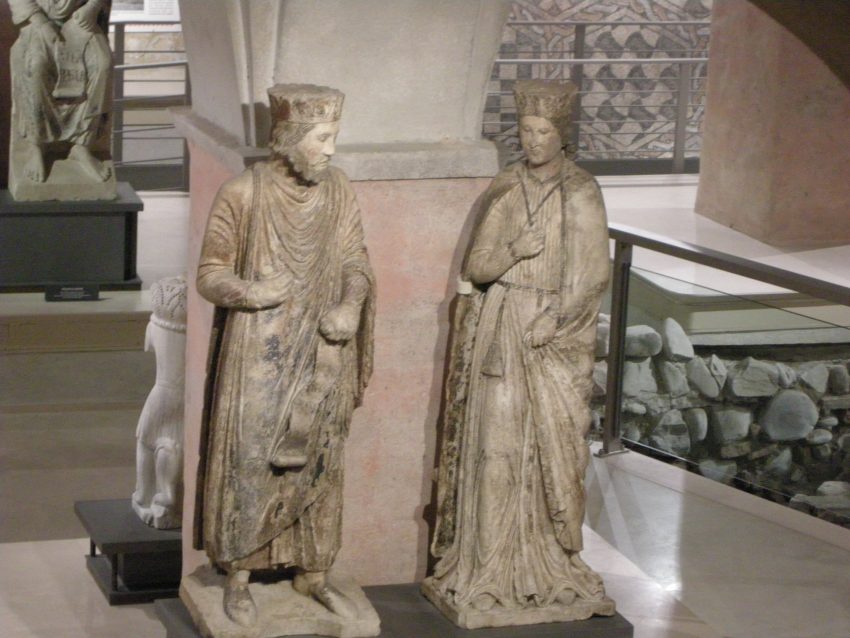
Right beside Parma's cathedral, the Diocesan Museum opens a window onto the city's deepest layers, from the Roman Forum to the medieval episcopal quarter that shaped the historic centre you see today. Created after archaeological excavations for the Jubilee of 2000 in the cathedral square and the Bishop's Palace, it presents the finds in situ, so you are literally walking over the ground where Parma evolved. This compact museum is one of the top attractions in Parma if you are curious about how the city grew from a Roman town to a powerful medieval bishopric.
The route leads you past fragments of city walls, foundations of medieval buildings and an early Christian mosaic discovered in 1955, tying them together with clear explanations and reconstructions. Architectural elements from the 12th and 13th centuries, a copper angel that once stood on the cathedral pinnacle, capitals, mosaics and small objects like an oil lamp from Carignano or a funerary stele show how beliefs, rituals and public space changed over more than a thousand years. With its tactile path for blind visitors and touchable reproductions, the museum is also a highlight of any walking tour of Parma focused on inclusive, hands-on heritage.
Table of Contents
- History and Significance of the Diocesan Museum
- Things to See and Do in the Diocesan Museum
- How to Get to the Diocesan Museum
- Practical Tips on Visiting the Diocesan Museum
- Where to Stay close to the Diocesan Museum
- Is the Diocesan Museum Worth Visiting?
- FAQs for Visiting Diocesan Museum
- Nearby Attractions to the Diocesan Museum
History and Significance of the Diocesan Museum
The Diocesan Museum grew out of archaeological work carried out ahead of the 2000 Jubilee celebrations, when excavations under the cathedral square and the Bishop's Palace revealed key evidence about the northeastern part of the city. Sections of ancient walls, foundations of medieval buildings and early Christian mosaics confirmed what historians long suspected: that the episcopal complex has always been concentrated in this area, making it one of the most continuously important sites in Parma.
An early Christian mosaic unearthed in 1955 in the cathedral square, together with further finds uncovered during the Jubilee excavations, formed the core of the new museum’s narrative. Rather than move everything elsewhere, the decision was taken to create an interpretive space directly beneath and beside the existing religious buildings. This allows visitors to see how the Roman city, early Christian community and medieval church overlapped physically, turning the museum into a kind of archaeological underlay for the present-day cathedral and baptistery.
The museum’s exhibition is organised chronologically and thematically. It starts with the Roman city and its pagan traditions, then traces the development of the episcopal complex from early Christian times through the Romanesque and into the Middle Ages. Along the way, architectural elements from the 12th and 13th centuries, pieces from the cathedral and baptistery, a copper angel from the cathedral’s pinnacle and a Christian oil lamp from Carignano illustrate how forms and symbols were reused and reinterpreted. Restored capitals and mosaics found in the square in 1955 are displayed with context, making the museum an essential stop for understanding Parma’s sacred topography.
Things to See and Do in the Diocesan Museum
The visit usually begins with an introduction to the Roman city: informative boards, graphic reconstructions and casts of inscriptions help you imagine the forum that once occupied this area and the urban fabric around it. Look for the segment of city walls and the foundations of the medieval building, which show how later structures were literally built on Roman bones. These layers are explained in a way that is accessible even if you are not an archaeology specialist, making it easy to picture how the streets and squares above you came to be.
As you move on, the focus shifts to the development of the episcopal complex. Architectural fragments from the cathedral and baptistery dating from the 12th and 13th centuries reveal details that may be hard to notice outdoors, from carved capitals to mouldings and decorative motifs. The copper angel that once adorned the cathedral pinnacle is a particularly evocative piece, since you normally would never see such an object up close. Nearby, restored mosaics and carved stonework recovered from the cathedral square in 1955 anchor the story firmly in this precise location.
Do not skip the section with smaller artefacts, where a Christian oil lamp from Carignano, a lamp with Christian symbols from the 2nd century AD, and a funerary stele carrying both pagan and Christian symbols from the 3rd century AD show the gradual shift from one belief system to another. At the entrance, the tactile path for blind visitors offers reproductions of famous works, and sighted visitors can also appreciate how touch changes the way we experience art. You are encouraged to handle items such as the baptismal font from Vicofertile and a reproduction of the Baptistery’s Zooforo, making this museum more engaging and physical than many small ecclesiastical collections.
How to Get to the Diocesan Museum
The Diocesan Museum is located right beside Parma Cathedral on Piazza Duomo, in the heart of the historic centre, so it is easy to reach once you are in the city. Parma itself has a small local airport and can also be reached from larger airports such as Bologna and Milan, with onward travel to the city by regional train, coach or hire car. For the best deals and a seamless booking experience, check out these flights to Parma on Booking.com. From within Parma, local buses and taxis can drop you close to the cathedral square, from where the museum entrance is just a short walk.
If you are travelling by train in Italy, Parma sits on major rail lines linking cities like Milan, Bologna and Florence.Use Omnio to easily compare schedules, book train tickets, and find the best prices all in one place for a hassle-free journey across Italy. From the railway station, it is around 15-20 minutes on foot to Piazza Duomo; simply follow signs towards the centro storico and then to the cathedral. City buses can also bring you closer if you prefer to minimise walking, and from any nearby stop it is only a few minutes to the museum.
Visitors arriving by car should follow signs for Parma and then the centro storico, bearing in mind that the historic core has restricted traffic zones.If you are looking to rent a car in Italy I recommend having a look at Discover Cars, first, as they compare prices and review multiple car rental agencies for you. The best approach is to park in one of the public car parks on the fringe of the centre and walk to Piazza Duomo; from there, the cathedral and the Diocesan Museum are clearly visible and well signposted.
Practical Tips on Visiting the Diocesan Museum
- Suggested tips: Combine your visit to the Diocesan Museum with time in the cathedral and baptistery to get a complete picture of Parma's religious centre across the centuries.
- Best time to visit: Late morning or mid-afternoon is ideal for a quieter experience; pairing the museum with a cathedral visit earlier or later in the day works well.
- Entrance fee: € 12,00 Diocesan Museum and the Baptistery
- Opening hours: Open every day from 10am to 6pm* (* last admission 5.30pm)
- Official website: http://www.piazzaduomoparma.com/
- How long to spend: Allow 45-60 minutes to explore the displays at a relaxed pace, longer if you enjoy reading all the panels or have a strong interest in archaeology.
- Accessibility: Access involves steps and underground areas, so visitors with reduced mobility should check current arrangements; the tactile path at the entrance is especially designed for blind and visually impaired visitors.
- Facilities: Facilities on site are limited; for toilets, cafés and shops you will rely on the immediate surroundings of Piazza Duomo and the nearby streets.
- Photography tip: Focus on details like the mosaics, capitals and the copper angel, and try to include explanatory panels in a few shots so you remember what you are looking at later, respecting any photography rules.
- Guided tours: Look out for guided visits that combine the cathedral, baptistery and Diocesan Museum, which can help tie together the architecture above ground and the remains below.
- Nearby food options: After your visit, step into the streets around Piazza Duomo and Piazza Garibaldi for cafés and trattorias where you can enjoy Parma's famous prosciutto, cheeses and fresh pasta.
Where to Stay close to the Diocesan Museum
Because the Diocesan Museum sits right next to the cathedral, staying near Piazza Duomo is ideal if you want to be on the doorstep of Parma's oldest core. For a characterful stay directly overlooking the square, Palazzo Dalla Rosa Prati offers historic rooms and suites just steps from both the cathedral and the museum. If you prefer a more contemporary hotel within an easy walk of the Duomo and the rest of the centre, Grand Hotel de la Ville Parma provides modern comfort and a straightforward stroll into the old town. A smaller, central option is Hotel Button, which places you between Piazza Garibaldi and Piazza Duomo, making it simple to reach the Diocesan Museum and other key sights on foot.
Is the Diocesan Museum Worth Visiting?
The Diocesan Museum is definitely worth visiting if you are interested in how a city's spiritual and physical history intertwine. While it is smaller and quieter than some of Parma's other attractions, it provides the missing archaeological and documentary pieces that explain why the cathedral and baptistery stand where they do and how the area evolved from Roman forum to episcopal centre. The inclusion of tactile exhibits also makes it stand out as a more inclusive, hands-on museum than many comparable church collections. For anyone who likes to understand the “why” behind a city's layout, this is a rewarding stop.
What Other Travellers Say...

Museo Diocesano, Parma, on Vicolo Vescovado in Piazza Duomo, is a compact diocesan museum housed in part of the Bishop's Palace with an entrance at Vicolo del Vescovado; it presents a chronological itinerary of Christianity in Parma from Roman through medieval periods and displays medieval and Roman ecclesiastical artifacts. Tickets are sold together with entry to the nearby baptistery, whose sculptures and wall paintings draw many visitors and are often considered the highlight; several reviewers note the museum is small and best paired with a quick visit to the baptistery and cathedral.


FAQs for Visiting Diocesan Museum
Nearby Attractions to the Diocesan Museum
- Cattedrale di Parma: The city's Romanesque cathedral with Correggio's Assumption of the Virgin in the dome, standing directly above the museum area.
- Baptistery of Parma: Octagonal pink marble baptistery next to the cathedral, richly decorated with medieval sculpture and symbolic cycles.
- Pilotta Palace: Monumental complex by the river housing the National Gallery, Teatro Farnese, Archaeological Museum and Bodoni Museum.
- Piazza Garibaldi: Central square built over the Roman Forum, lined with historic palaces, cafés and shops, a short walk from Piazza Duomo.
- Ducal Park: Large historic park across the river with tree-lined avenues, palaces, a lake and space to relax after museum visits.
The Diocesan Museum appears in our Complete Guide to Visiting Parma!

Moira & Andy
Hey! We're Moira & Andy. From hiking the Camino to trips around Europe in Bert our campervan — we've been traveling together since retirement in 2020!
This website uses affiliate links which may earn a commission at no additional cost to you!
Planning Your Visit
Open every day from 10am to 6pm* (* last admission 5.30pm)
€ 12,00 Diocesan Museum and the Baptistery
Nearby Attractions
- Baptistery of Parma (0.1) km
Baptistery - Cattedrale di Parma (0.1) km
Cathedral - Chamber of St. Paul and Cell of St. Catherine (0.1) km
Monastery - Monastic Complex of San Giovanni Evangelista (0.2) km
Monastery - Regio Theatre (0.3) km
Historic Building and Theatre - Basilica Santa Maria della Steccata (0.3) km
Basilica - Piazza Garibaldi (0.3) km
Square - Pilotta Palace (0.3) km
Museum and Palace - Teatro Farnese (0.4) km
Historic Building and Theatre - Parco Ducale (0.9) km
Park