Meridian Gate, Hue
City Gate in Hue

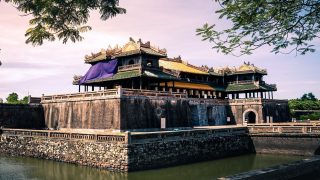
Ngo Mon Gate or Meridian Gate is the most important of the five ceremonial entrances into Hue's Imperial City, designed to project authority the moment you arrive. It's a U-shaped structure with five passageways, where the central route was reserved for the Emperor while attendants and officials used the side gates-an architectural way of turning hierarchy into something you could literally walk through.
Look up and you’ll see why it’s so memorable: the upper pavilion (the Five Phoenix Pavilion) gives the gate its distinct silhouette and once served as a stage for imperial appearances and court ceremony. Nearly destroyed during the wars of the 20th century, it has been carefully restored, so today you can admire it not only as a grand photo stop, but as the threshold into the deeper story of Hue’s Nguyen Dynasty capital.
Table of Contents
- History and Significance of the Meridian Gate
- Things to See and Do in the Meridian Gate
- How to Get to the Meridian Gate
- Practical Tips on Visiting the Meridian Gate
- Where to Stay Close to the Meridian Gate
- Is the Meridian Gate Worth Visiting?
- For Different Travelers
- FAQs for Visiting Meridian Gate
- Nearby Attractions to the Meridian Gate
History and Significance of the Meridian Gate
Ngo Mon Gate was built as the formal southern face of the Imperial City, the point where royal authority met the outside world. Its layout reflects strict court protocol: the central passage for the Emperor, paired passages for mandarins and military officials, and outer routes for servants and attendants, all under the watchful symmetry of imperial design.
Above the gate, the pavilion wasn't just decorative-it functioned as a ceremonial platform, turning the architecture into a stage for state power. The fact that the structure suffered heavy damage in wartime, yet still stands today through restoration, adds a modern layer of significance: it is both a Nguyen Dynasty monument and a reminder of what Hue has fought to preserve.
Things to See and Do in the Meridian Gate
Start by circling the gate before you even enter, because the best appreciation comes from angles. From the front, you get the classic “imperial threshold” view; from the sides, the U-shape and layered rooflines become more obvious, and the gate starts to read as a small complex rather than a single façade.
Once inside, take a few minutes to slow down and look at how the space funnels visitors forward into the ceremonial heart of the Imperial City. This is a great place to set your mental map for the day: the gate behind you, the main axis ahead, and a sense of how the Nguyen court choreographed movement through architecture.
If you time it well, it’s also one of Hue’s best “living heritage” moments, since ceremonies and performances are often staged around the main entrance area. Even without an event, it’s a prime photo stop-especially early in the day when the light is softer and the crowds haven’t fully arrived.
How to Get to the Meridian Gate
The nearest airport is Phu Bai International Airport (HUI), and many travellers also use Da Nang International Airport (DAD) for wider flight options before continuing to Hue by road. For the best deals and a seamless booking experience, check out these flights to Hue on Booking.com.
Hue Railway Station is a convenient arrival point if you're coming from Da Nang or Hanoi, and from there it's a short taxi or ride-hail trip to the Citadel area. Train schedules and bookings can be found on Omio. Intercity buses and limousine vans also connect Hue with Da Nang, Hoi An, and other central Vietnam stops, which can be useful if you're building an overland itinerary.
If you’re travelling by car, aim for parking near the Citadel perimeter and walk to the main visitor entrance area rather than trying to drive directly to the gate itself.
Practical Tips on Visiting the Meridian Gate
- Entrance fee: 200,000 VND (adults); 40,000 VND (children 7–12); free for children under 7.
- Opening hours: (Summer) 16 March – 15 October; Daily: 06:30–18:00. (Winter) 16 October – 15 March; Daily: 07:00–17:30.
- Official website: https://hueworldheritage.org.vn/
- Best time to visit: Go at opening time for cooler air, softer light, and a calmer first impression before tour groups build.
- How long to spend: Allow 20-40 minutes to appreciate the gate properly, then use it as the natural launch point for a 2-4 hour Imperial City visit.
- Accessibility: Surfaces are mostly flat around the main approach, but expect steps and uneven paving in parts of the wider complex once you continue deeper inside.
- Facilities: Treat this as a heritage-site entrance rather than a standalone attraction; bring water, sun protection, and plan your main café stop elsewhere in Hue.
Where to Stay Close to the Meridian Gate
For a culture-heavy itinerary, base yourself near central Hue and the Perfume River so you can reach the Imperial City early and return easily for evening food and river walks; if your trip focus is comfort and downtime, the riverside hotel zone gives you calmer stays with quick taxi access to the Citadel when you're ready to sightsee.
For a refined riverside base with a classic Hue feel, choose Azerai La Residence, Hue. If you want a central, comfortable option that keeps both the river and the Citadel area within easy reach, Silk Path Grand Hue Hotel is a strong pick. For a practical, well-known stay on the river promenade with straightforward access to major sights, Saigon Morin Hotel works well.
Is the Meridian Gate Worth Visiting?
Yes-because it’s not just a gate, it’s the psychological “start line” of Hue’s imperial story. The scale, symbolism, and ceremonial design hit immediately, and it sets the tone for everything you see deeper inside the Imperial City.
Honest pivot: if you’re not planning to enter the Imperial City complex and you only want quick exterior photos, this can be a very short stop rather than a core highlight. In that case, you may get more satisfaction from Hue’s riverside viewpoints and pagodas, saving the Citadel for a longer return visit when you can explore properly.
What Other Travellers Say...

Meridian Gate is the main entrance to Hue's Imperial City, featuring an upper-level pavilion used for ceremonies and housing exhibits of imperial seals; the central yellow-doored path and bridge over a lotus pond were reserved for the emperor while side gates served other visitors, and the pavilion contains a large drum and bell — visitors say the complex's scenery and grand buildings are worth a visit and recommend allowing around three hours to explore, noting the gate area is also used for events such as fashion shows.


For Different Travelers
Families with Kids
This is a good family stop because it has a clear “wow” shape and a simple story: the Emperor walked through the middle, everyone else used the sides. Kids often enjoy the idea that architecture had rules, and it’s an easy place to set a playful mission for the day, like spotting symmetry, roofs, and ceremonial pathways.
To keep it smooth, treat the gate as your short, high-impact start, then move on quickly into more open areas inside the Imperial City before energy dips. Shade and pacing matter in Hue, so build in small breaks rather than trying to explain everything at the entrance.
Couples & Romantic Getaways
Ngo Mon Gate works especially well for couples because it’s visually striking without being demanding, and it naturally leads into a slow, scenic wander through courtyards and halls. Arriving early gives you a quieter, more cinematic feel-less like a tourist checkpoint and more like a private doorway into history.
For a romantic rhythm, pair a morning Citadel visit with an afternoon Perfume River stroll and a relaxed dinner back in the centre. The gate becomes the day's “grand opening scene,” and Hue's softer evening atmosphere becomes the closing chapter.
Budget Travelers
This is a strong value stop because it’s included in the Imperial City ticket and gives you one of Hue’s most iconic visuals right away. If you’re watching costs, plan to do the Imperial City thoroughly in one visit rather than paying for multiple smaller attractions that add up.
Budget tip: arrive early, walk as much as you can, and use cafés outside the Citadel for better-value breaks. A well-paced Imperial City day anchored by Ngo Mon Gate can be one of the most satisfying low-cost cultural days in central Vietnam.
FAQs for Visiting Meridian Gate
Getting There
Tickets & Entry
Visiting Experience
Tours, Context & Itineraries
Photography
Accessibility & Facilities
Food & Breaks Nearby
Safety & Timing
Nearby Attractions to the Meridian Gate
- Thai Hoa Palace: The Imperial City's grand ceremonial hall where court rituals and formal events once unfolded.
- Nine Dynastic Urns: A striking row of bronze urns that symbolise Nguyen emperors and make a quick, memorable stop on the main axis.
- Hien Lam Pavilion: A dignified memorial-style structure that adds depth and quiet atmosphere to the imperial route.
- Thien Mu Pagoda: Hue's most famous riverside pagoda, best paired with the Citadel for a balanced history-and-scenery day.
- Dong Ba Market: The city's classic market for local food, small goods, and a lively slice of everyday Hue.
The Meridian Gate appears in our Complete Guide to Visiting Hue!

Moira & Andy
Hey! We're Moira & Andy. From hiking the Camino to trips around Europe in Bert our campervan — we've been traveling together since retirement in 2020!
This website uses affiliate links which may earn a commission at no additional cost to you!
Planning Your Visit
(Summer) 16 March - 15 October; Daily: 06:30-18:00.
(Winter) 16 October - 15 March; Daily: 07:00-17:30.
200,000 VND (adults); 40,000 VND (children 7-12); free for children under 7.
Nearby Attractions
- Thai Hoa Palace (0.1) km
Palace - Halls of the Mandarins (0.2) km
Historic Building - Nine Holy Cannons (0.2) km
Historic Site - Hien Lam Pavilion (0.2) km
Historic Building - Mieu Temple (0.3) km
Historic Building - Forbidden Purple City (0.3) km
Historic Building - Hung Mieu Temple (0.3) km
Historic Building - The Royal Theatre (0.3) km
Historic Building - Phu Van Tower (0.3) km
Historic Building - Nhat Thanh Lau (0.3) km
Historic Building