Covered Gate, Birgu
Historic Building and Museum in Birgu
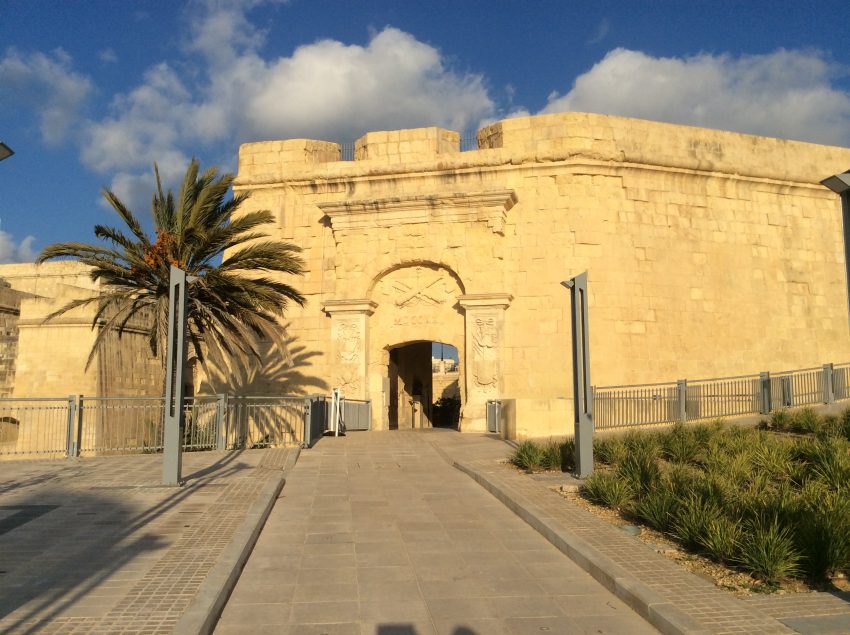
Rising at the landward entrance to Birgu, the Couvre Porte - also known as the Covered Gate or Birgu Counterguard - is one of the top attractions in Birgu for travellers fascinated by military architecture. Built between 1716 and 1730 under the direction of Charles François de Mondion and Louis François de Tigné, it formed part of a sophisticated system of outworks introduced during the rule of Grand Master António Manoel de Vilhena. Its purpose was clear: protect the crucial Porta Superiore by creating a multilayered defensive zone where soldiers could operate under cover.
Today, the Couvre Porte is a great place to visit on a walking tour of Birgu thanks to its monumental Baroque gateway, sculpted decorations, restored masonry, and its modern role as the home of the Malta at War Museum. Its blend of elegance and strategic brilliance reveals how the Knights refined their fortification techniques well into the 18th century.
History and Significance of Couvre Porte
Constructed during a period of renewed military investment, the Couvre Porte served as a counterguard - an advanced fortification designed to protect Birgu's original land gate from direct attack. Between 1716 and 1730, engineers de Mondion and de Tigné created a new defensive platform with ravelins, traverses, a covert way, and a reverse glacis that made any assault on the city far more difficult. By extending the city's landward defences outward, they ensured that the heart of Birgu remained secure against artillery fire and infantry advances.
The gate’s grand Baroque façade symbolised more than military strength. Adorned with sculpted motifs and trophies of arms, it reflected the Knights’ desire to combine power with ceremony, making even utilitarian structures expressive of their authority. Over the centuries, the counterguard underwent modifications, but its essential form remained intact, preserving the clarity of de Mondion’s vision.
During the British colonial period, the Couvre Porte was adapted for new uses. The British built a barrack block within the counterguard and utilised the site for a range of military and administrative functions, altering the space without compromising its strategic purpose. Its importance continued into modern times, eventually becoming a seat of local administration.
A major restoration in the 21st century revealed new details about the structure, including a hidden sally-port once used for rapid, covert movement during sieges. The project restored the gate’s sculptural details and stabilised the surrounding masonry, returning the complex to its 18th-century prominence.
Things to See and Do in Couvre Porte
Visitors entering Birgu through the Couvre Porte immediately encounter its impressive Baroque gateway. The restored trophies of arms, sculpted stone ornaments, and grand proportions make it a striking introduction to the city's fortifications. Exploring the surrounding ramparts and traverses offers a sense of how complex and well-organised the Knights' defensive planning had become by the 18th century.
Inside the counterguard, the Malta at War Museum provides a vivid account of the island’s role during World War II. Exhibits include wartime footage, uniforms, weapons, and personal objects that tell the story of Malta’s endurance under relentless bombing. One of the highlights is the underground air-raid shelter, carved into the limestone beneath the counterguard, offering an immersive look at how civilians survived the war.
The restored sally-port discovered during excavations adds another point of interest, hinting at dramatic moments when soldiers could slip in and out unseen during a siege. Together, these features make the Couvre Porte as much an experience as a monument.
How to Get There
The Couvre Porte stands at the main entrance to Birgu and is easy to reach from Valletta via the Grand Harbour ferry, followed by a short uphill walk. Buses also operate between Valletta and Birgu with stops close to the gate. If you are travelling by car, parking is available near the waterfront and in nearby public car parks outside the old town.
Practical Tips on Visiting Couvre Porte
- Best time to visit Couvre Porte: Early morning or late afternoon when the stonework is beautifully lit.
- Entrance fee in Euros: The Malta at War Museum has its own admission fee; the outer gate area is free to explore.
- Opening hours: The museum is open daily; check official listings for updated times.
- Official website: Malta at War Museum (Wirt Artna).
- How long to spend: About 1 hour for the museum and 10-15 minutes for the gate and outer works.
- Accessibility: Some steep and uneven areas; the underground shelter is not fully accessible.
- Facilities: Museum shop and restrooms available inside; cafés nearby.
- Photography tip: Capture the gateway from the bridge for the best symmetrical composition.
- Guided tours: The museum offers guided experiences explaining Birgu’s wartime story.
- Nearby food options: Cafés and restaurants line the approach and the waterfront.
Where to Stay close to Couvre Porte
For travellers who want to base themselves near Birgu’s historic gateways and fortifications, several boutique options are available. Within the old city, Locanda La Gelsomina offers an intimate stay surrounded by heritage architecture. Across the creek in Senglea, Cugó Gran Macina Malta provides luxurious comfort inside restored fortifications. Visitors staying in Valletta with easy ferry access may prefer Casa Asti.
Is Couvre Porte Worth Visiting?
Yes. The Couvre Porte is one of Malta's most impressive pieces of Baroque military engineering, blending elegance with strategic complexity. Combined with the Malta at War Museum and its underground shelter, it offers travellers a comprehensive look at both the Knights' fortification systems and Malta's World War II story. It's an essential stop for anyone exploring Birgu's layered past.
What Other Travellers Say...

Advanced Gate in Birgu sits at VGPC+5W8 and serves as an attractive, well-decorated entrance to the city; visitors praise its beauty, enjoy views over the fortified port city, and mention the surrounding historical area with olive trees and fossils on the walls, often encountered as part of guided tours.


FAQs for Visiting
Nearby Attractions to Couvre Porte
- Fort St. Angelo: Malta's iconic medieval and Knightly fortress with panoramic harbour views.
- Malta Maritime Museum: A comprehensive museum exploring 7,000 years of maritime history.
- Inquisitor's Palace: One of Europe's last surviving inquisitorial residences.
- St. Lawrence's Church: Birgu's striking Baroque parish church.
- Auberge de France: One of the Knights' earliest Langue residences in the Collachio.
The Covered Gate appears in our Complete Guide to Visiting Birgu!

Moira & Andy
Hey! We're Moira & Andy. From hiking the Camino to trips around Europe in Bert our campervan — we've been traveling together since retirement in 2020!
This website uses affiliate links which may earn a commission at no additional cost to you!
Planning Your Visit
Monday to Sunday, 10:00 a.m. - 4:30 p.m.
Adults €10
Nearby Attractions
- Gate of Provence (0.1) km
City Gate - St. John Bastion and the Advanced Gate (0.1) km
City Gate - Inquisitor’s Palace (0.2) km
Historic Building - St. Lawrence’s Church (0.2) km
Church - Armoury of the Knights of Malta (0.3) km
Historic Building - Malta Maritime Museum (0.3) km
Museum - Auberge d’Angleterre (0.3) km
Historic Building - Auberge d’Aragon (0.3) km
Historic Building - Auberge de Castille et Portugal (0.3) km
Historic Building - Auberge d'Auvergne et Provence (0.3) km
Historic Building