Cattedrale di Matera
Cathedral, Church and Religious Building in Matera
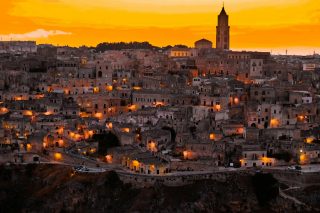
Perched on Matera's Civita ridge between the two Sassi districts, the Cattedrale di Matera (Duomo) is the city's most commanding landmark, with a pale Romanesque exterior that you'll spot from countless viewpoints as you wander the old town. The climb up to Piazza Duomo is part of the experience, rewarding you with sweeping panoramas over cave dwellings, ravines, and honey-colored stone rooftops.
Most travelers visit as part of a walking tour through the Sassi, pairing the cathedral with nearby viewpoints and lanes that frame it from below. For the best “wow” angles, look for it from the terraces around the Sasso Barisano and Sasso Caveoso sides, then finish at the top for the full skyline-and-bell-tower reveal.
Table of Contents
- History and Significance of the Cattedrale di Matera
- Things to See and Do in the Cattedrale di Matera
- How to Get to the Cattedrale di Matera
- Practical Tips on Visiting the Cattedrale di Matera
- Where to Stay Close to the Cattedrale di Matera
- Is the Cattedrale di Matera Worth Visiting?
- For Different Travelers
- FAQs for Visiting Cattedrale di Matera
- Nearby Attractions to the Cattedrale di Matera
History and Significance of the Cattedrale di Matera
The Cattedrale di Matera was built in the medieval era when Matera's hilltop Civita served as the city's spiritual and civic heart. Its Romanesque character and elevated placement were designed to project stability and faith over a landscape shaped by rock, water, and centuries of human adaptation.
Inside, the atmosphere shifts from the austere stone exterior to a more ornate, devotional space that reflects later artistic tastes and restorations. The cathedral's layered look is part of what makes it memorable: you're not just seeing one period, but a living building that has evolved with Matera itself.
Beyond architecture, the cathedral is closely tied to local identity and religious tradition, especially around major feast days when the piazza and surrounding streets become part of the city’s shared ritual life. Even on an ordinary day, it feels like a natural “north star” for navigating the historic center.
Things to See and Do in the Cattedrale di Matera
Start with the exterior: the façade and the setting in Piazza Duomo are as important as the interior, because the cathedral’s position creates some of Matera’s most iconic views. Take a slow lap around the square and nearby lanes to catch changing perspectives over the Sassi and the canyon-like landscape.
Inside, look for the contrast between the Romanesque bones of the building and the richer decorative elements that give the nave and chapels their warmth. Many visitors come away most impressed by the sense of calm, the craftsmanship in the details, and the way the light plays across stone and gilded surfaces.
If you’re doing the combined cultural route, treat it like a mini-itinerary: cathedral first for the “big picture,” then the diocesan museum for context and a closer look at sacred art. It’s a satisfying pairing that turns a quick stop into a more complete story.
How to Get to the Cattedrale di Matera
The nearest major airports are Bari Karol Wojtyła (BRI) and Naples International (NAP), with Bari usually the most convenient for Matera. For the best deals and a seamless booking experience, check out these flights to Matera on Booking.com.
By rail, the most common approach is to reach Bari Centrale first and then continue toward Matera using regional connections (often involving a separate local rail line), or combine train plus bus depending on schedules. Use Omnio to easily compare schedules, book train tickets, and find the best prices all in one place for a hassle-free journey across Italy.
If you’re driving, aim for parking outside the ZTL and walk up into the historic center, since the streets near Piazza Duomo are narrow and access is restricted. If you are looking to rent a car in Italy I recommend having a look at Discover Cars, first, as they compare prices and review multiple car rental agencies for you.
Practical Tips on Visiting the Cattedrale di Matera
- Official website: https://www.chiesadimaterairsina.it/
- Entrance fee: Adults: €3.50 (Cattedrale + MATA Museo Diocesano cultural route); free entry may apply during Mass.
- Opening hours: Daily: 09:00–18:00.
- Best time to visit: Go early in the day for quieter interiors and softer light over the Sassi from the piazza. If you’re visiting on a Sunday or holy day, plan around service times.
- How long to spend: Budget 30–60 minutes for the cathedral itself, or 60–90 minutes if you’re combining it with the diocesan museum route.
- Accessibility: The approach involves steep lanes and steps typical of Matera’s old town; some routes are easier than others. If you need step-free access, ask staff about the most accessible entrance and the gentlest walking approach.
- Facilities: Restrooms are limited in the historic center; if you’re on a ticketed cultural route, facilities may be available at associated sites. Bring water in warm months, as the climb up can feel intense.
Where to Stay Close to the Cattedrale di Matera
Base yourself in the Sassi or the Civita/centro storico area for the easiest walks to the cathedral at sunrise and after day-trippers leave.
Staying nearby lets you enjoy Matera’s best moments on foot: early-morning viewpoints, golden-hour photos, and a relaxed return to your room after dinner without worrying about transport or ZTL logistics.
Palazzo Gattini Luxury Hotel Chosen for its prime location steps from the cathedral and a classic, high-end Matera atmosphere that feels woven into the stone city.
Sextantio Le Grotte della Civita Included for its immersive cave-style rooms and the unforgettable sense of sleeping inside Matera’s history while staying walkable to the Civita ridge.
Aquatio Cave Luxury Hotel & Spa A great pick if you want a spa reset after long walks on stone steps, with a boutique feel and easy access to the upper town.
Hotel Sant’Angelo Selected for its scenic Sassi setting and terrace-style views that make the walk up to Piazza Duomo part of a photogenic daily routine.
Locanda di San Martino A strong value-for-comfort option with characterful rooms and a convenient base for exploring both Sasso Caveoso and the climb toward the cathedral.
Is the Cattedrale di Matera Worth Visiting?
Yes. The Cattedrale di Matera is one of those places where the setting is as powerful as the building: you get a signature viewpoint, a landmark you've been orienting to all day, and a peaceful interior that balances the sensory overload of the Sassi.
Honest Pivot: If you’re short on time and you’re not interested in churches or sacred art, you could skip the interior and simply enjoy Piazza Duomo and nearby viewpoints instead. Likewise, if steep climbs are a deal-breaker, prioritize easier panoramic terraces elsewhere and consider a guided route that minimizes steps.
What Other Travellers Say...

Reviews are overwhelmingly positive, with many travelers calling the cathedral a must-see thanks to its hilltop setting and panoramic views over both Sassi districts. Visitors frequently praise the beauty of the interior, the impressive façade, and the ease of navigating the area on foot with plenty of photo stops. A few notes mention that entry can involve a fee (especially for cultural routes) and that the climb up through the old town includes steps and slopes that may be tiring for some.


For Different Travelers
The cathedral works well as a flexible stop: it can be a quick “must-see” on a walking tour or a slower, more reflective visit paired with viewpoints and nearby museums.
Families with Kids
Kids often enjoy the “treasure hunt” aspect of reaching the top of the old town and spotting the cathedral from different angles before arriving. The open space around Piazza Duomo can also feel like a natural pause point between more cramped Sassi lanes.
Inside, keep expectations realistic: it’s a calm, respectful environment rather than a hands-on attraction. A short visit focused on big visual highlights and a quick photo stop tends to work best for younger children.
Couples & Romantic Getaways
The approach to the cathedral is tailor-made for romantic slow travel: winding stone streets, sudden viewpoints, and a dramatic arrival at the city’s highest-feeling piazza. It’s especially rewarding around golden hour when Matera’s stone glows.
Couples who like context can turn it into a mini date: cathedral visit, a scenic stroll along the ridge, then a dinner reservation in the Sassi with the duomo lit up above you.
Budget Travelers
This is a high-impact stop that doesn’t require a big spend to enjoy: the exterior, piazza, and viewpoints deliver a lot even if you keep your visit simple. Pair it with self-guided walking routes through the Sassi for an excellent DIY day.
If you do choose a ticketed cultural route, treat it as a “one paid stop” that adds structure and meaning to your church visits. Budget travelers often find it worthwhile when it includes museum context rather than a standalone entry.
History Buffs
For history lovers, the cathedral is a key piece of Matera’s timeline, linking medieval power, religious life, and the city’s evolving artistic layers. The contrast between exterior restraint and interior richness is a visual lesson in how buildings change with taste and patronage.
To deepen the visit, combine it with nearby museums and a guided walk that explains how the Civita relates to the two Sassi districts. You'll leave with a clearer mental map of why Matera looks the way it does.
FAQs for Visiting Cattedrale di Matera
Getting There
Tickets & Entry
Visiting Experience
Tours, Context & Itineraries
Photography
Accessibility & Facilities
Food & Breaks Nearby
Safety & Timing
Nearby Attractions to the Cattedrale di Matera
- Sassi di Matera: The iconic cave districts below the Civita, best explored on foot for viewpoints, lanes, and rock-cut spaces.
- Palombaro Lungo: A vast underground cistern near Piazza Vittorio Veneto that reveals Matera's ingenious water history.
- Casa Grotta di Vico Solitario: A furnished cave-home museum that shows everyday life in the Sassi in a tangible, memorable way.
- MUSMA (Museo della Scultura Contemporanea): Contemporary sculpture displayed in atmospheric cave spaces, a great contrast to the city's medieval fabric.
- Belvedere di Piazza Giovanni Pascoli: A classic panoramic terrace for wide shots over the ravine and the Sassi skyline.
The Cattedrale di Matera appears in our Complete Guide to Visiting Matera!

Moira & Andy
Hey! We're Moira & Andy. From hiking the Camino to trips around Europe in Bert our campervan — we've been traveling together since retirement in 2020!
This website uses affiliate links which may earn a commission at no additional cost to you!
Planning Your Visit
Daily: 09:00-18:00.
Adults: €3.50 (Cattedrale + MATA Museo Diocesano cultural route); free entry may apply during Mass.
Nearby Attractions
- Casa Noha (0.1) km
Historic Building, Historic Room and Museum - MUSMA (0.1) km
Cave, Museum and Sculpture - Museo-Laboratorio della Civilta Contadina (0.1) km
Historic Room, Historic Site and Museum - Sassi di Matera (0.2) km
Ancient City, Area and Historic Site - Madonna delle Virtu (0.2) km
Cave, Historic Site and Religious Building - Chiesa di San Francesco d'Assisi (0.2) km
Church, Historic Building and Religious Building - Piazza San Pietro Caveoso (0.3) km
Historic Site, Square and Viewing Point - Chiesa dei Santi Pietro e Paolo (0.3) km
Church, Religious Building and Viewing Point - Chiesa di San Giovanni Battista (0.3) km
Church, Historic Building and Religious Building - Museo Archeologico Nazionale Domenico Ridola (0.3) km
Museum