Casa Llotja de Mar, Barcelona
Arts Venue, Historic Building and Historic Site in Barcelona
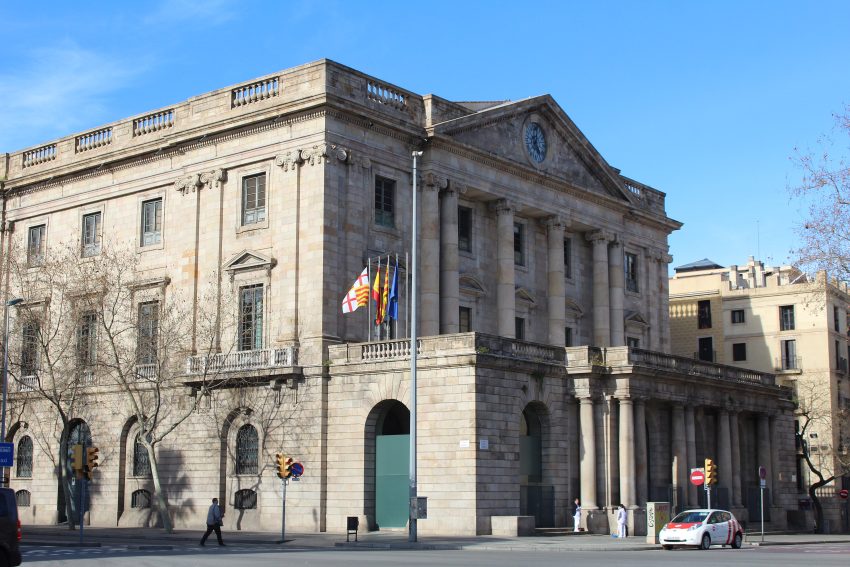
Casa Llotja de Mar is one of Barcelona's most imposing historic buildings on the old waterfront at Pla de Palau, built around a Gothic core and later wrapped in a grand neoclassical exterior. It began as a merchants' exchange and still feels like a place designed to project authority-stone, symmetry, and scale doing the talking. Even from outside, it reads as a reminder that Barcelona's wealth and civic identity were forged through the sea and the business it brought into the city.
Its relevance to Picasso is unusually direct because “La Llotja” is closely associated with the art school where he trained during his formative Barcelona years. This is where he absorbed the academic fundamentals-controlled drawing, observation, and discipline-that underpin even his most radical later work. When you stand here, you're essentially looking at the institutional side of Picasso's story: the formal training and expectations he learned first, before he started challenging what art was supposed to be.
In practical terms, Casa Llotja de Mar works best as a contextual stop rather than a guaranteed interior visit, since access can depend on events, tours, or open days. That makes it ideal for a Picasso walking tour route: you can take in the façade and setting as you move between El Born, the old town lanes, and the Museu Picasso, using Llotja as the “origin point” that explains how the young Picasso was trained in Barcelona. If you do catch a guided opening, the visit lands even better because the architecture reinforces the sense of discipline and civic power that shaped the city he learned in.
Table of Contents
- History and Significance of the Casa Llotja de Mar
- Things to See and Do in the Casa Llotja de Mar
- How to Get to the Casa Llotja de Mar
- Practical Tips on Visiting the Casa Llotja de Mar
- Where to Stay Close to the Casa Llotja de Mar
- Is the Casa Llotja de Mar Worth Visiting?
- For Different Travelers
- FAQs for Visiting Casa Llotja de Mar
- Nearby Attractions to the Casa Llotja de Mar
History and Significance of the Casa Llotja de Mar
Casa Llotja de Mar began as a medieval merchants' exchange-built for contracts, negotiation, and the kind of civic order that underpinned Barcelona's maritime rise. Over time it evolved into a prestige building, reflecting how Barcelona liked to present itself: disciplined, outward-looking, and successful enough to wrap commerce in ceremony.
That architectural layering is the story. The later neoclassical exterior projects authority, while the Gothic core preserves the older civic machine inside. For a Picasso-focused lens, it's a reminder that he didn't grow up in a city of a single style: Barcelona is a collage of eras, and that visual collision is part of what made it such a rich training ground for a young artist with fast-moving eyes.
The Picasso link sits in the building's identity as “La Llotja” in the cultural imagination. The associated art school is where Picasso absorbed rigorous academic technique before he turned against the idea that technique alone was the point. This is one of the clearest places in Barcelona to think about Picasso's foundations: not myth, not bohemian legend, but the hard discipline that made later radical leaps possible.
Things to See and Do in the Casa Llotja de Mar
The headline interior is the Contracting Hall (the great Gothic trading room), where scale and symmetry do the storytelling. Look up and take your time: the atmosphere is less “museum display” and more “medieval civic powerhouse,” especially when the space is quiet.
Don’t miss the ceremonial circulation spaces either. Visitors consistently mention the dramatic staircases and sculptural details, which give the building a cinematic feel and explain why it’s such a popular venue for events and formal receptions.
If you can, visit with context. A guided tour helps you connect the architecture to the building’s role in trade, art education, and civic life, and it also increases your chances of seeing rooms that may be closed during private functions.
How to Get to the Casa Llotja de Mar
Barcelona-El Prat Airport (BCN) is the main gateway, with Girona-Costa Brava Airport (GRO) and Reus Airport (REU) sometimes useful for low-cost routes depending on season. For the best deals and a seamless booking experience, check out these flights to Barcelona on Booking.com.
Barcelona is also extremely well connected by rail, with long-distance and high-speed services arriving at Barcelona Sants, from where you can continue by Metro, taxi, or local train connections toward the old town. Train schedules and bookings can be found on Omio.
If you're driving, aim for a paid car park near Port Vell or the edge of El Born and walk the last stretch, since the Ciutat Vella street network is slow and parking is limited. If you are looking to rent a car in Spain I recommend having a look at Discover Cars, first, as they compare prices and review multiple car rental agencies for you.
Practical Tips on Visiting the Casa Llotja de Mar
- Official website: https://www.llotjademar.cat/en
- Entrance fee: Check official website.
- Opening hours: Monday – Friday: 08:00–18:00. Closed on Saturday, Sunday.
- Best time to visit: Weekday mornings are best for a calmer feel around Pla de Palau and the seafront, but always check for tour availability because the building can be booked for events.
- How long to spend: Plan 30-60 minutes for a guided visit or a quick look during an open period; add time if you're pairing it with El Born and the waterfront.
- Accessibility: Expect historic architecture with potential steps and uneven surfaces; confirm step-free access and lift availability when booking a tour.
- Facilities: As an events-focused venue, visitor facilities can be limited outside guided tours; plan restrooms and water stops in nearby Port Vell/El Born.
Where to Stay Close to the Casa Llotja de Mar
Base yourself in El Born or the lower Gothic Quarter for the easiest walking access to Casa Llotja de Mar, the waterfront, and many of Barcelona's classic sights.
For a polished, design-forward stay right in the historic core, consider: Duquesa de Cardona Hotel 4* Sup It’s close to the seafront and ideal if you want rooftop views and a short, scenic walk to Pla de Palau.
If you want a boutique option with a strong sense of place in El Born: K+K Hotel Picasso It's a smart pick for park-and-old-town access, with Ciutadella Park nearby for downtime between sightseeing.
For a stylish, central base with easy access to both El Born and the Gothic Quarter: Catalonia Port It's well positioned for walking routes that link the waterfront, La Rambla, and the old town lanes.
If you prefer a modern, reliable chain feel right by Port Vell: Eurostars Grand Marina It’s great for travelers who value space, services, and quick taxi access while still being walkable to Ciutat Vella.
For a memorable, high-end stay with a landmark address: Hotel Arts Barcelona It's farther than El Born but excellent if you want luxury by the sea and don't mind using taxis/Metro for old-town visits.
Is the Casa Llotja de Mar Worth Visiting?
Yes, especially if you like historic civic architecture and want a less-crowded counterpoint to Barcelona’s headline attractions. The building’s appeal is its layered identity: medieval trade hall, neoclassical statement piece, and a living venue that still hosts important events.
Honest Pivot: if you only enjoy attractions with guaranteed daily access and long opening hours, this may frustrate you, since entry can depend on guided tours or event schedules. In that case, put your time into reliably open sites nearby (like museums and churches in El Born and the Gothic Quarter) and admire Llotja de Mar from outside.
What Other Travellers Say...

Reviews are strongly positive overall, with visitors praising the building’s sense of history and the contrast between its neoclassical exterior and Gothic interior. Many highlight the grand staircases, sculptural details, and the impressive main halls, often encountered during conferences or special events. A recurring downside is that it can feel more like an event venue than a standard tourist attraction, so access and the experience may depend on tours or scheduled functions.


For Different Travelers
Casa Llotja de Mar works best as a “texture stop” in a day of walking: a dose of history, architecture, and atmosphere that complements the bigger-ticket sights. Think of it as a short, high-impact visit rather than an all-morning attraction.
Families with Kids
Kids who like big spaces and dramatic staircases will enjoy the wow-factor, especially if you frame it as a “merchant palace by the sea.” Keep expectations realistic: the experience is more about architecture than hands-on exhibits.
Pair it with a kid-friendly loop through Port Vell afterward, where you'll find open space to run around and plenty of snack options. If your family needs predictable schedules, prioritize a confirmed tour time.
Couples & Romantic Getaways
For couples, Casa Llotja de Mar is a great “quiet grandeur” stop: elegant interiors, cinematic details, and a waterfront setting that feels very Barcelona. It's particularly good for photos that look formal and timeless.
Make it part of a slow walk from El Born to Barceloneta, with a coffee or vermut nearby. If you can book a guided visit, the added storytelling makes it feel more special than a quick peek.
Budget Travelers
From a budget perspective, this is best approached as a walking-route highlight: you can enjoy the façade and the Pla de Palau area without spending much. If a paid guided tour is the only entry option, decide whether the interior access is worth it compared with nearby free churches and public viewpoints.
Plan your day so you're not making a special trip just for this one building. Combine it with free wandering in El Born and the Gothic Quarter to maximize value.
History Buffs
History lovers will appreciate how the building embodies Barcelona’s mercantile past and the civic institutions that grew around Mediterranean trade. The contrast between Gothic core spaces and later neoclassical layers is a lesson in how cities rewrite themselves.
A guided tour is strongly recommended for history buffs, since it helps connect specific rooms to their original functions and later uses. Bring a curious eye for details like ceremonial staircases, sculpture, and the proportions of the great hall.
FAQs for Visiting Casa Llotja de Mar
Getting There
Tickets & Entry
Visiting Experience
Tours, Context & Itineraries
Photography
Accessibility & Facilities
Food & Breaks Nearby
Safety & Timing
Nearby Attractions to the Casa Llotja de Mar
- Picasso Museum (Museu Picasso): A must for art lovers, with an excellent collection in the heart of El Born.
- Basilica of Santa Maria del Mar: A beautiful Gothic church that's central to the El Born neighborhood's identity.
- Port Vell: Barcelona's historic harbor area, ideal for an easy waterfront stroll.
- Barceloneta Beach: The classic city beach, great for a quick sea-air break after old-town sightseeing.
- Barcelona Cathedral: A landmark Gothic cathedral and a natural anchor point for exploring the Gothic Quarter.
The Casa Llotja de Mar appears in our Complete Guide to Visiting Barcelona!

Moira & Andy
Hey! We're Moira & Andy. From hiking the Camino to trips around Europe in Bert our campervan — we've been traveling together since retirement in 2020!
This website uses affiliate links which may earn a commission at no additional cost to you!
Planning Your Visit
Monday - Friday: 08:00-18:00.
Closed on Saturday, Sunday.
Check official website.
Nearby Attractions
- Pg. d'Isabel II, 4 (0.1) km
Area and Street - Basílica de Santa Maria del Mar (0.1) km
Basilica, Church and Historic Building - Museum of the History of Catalonia (0.3) km
Attraction and Museum - Carrer de la Plata, 4 (0.3) km
Historic Site and Street - Picasso Museum (0.3) km
Arts Venue, Gallery and Museum - El Born Centre de Cultura i Memòria (0.3) km
Ruins - Palau Requesens (0.4) km
Arts Venue, Historic Building and Palace - Barcelona Roman Walls (0.4) km
City Walls and Roman Site - Plaça de l'Àngel (0.4) km
Square - Plaça de Sant Just (0.4) km
Square