Juliet's House, Verona
Historic Building in Verona

Juliet's Houseor Casa di Giulietta is one of Verona's most famous addresses, a medieval courtyard-and-palazzo complex on Via Cappello just a short walk from Piazza delle Erbe. The headline moment is the balcony, but the real experience is the layered atmosphere: a compact museum inside, a lively courtyard below, and the feeling of stepping into a story that Verona has half-adopted, half-invented, and fully embraced.
It's one of the top attractions in Verona because it's pure theatre in the best way, even if you arrive knowing that Shakespeare's plot is fiction and the “Juliet” connection is more legend than documented fact. If you're doing a walking tour of Verona, this stop works well as a quick, high-impact visit between the city's grand squares, with just enough time pressure (and crowd energy) to make it memorable.
Table of Contents
- History and Significance of the Juliet’s House
- Things to See and Do in the Juliet’s House
- How to Get to the Juliet’s House
- Practical Tips on Visiting the Juliet’s House
- Where to Stay Close to the Juliet’s House
- Is the Juliet’s House Worth Visiting?
- For Different Travelers
- FAQs for Visiting Juliet’s House
- Nearby Attractions to the Juliet’s House
History and Significance of the Juliet’s House
The building is a medieval palace long associated with the Cappello family, whose name and local presence helped fuel the city's romantic identification with Shakespeare's Capulets. Over time, Verona's imagination did the rest: places were “matched” to the story, and Juliet's House became the city's most iconic stage set for the idea of Romeo and Juliet.
There is historical texture beneath the legend. The Montecchi and Cappelletti names appear in medieval sources and even in Dante's writing, but that does not translate neatly into a real-life Romeo-and-Juliet feud. What Verona offers instead is a fascinating blend of civic storytelling, cultural tourism, and a site that has been curated to feel like the emotional centre of a world-famous tragedy.
Today, Juliet's House is best understood as a symbol: part medieval palazzo, part carefully shaped experience, and part communal ritual for travelers who want to participate in the city's romance narrative. The result is not “authentic” in a strict historical sense, but it is very real as a cultural phenomenon.
Things to See and Do in the Juliet’s House
Start in the courtyard, where the energy is highest and the tradition is most visible: photos, quick pauses, and the sense that everyone is sharing the same playful pilgrimage. Depending on crowd-management rules at the time of your visit, access to the courtyard may be controlled during peak periods, so treat the courtyard as part of the timed experience rather than a guaranteed free drop-in.
Inside the house museum, the visit is short but dense, with rooms that lean into the medieval setting and the legend, plus displays that give context to how the site became Verona’s romance icon. The balcony moment is brief, but it’s the emotional highlight for many people, so the best approach is to enjoy the build-up and take the view in quickly without trying to perfect the “one” photo.
Afterward, let the experience spill back into the city: step out to the nearby lanes around Piazza delle Erbe, or loop toward Piazza dei Signori for a calmer architectural counterpoint. Juliet's House is most satisfying when it's a chapter in your day rather than the entire plan.
How to Get to the Juliet’s House
Juliet's House is in Verona's historic centre on Via Cappello, a few minutes on foot from Piazza delle Erbe and easy to reach via the pedestrian lanes. The nearest airports are Verona Villafranca (VRN), Milan Bergamo (BGY), and Venice Marco Polo (VCE). For the best deals and a seamless booking experience, check out these flights to Verona on Booking.com.
From Verona Porta Nuova train station, the simplest route is to take a short bus or taxi toward Piazza Bra/Arena and then walk through the historic centre to Via Cappello. Use Omnio to easily compare schedules, book train tickets, and find the best prices all in one place for a hassle-free journey across Italy.. If you prefer to walk, it’s doable and scenic, but the final streets can be busy and slower-moving in peak season.
By car, it’s best to park outside the tightest historic-core zone and walk in, as central access restrictions and limited parking can make driving inefficient for this stop. If you are looking to rent a car in Italy I recommend having a look at Discover Cars, first, as they compare prices and review multiple car rental agencies for you.
Practical Tips on Visiting the Juliet’s House
- Entrance fee: €12 (standard ticket; reductions available and under 18s free).
- Opening hours: Tuesday – Sunday: 09:00–19:00. Closed on Monday, 25 December & 1 January. Last entry (house museum): 18:00.
- Official website: https://casadigiulietta.comune.verona.it/
- Best time to visit: Go early in the day for a calmer courtyard and a smoother timed entry, or choose late afternoon to avoid the peak mid-day crush.
- How long to spend: Plan 45-75 minutes for the timed visit and a few photos, then add extra time if you want to linger around Piazza delle Erbe afterward.
- Accessibility: Expect narrow interiors, stairs, and crowd pinch-points; if mobility is a concern, aim for the quietest time slots and keep expectations flexible.
- Facilities: Treat this as a compact, timed attraction and plan your café/restroom break around the nearby central squares.
Where to Stay Close to the Juliet’s House
For a culture-heavy itinerary, base yourself in Verona's Centro Storico around Piazza delle Erbe so you can reach Juliet's House and the main sights on foot at quieter hours; if your priority is easy arrivals and day trips, staying near Porta Nuova station is more efficient.
If you want the ultimate location-for-atmosphere stay right by the site, Relais de Charme Il Sogno di Giulietta is hard to beat for convenience and romance. For a polished, central base with an easy walk to Juliet's House and the main squares, Hotel Accademia works well for a classic historic-centre stay. If you want a comfortable all-rounder close to Piazza Bra and still walkable to Via Cappello, Hotel Milano & Spa is a strong option for first-time visitors.
Is the Juliet’s House Worth Visiting?
Yes, if you treat it as a cultural experience rather than a historical proof. The site is a symbol and a performance-sometimes crowded, sometimes a little chaotic, but undeniably a “Verona moment” that many travelers find surprisingly fun and oddly moving.
If you dislike timed-entry queues, staged attractions, or very selfie-heavy spaces, you may prefer to enjoy the courtyard area briefly (if accessible at the time) and focus your time on Verona’s churches, squares, and river viewpoints. But for most visitors, it’s worth it simply because it’s such a concentrated, unmistakable piece of the city’s identity.
What Other Travellers Say...

Tomba di Giulietta on Via Luigi da Porto sits in a quiet former convent a short walk from the city centre and offers a peaceful alternative to the busier Juliet's House: a small museum displaying medieval frescoes, Roman sculpture and other local artworks, a red marble sarcophagus in a crypt traditionally linked to Juliet, and tranquil gardens—visitors praise its reflective atmosphere, inventive displays (including ceiling mosaics) and the chance to enjoy the art and the site without crowds.


For Different Travelers
Families with Kids
This visit works best with a clear plan and a short attention span in mind: arrive for your time slot, do the balcony moment, and move on. Kids often enjoy the “story” element more than the museum details, so frame it as a quick legend stop followed by something playful nearby like gelato or a fountain-and-square wander.
Crowds can be the main challenge, so pick a calmer time slot and keep the visit tightly paced. If you’re traveling with a stroller, expect tight spaces and consider a carrier for the interior.
Couples & Romantic Getaways
For couples, Juliet's House is a classic, slightly tongue-in-cheek pilgrimage that's more fun when you lean into the theatre of it. The key is timing: a quieter slot makes the balcony feel more romantic and less like a conveyor belt of photos.
Pair it with an aperitivo afterward in the lanes around Piazza delle Erbe or a sunset walk by the Adige to balance the busy energy with something calmer. The contrast is what makes the day feel properly romantic rather than simply crowded.
Budget Travelers
If you're watching costs, decide whether you want to pay for the full balcony-and-museum experience or simply absorb the Verona romance theme elsewhere in the city. Verona's squares, river walks, and church interiors deliver huge atmosphere for far less, so this is a good “choose your priorities” stop.
If you do go, maximize value by making it part of a tight centre loop so you are not spending extra time or transport just for one attraction. The best budget move is planning well, not adding add-ons.
History Buffs
Approach this as a case study in how places build legends, not as a medieval site with a single, provable story. The real interest is the Cappello name connection, the way Shakespeare’s fiction was mapped onto Verona’s geography, and how the city shaped a cultural landmark from hints, symbols, and popular imagination.
For a more historically grounded counterpoint, pair this stop with nearby civic architecture and churches that show Verona's real medieval and Renaissance layers. It's a satisfying way to separate “Verona the legend” from “Verona the city.”
FAQs for Visiting Juliet’s House
Getting There
Tickets & Entry
Visiting Experience
Tours, Context & Itineraries
Photography
Accessibility & Facilities
Food & Breaks Nearby
Safety & Timing
Nearby Attractions to the Juliet’s House
- Piazza delle Erbe - Verona's former Roman forum turned lively square, ideal for cafés and architectural details.
- Piazza dei Signori - A more formal civic square with Renaissance façades and a calmer atmosphere than the market area.
- Torre dei Lamberti - A central tower climb with sweeping rooftop views over Verona's historic core.
- Verona Cathedral (Duomo) - A quieter Romanesque complex near the river, good for art and a slower pace.
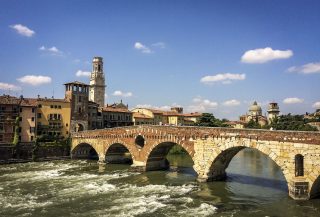
- Ponte Pietra - Verona's most atmospheric river crossing, perfect for photos and linking to viewpoint walks.
The Juliet's House appears in our Complete Guide to Visiting Verona!

Moira & Andy
Hey! We're Moira & Andy. From hiking the Camino to trips around Europe in Bert our campervan — we've been traveling together since retirement in 2020!
This website uses affiliate links which may earn a commission at no additional cost to you!
Planning Your Visit
Tuesday - Sunday: 09:00-19:00.
Closed on Monday, 25 December & 1 January.
Last entry (house museum): 18:00.
€12 (standard ticket; reductions available and under 18s free).
Nearby Attractions
- Torre dei Lamberti (0.1) km
Tower - Piazza Delle Erbe (0.2) km
Square - Piazza dei Signoria (0.2) km
Square - Arche Scaligere (0.2) km
Tomb - Loggia del Consiglio (0.2) km
Historic Building - Basilica di Santa Anastasia (0.4) km
Church - Porta Borsari (0.4) km
Historic Building - Palazzo Miniscalchi (0.4) km
Museum - Arena di Verona (0.5) km
Amphitheatre - Piazza Brà (0.5) km
Square