Casa del Gigante, Ronda
Museum and Palace in Ronda

Casa del Gigante is one of Ronda's most fascinating small-scale monuments: a private Nasrid-era house that feels like a miniature palace, built between the late 13th and early 14th centuries. Tucked into the old town, it offers a rare chance to step inside a Moorish domestic space outside Granada, with an atmosphere that's intimate, architectural, and surprisingly complete considering how much of medieval urban fabric has vanished elsewhere.
The house is named for the mysterious stone figure associated with its corner reliefs, and that story alone gives it a memorable personality. It's one of the must-see places in Ronda if you're curious about Islamic-era Andalusia beyond the big headline sites, and it fits naturally into a walking tour of Ronda when you want a quieter, more detailed counterpoint to the gorge viewpoints and grander monuments.
Table of Contents
- History and Significance of the Casa del Gigante
- Things to See and Do in the Casa del Gigante
- How to Get to the Casa del Gigante
- Practical Tips on Visiting the Casa del Gigante
- Where to Stay Close to the Casa del Gigante
- Is the Casa del Gigante Worth Visiting?
- For Different Travelers
- FAQs for Visiting the Casa del Gigante
- Nearby Attractions to the Casa del Gigante
History and Significance of the Casa del Gigante
Casa del Gigante is widely regarded as one of the most complete examples of Nasrid architecture outside Granada, and that status comes from both its layout and its surviving decorative language. While the building has been modified over time, it still reads as a Moorish residence designed around privacy, inner courtyards, and an “oriental” domestic plan that prioritised enclosed, cool spaces over outward-facing façades.
The “Gigante” name refers to anthropomorphic stone reliefs that once decorated the corners of the building. Only one is preserved today, and even that is difficult to read clearly, which adds to the sense of mystery that surrounds the site. Theories about the reliefs’ origins range from Phoenician or Punic to later reuse, and local legend layers its own stories on top, leaving visitors with the enjoyable uncertainty that often surrounds ancient objects.
The house also sits within a broader story of Ronda's rise as a key city in Moorish Andalusia. In the 14th century, this area was reportedly cleared of smaller medieval houses as the city's elite needed space for noble residences near the royal court, likely under King Abomolec. After the Christian conquest of Ronda in 1485, the property passed through multiple owners, including local officials and noble families, later serving as an orphanage in the 19th century before returning to private hands in the 20th. It opened to the public in 2004 as an interpretation centre dedicated to everyday life in Muslim Spain, which frames the visit as cultural insight rather than simply architectural admiration.
Things to See and Do in the Casa del Gigante
The heart of the experience is the house’s courtyard-centred design. Traditional Nasrid domestic architecture was all about moving inward rather than outward, and here you can still feel how rooms are organised around patios and a small pool, creating shade, airflow, and a sense of calm separation from the street outside.
Look closely at the Moorish architectural elements: horseshoe arches, ornate stucco work, and decorative wooden ceilings that bring texture and depth to relatively compact rooms. The entrance zone is especially notable for its ataurique decoration and cursive inscriptions, and there are traces of 14th-century polychromy that hint at how richly coloured the house once would have been. If you enjoy Alhambra-style detail, you’ll likely find yourself slowing down here and scanning walls rather than rushing through.
The visit also includes a small museum on the top floor that outlines Ronda’s history across roughly 5,000 years. It’s a useful contextual layer because it helps you place the house within the longer story of settlement, conquest, and rebuilding in this landscape. Outside, you’ll also notice a statue of Vicente Espinel in front of the entrance, which makes for a quick landmark moment before you step back into the medieval world of the house itself.
One of the more unusual details is that the original entrance is no longer used, because later construction blocked it. Today, entry is through a courtyard area that was once sealed, and that small practical fact quietly illustrates how historic buildings often survive by adapting to the changing city around them.
How to Get to the Casa del Gigante
Most visitors reach Ronda via Málaga Airport and then continue inland for a day trip or overnight stay. For the best deals and a seamless booking experience, check out these flights to Ronda on Booking.com. Seville Airport is another common option if you're combining Ronda with a wider Andalusia itinerary. For the best deals and a seamless booking experience, check out these flights to Ronda on Booking.com.
Ronda is accessible by train, which is a convenient option if you prefer not to drive in the region. Train schedules and bookings can be found on Omio. From the station, the easiest approach is to head into the historic centre on foot or by taxi, then continue walking through the old town streets to reach the house.
Local buses and taxis are useful for getting you into the centre if you want to save energy for walking and viewpoints once you arrive. If you’re driving, park once in a central lot and explore the old town on foot, since narrow streets and limited access can make door-to-door driving more trouble than it’s worth. If you are looking to rent a car in Spain I recommend having a look at Discover Cars, first, as they compare prices and review multiple car rental agencies for you.
Practical Tips on Visiting the Casa del Gigante
- Entrance fee: Adults: €2.50
- Opening hours: Monday to Friday: 10:00–18:00; Saturdays 10:00–14:00 &16:00–18:00; Sundays: 10:00–15:00
- Official website: https://turismoderonda.es/es/ronda/que_ver/arquitectura_plazas_monumentos/casa_del_gigante
- Best time to visit: Visit in the late morning if you want a calmer, more unrushed interior experience before the old town gets busier. Mid-afternoon can also work well if you like a cooler, shaded break from bright viewpoints along the gorge.
- How long to spend: Plan 45-75 minutes to appreciate the architecture properly and take in the small museum without rushing. If you enjoy decorative detail and slow-looking, you can easily spend closer to 90 minutes.
- Accessibility: Expect a historic-house layout with steps, thresholds, and potentially uneven floors, plus stairs to reach the top-floor museum. If mobility is limited, it may be best to focus on the ground-floor patios and main rooms.
- Facilities: Facilities are typically limited compared to larger museums, so plan café breaks and restrooms around the surrounding old town. This visit works best as a focused cultural stop within a wider day.
Where to Stay Close to the Casa del Gigante
For a culture-heavy itinerary, the best area to base yourself is central Ronda near the old town and main sights so you can walk everywhere and enjoy the historic streets early and late; if your main focus is transport convenience for onward travel, staying nearer the station can make arrivals and departures simpler while keeping the old town reachable.
For an iconic location near the gorge and many historic sights, Parador de Ronda is a strong base. For comfort and walkability with a classic Ronda feel, Catalonia Reina Victoria works well. For a smaller, characterful option that suits old-town wandering, Soho Boutique Palacio San Gabriel is a good fit.
Is the Casa del Gigante Worth Visiting?
Yes, especially if you want to experience Moorish Andalusia in a more intimate, domestic setting rather than only through fortress walls and churches. The house gives you a rare chance to see how Nasrid design shaped everyday life through courtyards, water, ornament, and privacy, all in a space you can absorb without feeling overwhelmed.
It's also worth it because it adds balance to a Ronda itinerary. After big views and dramatic bridges, Casa del Gigante brings you back to human scale-rooms, ceilings, inscriptions, and the quiet feeling of an enclosed patio.
What Other Travellers Say...

Casa del Gigante, at Pl. del Gigante 1 in Ronda, is a preserved Nasrid-period house showcasing classic Islamic architecture centered on a courtyard; visitors praise its Moorish design and informative displays (including videos and animations suitable for children), though some feel renovations have diminished original character and others note occasional opening-time inconsistencies—many find it a peaceful, worthwhile stop if you have spare time in Ronda, with friendly staff and short guided elements that some would like to see extended.


For Different Travelers
Families with Kids
This can work well for families with older kids who enjoy exploring real historic spaces and spotting details like arches, inscriptions, and courtyards. The house format keeps the visit contained and manageable, and the “Giant” name adds an easy story hook.
For younger children, the visit is best kept short and focused on the patios and most visually engaging rooms. Pair it with a viewpoint or a plaza afterward so the day stays varied and doesn’t become too “indoors and quiet” for too long.
Couples & Romantic Getaways
For couples, Casa del Gigante is a strong choice because it feels calm and atmospheric, with that unmistakable Moorish sense of enclosure, shade, and ornament. The courtyards and water features create a softer, more intimate mood than the big gorge viewpoints, making it a great stop when you want to slow the pace.
It also pairs nicely with a late-afternoon old-town wander. Do the house when you want a quieter cultural moment, then step back outside into the lively lanes for dinner plans and sunset viewpoints.
Budget Travelers
If the ticket price fits your budget, it’s a good-value cultural stop because it’s genuinely distinctive and not easily replicated by free sightseeing alone. You’re paying for access to a rare architectural interior, which can feel more meaningful than another scenic overlook.
To keep your day affordable, make this your main paid “interior” experience and build the rest of your itinerary around free viewpoints, wall walks, and plazas. It’s a good way to add depth without stacking multiple entry fees.
History Buffs
History-minded travelers tend to love this stop because it's a relatively rare surviving example of Nasrid domestic architecture outside Granada. The layout, inscriptions, and decorative techniques offer a grounded counterpoint to grand palaces, showing how elite life may have been staged through privacy and interior beauty.
The layered ownership story also adds depth: Moorish noble residence, post-1485 Christian hands, later institutional use as an orphanage, then modern restoration and interpretation. It’s a compact building with a surprisingly long biography.
FAQs for Visiting the Casa del Gigante
Getting There
Tickets & Entry
Visiting Experience
Tours, Context & Itineraries
Photography
Accessibility & Facilities
Food & Breaks Nearby
Safety & Timing
Nearby Attractions to the Casa del Gigante
- Palacio de Mondragón: A Mudéjar-Renaissance palace with courtyards, museum exhibits, and gorge-edge gardens.
- Iglesia de Santa María la Mayor: A landmark church with layered Gothic, Renaissance, and Baroque elements.
- Plaza Duquesa de Parcent: One of Ronda's most beautiful squares, surrounded by historic monuments.
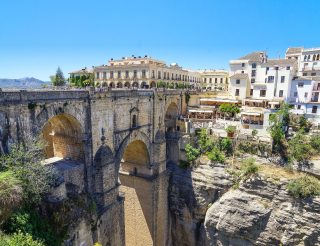
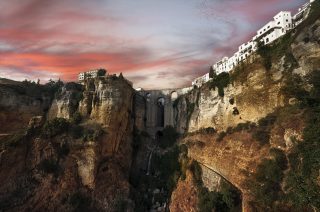
- Puente Nuevo: The city's iconic bridge and the essential panorama over El Tajo.
- Baños Árabes de Ronda: Exceptionally preserved medieval baths that deepen the Islamic-era context of the city.
The Casa del Gigante appears in our Complete Guide to Visiting Ronda!

Moira & Andy
Hey! We're Moira & Andy. From hiking the Camino to trips around Europe in Bert our campervan — we've been traveling together since retirement in 2020!
This website uses affiliate links which may earn a commission at no additional cost to you!
Planning Your Visit
Monday to Friday: 10:00-18:00; Saturdays 10:00-14:00 &16:00-18:00; Sundays: 10:00-15:00
Adults: €2.50
Nearby Attractions
- San Sebastian Minaret (0.1) km
Minaret - Casa de San Juan Bosco (0.1) km
Palace - Plaza de María Auxiliadora (0.1) km
Square - Museo Lara (0.1) km
Museum - Palacio de Mondragon (0.1) km
Gardens, Museum and Palace - Church of Santa María la Mayor (0.1) km
Church and Historic Building - Museo del Bandolero (0.1) km
Museum - Plaza Duquesa de Parcent (0.2) km
Square - Town Hall of Ronda (0.2) km
Historic Building - Puerte de la Cijara (0.2) km
City Gate