Casa De Paredes, La Coruna
Attraction, Historic Building and Historic Site in La Coruna
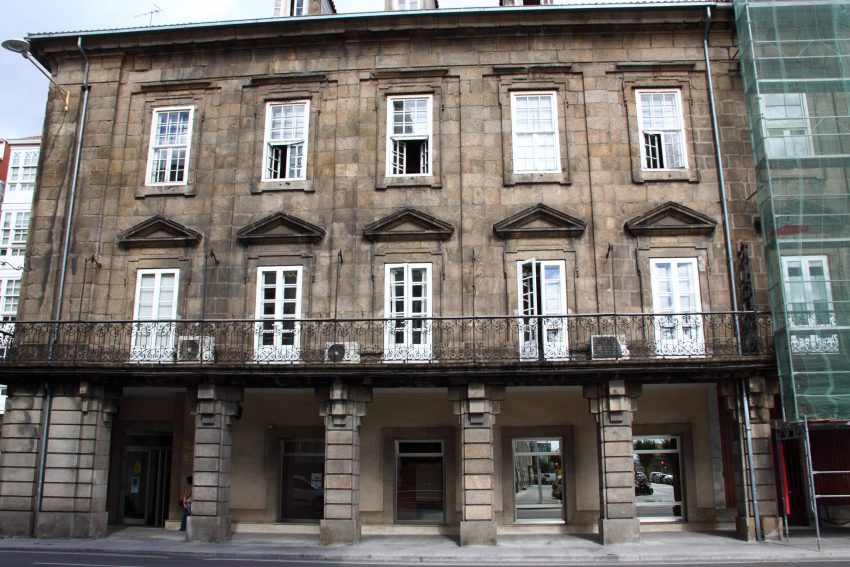
Casa De Paredes (often referred to as the Casas de Paredes) is a distinctive 18th-century architectural ensemble on Avenida de la Marina in La Coruna, created as part of the city's grand seafront image. It's best appreciated from the outside, where the symmetry and urban-scale design read like a statement piece along the waterfront.
Because it sits in a highly walkable part of town, Casa De Paredes is easy to include on a self-guided stroll between the Old Town, the marina-front promenades, and nearby plazas. For the best views, approach from the seafront side for the “façade moment,” then loop back through adjacent streets to see how the complex connects to everyday city life.
Table of Contents
- History and Significance of the Casa De Paredes
- Things to See and Do in the Casa De Paredes
- How to Get to the Casa De Paredes
- Practical Tips on Visiting the Casa De Paredes
- Where to Stay Close to the Casa De Paredes
- Is the Casa De Paredes Worth Visiting?
- For Different Travelers
- FAQs for Visiting Casa De Paredes
- Nearby Attractions to the Casa De Paredes
History and Significance of the Casa De Paredes
Casa De Paredes dates to the late 18th century and is closely linked to the era when military engineers and Enlightenment-era planning ideas shaped parts of Galicia's coastal cities. The ensemble is commonly associated with a broader ambition to give La Coruna a more monumental maritime frontage, reflecting the city's strategic and commercial importance.
Architecturally, the complex is typically described as neoclassical in spirit: ordered, restrained, and designed to project civic confidence. Even if you’re not an architecture specialist, the appeal is immediate in the proportions and the way the buildings “frame” the waterfront streetscape.
Today, the site’s significance is as much urban as it is historical. It’s a reminder that La Coruna’s most photogenic stretches aren’t only beaches and viewpoints, but also carefully planned city fabric that still shapes how the center feels and flows.
Things to See and Do in the Casa De Paredes
Start by taking in the main façade from Avenida de la Marina, where the ensemble reads as a unified architectural statement. Look for the rhythm of windows and the overall symmetry, then step back far enough to appreciate how it was meant to be seen as part of a broader waterfront “scene.”
Next, treat Casa De Paredes as a short, high-impact stop on a walking tour: pair it with nearby seafront viewpoints, the Old Town lanes, and a café break along the marina. If you enjoy urban photography, this is a great place to practice clean, geometric compositions and perspective lines.
Finally, don’t expect a deep interior visit experience here. Many travelers simply stop for exterior viewing, photos, and context—then continue to nearby museums, gardens, or the beach promenades for more time-intensive sightseeing.
How to Get to the Casa De Paredes
The nearest airports are A Coruña Airport (LCG) for the quickest arrival, with Santiago de Compostela Airport (SCQ) as a common alternative with more flight options. For the best deals and a seamless booking experience, check out these flights to La Coruna on Booking.com.
If you're coming from elsewhere in Spain, La Coruna is well connected by rail, and arriving at A Coruña's main station makes it straightforward to continue by taxi, bus, or a short ride into the center. Train schedules and bookings can be found on Omio.
Driving can work well for a Galicia road trip, but central La Coruna can be slower for parking and one-way streets, so it's often easiest to park once and explore on foot. If you are looking to rent a car in Spain I recommend having a look at Discover Cars, first, as they compare prices and review multiple car rental agencies for you.
Practical Tips on Visiting the Casa De Paredes
- Official website: https://www.coruna.gal/cultura
- Entrance fee: Free.
- Opening hours: Monday – Sunday: Open 24 hours.
- Best time to visit: Go in the morning for softer light on the façades, or near sunset for warmer tones and fewer harsh shadows.
- How long to spend: Plan 10–25 minutes for exterior viewing and photos, longer if you’re pairing it with a waterfront walk.
- Accessibility: The area is generally flat and city-pavement friendly, though curb cuts and crossings vary by block.
- Facilities: There are plenty of cafés, shops, and public services nearby in central La Coruna, but facilities are not a “feature” of the building itself.
Where to Stay Close to the Casa De Paredes
Base yourself in central La Coruna near the waterfront and Old Town for the easiest walking access to Casa De Paredes and the city's main sights.
Melia Maria Pita A strong pick for waterfront views and a classic, comfortable stay that keeps you close to the marina-front walking routes.
Hotel Riazor Ideal if you want beach proximity while still being within easy reach of central landmarks and promenades.
Eurostars Ciudad de La Coruña A quieter-feeling option near green spaces and coastal paths, great for travelers who like morning walks with sea air.
NH Collection A Coruña Finisterre A higher-end base with excellent access to the Old Town edge and the port area, good for a “treat-yourself” city break.
Hotel Zenit Coruña A practical, well-located choice for travelers who want straightforward comfort and quick access to central streets and dining.
Is the Casa De Paredes Worth Visiting?
Yes—Casa De Paredes is worth a stop if you enjoy historic cityscapes, neoclassical architecture, and the feeling of discovering a landmark that locals pass every day. It's not a destination you build an entire day around, but it's a satisfying “connector sight” that enriches a waterfront-and-Old-Town walking itinerary.
Honest Pivot: If you prefer attractions with extensive interiors, exhibitions, or guided-room experiences, you may find this one underwhelming because the payoff is primarily exterior and contextual. In that case, keep it as a quick photo stop and prioritize La Coruna’s museums, viewpoints, and beaches for your longer visits.
What Other Travellers Say...

Reviews are largely positive, with visitors highlighting the ensemble’s 18th-century neoclassical character and its role in La Coruna’s historic waterfront planning. Many people say it’s a worthwhile stop on a walk and especially enjoyable to admire from the outside. The most common downside is that it can feel under-maintained for a protected landmark, and several reviewers note there’s little to see inside beyond the exterior architecture.


For Different Travelers
Casa De Paredes works best as a flexible, low-effort stop that adds historical texture to a day of exploring central La Coruna. Think of it as a scenic architectural highlight rather than a time-consuming attraction.
Families with Kids
For families, the best approach is to keep it short and visual: a quick look at the façade, a few photos, then move on to a nearby open space or promenade. Kids often respond better when you turn it into a mini “spot the symmetry” game or a quick scavenger hunt for shapes and patterns.
Pairing it with a snack stop nearby is the easiest win. You’ll get the cultural value without pushing attention spans too far.
Couples & Romantic Getaways
Couples will appreciate Casa De Paredes most as part of a relaxed waterfront walk, especially in golden-hour light. The setting lends itself to slow strolling, people-watching, and a café or wine stop nearby.
If you like photography together, it’s a fun place to capture clean, elegant backdrops without crowds clustering like they do at the biggest headline sights.
Budget Travelers
Budget travelers will like that this is essentially a free, outdoor-friendly highlight you can enjoy while walking between other neighborhoods. It’s a good way to add “big-city history” to your itinerary without paying for tickets.
To maximize value, combine it with other walkable stops—plazas, seafront viewpoints, and the Old Town—so your day feels full without relying on paid attractions.
History Buffs
History buffs will enjoy connecting the site to the late 18th-century push for ordered, monumental urban planning in strategic coastal cities. Even a short stop can spark a deeper appreciation for how military engineering and civic ambition shaped the look of the waterfront.
For a richer context day, use Casa De Paredes as a starting point, then continue to nearby historic areas and museums where the city's defensive and maritime story is more fully explained.
FAQs for Visiting Casa De Paredes
Getting There
Tickets & Entry
Visiting Experience
Tours, Context & Itineraries
Photography
Accessibility & Facilities
Food & Breaks Nearby
Safety & Timing
Nearby Attractions to the Casa De Paredes
- Plaza de María Pita, the city's main square, great for civic architecture and people-watching.
- Old Town (Ciudad Vieja), a compact maze of historic streets and viewpoints.
- Jardín de San Carlos, a small, scenic garden with a peaceful, elevated feel.
- Dársena and marina-front promenade, ideal for an easy waterfront walk and photos.
- Playa del Orzán, a central beach that's perfect for a breezy stroll any time of year.
The Casa De Paredes appears in our Complete Guide to Visiting La Coruna!

Moira & Andy
Hey! We're Moira & Andy. From hiking the Camino to trips around Europe in Bert our campervan — we've been traveling together since retirement in 2020!
This website uses affiliate links which may earn a commission at no additional cost to you!
Planning Your Visit
Monday - Sunday: Open 24 hours.
Free.
Nearby Attractions
- Avenida da Mariña (0.1) km
Area, Promenade and Street - Teatro Rosalía de Castro (0.1) km
Arts Venue, Historic Building and Theatre - Rúa Real (0.2) km
Area, Shop and Street - Cruise Terminal (0.3) km
Docks, Pier and Port - Mercado de San Agustín (0.3) km
Market - Praza de María Pita (0.3) km
Area, Attraction and Square - Church of St. George (0.3) km
Church, Historic Building and Religious Building - Coruña City Hall (0.4) km
Attraction, Historic Building and Town Hall - Coruña’s Paseo Marítimo (0.4) km
Area, Promenade and Walk - Pazo da Capitanía (0.5) km
Historic Building and Museum