Casa Comalat, Barcelona
Attraction, Historic Building and Notable Building in Barcelona
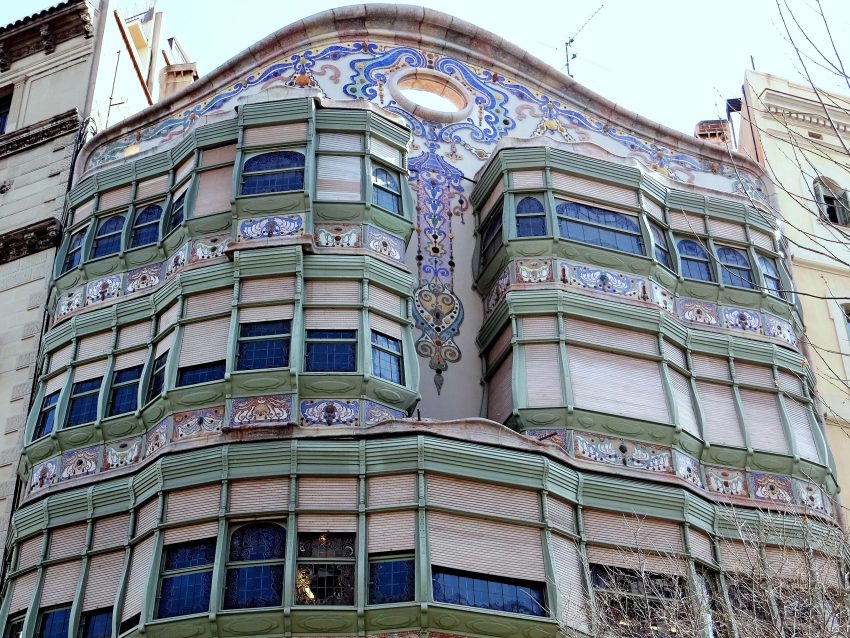
Casa Comalat is one of Barcelona's most charming modernisme buildings, tucked into the Eixample at the corner of Avinguda Diagonal and Carrer de Còrsega. It's best known for having two very different faces: a sculptural, stone-forward main façade on Diagonal and a more playful, color-rich rear façade on Còrsega.
Because it's a private building, most visitors experience Casa Comalat from the street, which actually makes it perfect for a quick stop on a walking tour between Passeig de Gràcia icons. For the best views, do a mini loop: start at the Diagonal side for the grand composition, then walk around to Còrsega to see the building's more whimsical personality.
Table of Contents
- History and Significance of the Casa Comalat
- Things to See and Do in the Casa Comalat
- How to Get to the Casa Comalat
- Practical Tips on Visiting the Casa Comalat
- Where to Stay Close to the Casa Comalat
- Is the Casa Comalat Worth Visiting?
- For Different Travelers
- FAQs for Visiting Casa Comalat
- Nearby Attractions to the Casa Comalat
History and Significance of the Casa Comalat
Casa Comalat is a Catalan modernisme building designed by architect Salvador Valeri i Pupurull and completed in 1911. It belongs to the same early-20th-century wave of Barcelona architecture that made the city famous, and it's often mentioned in the same breath as Gaudí-era landmarks for its organic curves and decorative ambition.
What makes it especially significant is how it showcases modernisme's love of craft and contrast. Rather than presenting a single “front,” Casa Comalat feels like two different buildings stitched together: one more formal and sculptural, the other more colorful and expressive. That duality is part of why it's such a rewarding stop even if you only have time for an exterior visit.
Today, Casa Comalat remains a private property, so it's primarily appreciated as an architectural street sight rather than a conventional museum-style attraction. That said, its location and standout details make it one of the easiest high-impact modernisme moments to add to a self-guided Eixample walk.
Things to See and Do in the Casa Comalat
Start with the Diagonal façade and take your time scanning upward. Look for the flowing, bone-like curves and the dense ornamental rhythm that feels very “Barcelona modernisme,” plus the dramatic vertical emphasis that draws your eye toward the upper levels.
Next, walk around to the rear façade on Carrer de Còrsega. This side is the surprise: it’s more vivid and playful, and it’s where many visitors feel the building’s personality really comes alive. Seeing both sides back-to-back is the key “activity” here, and it only takes a few minutes.
Finally, treat Casa Comalat as a photography stop on a broader itinerary. It pairs naturally with a modernisme crawl: Passeig de Gràcia, nearby landmark houses, and the wider Eixample grid. If you're doing a guided architecture walk, ask your guide to include it as a quieter counterpoint to the big-ticket façades.
How to Get to the Casa Comalat
The nearest major airport is Barcelona–El Prat Airport (BCN), which is the main international gateway for Barcelona. For the best deals and a seamless booking experience, check out these flights to Barcelona on Booking.com.
Arriving by rail is straightforward via Barcelona Sants (the city's main station for AVE and many long-distance routes), then continue by Metro or taxi to the Eixample area. Train schedules and bookings can be found on Omio.
If you're traveling by car, note that central Barcelona traffic restrictions and limited parking can make driving in the Eixample inconvenient, so consider parking outside the center and using public transport for the final stretch. If you are looking to rent a car in Spain I recommend having a look at Discover Cars, first, as they compare prices and review multiple car rental agencies for you.
Practical Tips on Visiting the Casa Comalat
- Entrance fee: Free.
- Opening hours: Daily: Open 24 hours.
- Best time to visit: Go in the morning for softer light on façades, or late afternoon for warmer tones and fewer harsh shadows in photos.
- How long to spend: Plan 10–20 minutes for a full walk-around and photos, or 30 minutes if you like architectural detail-spotting.
- Accessibility: Viewing is from public sidewalks, so it’s generally step-free; some curb cuts vary by corner, and the area can be busy.
- Facilities: There are no visitor facilities on-site; rely on nearby cafés, shops, and restrooms along Diagonal and around Passeig de Gràcia.
Where to Stay Close to the Casa Comalat
Base yourself in the Eixample (especially around Passeig de Gràcia/Diagonal) for the easiest walking access to modernisme sights, great dining, and excellent transport connections.
Alma Barcelona A polished luxury option near Passeig de Gràcia with a calm, design-forward feel that suits travelers who want quiet comfort after busy sightseeing days.
Majestic Hotel & Spa Barcelona A classic Barcelona stay with a prime boulevard location, ideal if you want to turn your modernisme walk into a door-to-door experience.
Hotel Casa Fuster A landmark building in its own right, perfect for architecture lovers who want their hotel to feel like part of the itinerary.
Praktik Bakery A smart mid-range pick with a fun concept and a convenient Eixample base, great for travelers prioritizing walkability and value.
Generator Barcelona A social, budget-friendly option close to the area, useful if you want a lively atmosphere and easy access to both Eixample and Gràcia.
Is the Casa Comalat Worth Visiting?
Yes, Casa Comalat is worth visiting if you enjoy architecture, street photography, or building a modernisme-themed walk beyond the headline attractions. It's visually memorable, quick to see, and rewarding precisely because it's less crowded than the big-ticket houses.
Honest Pivot: If you're hoping for an interior tour or a museum-style visit, you may want to skip it and focus on places with guaranteed entry. Casa Comalat shines as an exterior stop, so it's best for travelers who are happy admiring details from the street.
What Other Travellers Say...

Reviews are very positive overall, with travelers calling Casa Comalat a standout modernisme gem and praising the striking façades—especially the contrast between the front and rear sides. Many mention it's a rewarding stop on a walk from Passeig de Gràcia and a great place for architecture lovers and photographers. The most common downside is that the interior is generally not open to the public, and visitors note occasional confusion about whether any limited access is possible, so expectations should be set for an exterior visit.


For Different Travelers
Casa Comalat works best as a flexible “add-on” stop: you can spend five minutes or linger longer, and it fits neatly into routes linking Diagonal, Passeig de Gràcia, and the Eixample grid.
Families with Kids
Kids who like colorful buildings and “spot the details” games may enjoy the quick walk-around, especially comparing the two façades. It’s also an easy stop to break up a longer day of sightseeing without committing to timed entry.
If your family needs structured activities or indoor exhibits, pair Casa Comalat with a more interactive attraction nearby. Treat this as a short, low-effort visual highlight rather than a main event.
Couples & Romantic Getaways
For couples, Casa Comalat is a great “stroll stop” that feels a bit more intimate than the most famous façades nearby. The contrast between the two sides makes it fun to explore together and compare favorite details.
It also pairs nicely with a café break or an evening walk around Eixample’s elegant streets. If you’re planning a photo-focused day, this is a strong backdrop without the crowds.
Budget Travelers
Casa Comalat is ideal for budget travelers because the best experience is simply seeing it from the street. You can build a full modernisme route around it with minimal spending beyond transport and snacks.
To maximize value, combine it with other exterior architecture stops and save paid tickets for one or two interiors you truly care about. This approach gives you variety without stacking entry fees.
History Buffs
History buffs will appreciate Casa Comalat as a snapshot of early-20th-century Barcelona and the city's modernisme boom. It's also a useful comparison point for understanding how different architects interpreted the same era's tastes.
Because access is limited, the “history” here is read through the façade: materials, ornament, and urban context. It’s a quick stop that adds depth to a broader architectural narrative.
FAQs for Visiting Casa Comalat
Getting There
Tickets & Entry
Visiting Experience
Tours, Context & Itineraries
Photography
Accessibility & Facilities
Food & Breaks Nearby
Safety & Timing
Nearby Attractions to the Casa Comalat
- Casa Milà (La Pedrera): A must-see modernisme landmark nearby, famous for its rooftop and sculptural stone façade.
- Casa Batlló: One of Barcelona's most iconic buildings, celebrated for its imaginative design and immersive interior visit.
- Casa de les Punxes (Casa Terradas): A striking, castle-like modernist building with distinctive spires and strong street presence.
- Passeig de Gràcia: Barcelona's grand boulevard for architecture-spotting, shopping, and café breaks.
- Palau Robert: A cultural and exhibition space with gardens, useful as a calm pause along the Diagonal/Passeig de Gràcia area.
The Casa Comalat appears in our Complete Guide to Visiting Barcelona!

Moira & Andy
Hey! We're Moira & Andy. From hiking the Camino to trips around Europe in Bert our campervan — we've been traveling together since retirement in 2020!
This website uses affiliate links which may earn a commission at no additional cost to you!
Planning Your Visit
Daily: Open 24 hours.
Free.
Nearby Attractions
- Palau del Baró de Quadras (0.1) km
Attraction, Historic Building and Palace - Casa de les Punxes (0.3) km
Attraction, Historic Building and Notable Building - La Pedrera - Casa Milà (0.3) km
Attraction, Historic Building and Notable Building - Colmado Múrria (0.6) km
Shop - Casa Batlló (0.7) km
Attraction, Historic Building and Notable Building - Casa Amatller (0.8) km
Attraction, Historic Building and Museum - Casa Lleó Morera (0.8) km
Attraction, Historic Building and Notable Building - Casa Vicens Gaudí (1.1) km
Attraction, Historic Building and Museum - Casa Calvet (1.3) km
Attraction, Historic Building and Notable Building - Passeig de Gràcia (1.3) km
Area, Promenade and Street