Casa Calvet, Barcelona
Attraction, Historic Building and Notable Building in Barcelona
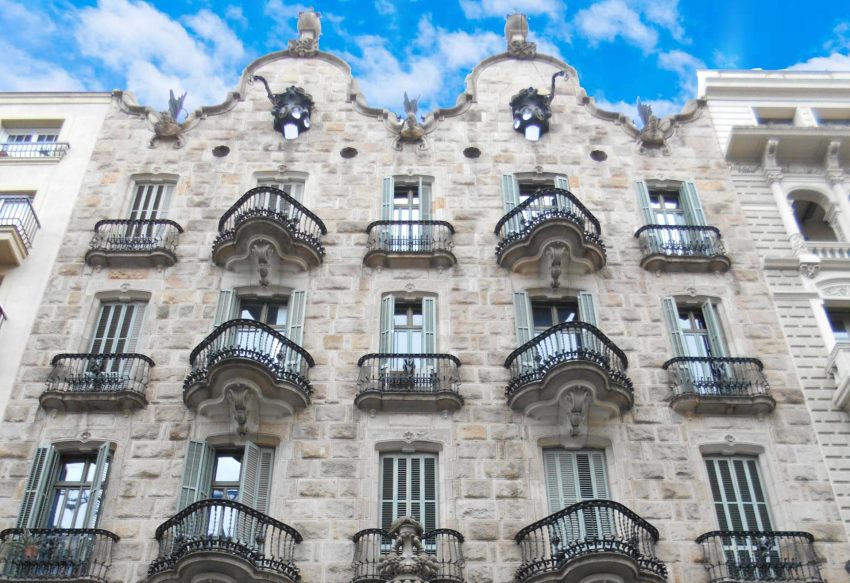
Casa Calvet is one of Antoni Gaudí's most understated works in Barcelona, tucked into the elegant Eixample grid on Carrer de Casp. Unlike the headline-grabbing curves of Casa Batlló or Casa Milà, this building rewards a slower look: sculpted stonework, playful symbolism, and a surprisingly “formal” façade that still feels unmistakably Gaudí once you know what to spot.
Because it's a private building, most travelers experience Casa Calvet from the street as part of a Modernisme walking tour. It pairs especially well with a stroll from Plaça de Catalunya toward Passeig de Gràcia, where you can compare Gaudí's quieter early city style with his later, more experimental houses.
Table of Contents
- History and Significance of the Casa Calvet
- Things to See and Do in the Casa Calvet
- How to Get to the Casa Calvet
- Practical Tips on Visiting the Casa Calvet
- Where to Stay Close to the Casa Calvet
- Is the Casa Calvet Worth Visiting?
- For Different Travelers
- FAQs for Visiting Casa Calvet
- Nearby Attractions to the Casa Calvet
History and Significance of the Casa Calvet
Casa Calvet was built between 1898 and 1900 for a textile family and is often described as one of Gaudí's most conservative designs. That “restraint” is part of its significance: it shows how Gaudí adapted his imagination to a refined, rule-bound neighborhood while still embedding personality into the details.
Look closely and you’ll see how Gaudí plays within a more symmetrical framework than usual, using sculptural stone, ironwork, and symbolic motifs to animate the façade. It’s also a reminder that Gaudí wasn’t only about dramatic silhouettes—he could be witty, precise, and deeply contextual when the commission called for it.
Casa Calvet is also important for understanding Gaudí's relationship with the Eixample: it was his first residential building in this district, and it helped set a tone for how Modernisme could fit into a dense urban street wall without losing artistry.
Things to See and Do in the Casa Calvet
Start with the façade. Stand across Carrer de Casp so you can take in the overall composition, then move closer to pick out the sculpted elements around the balconies and the main entrance. The building’s charm is in the small surprises—this is a “spot-the-details” stop rather than a big interior visit.
Next, pay attention to the ironwork and the rhythm of the windows and balconies. Even when the structure feels more orderly than other Gaudí houses, the craftsmanship and the subtle curves keep it from feeling rigid.
Finally, treat Casa Calvet as a connective stop on a Gaudí route rather than a standalone “ticketed attraction.” It's ideal between bigger visits: a breather from crowds, a quick photo stop, and a chance to appreciate how varied Gaudí's Barcelona portfolio really is.
How to Get to the Casa Calvet
Barcelona–El Prat Airport (BCN) is the nearest major airport for most international travelers, with frequent connections into the city center. For the best deals and a seamless booking experience, check out these flights to Barcelona on Booking.com.
If you're arriving by rail, Barcelona Sants is the main station for long-distance and many high-speed services, and from there you can connect onward by Metro or taxi toward Eixample. Train schedules and bookings can be found on Omio..
Driving in central Barcelona is rarely the fastest option due to traffic, limited parking, and low-emission rules, so it's best to park outside the core and use public transport for the final stretch. If you are looking to rent a car in Spain I recommend having a look at Discover Cars, first, as they compare prices and review multiple car rental agencies for you..
Practical Tips on Visiting the Casa Calvet
- Entrance fee: Free.
- Opening hours: Daily: 13:00–15:30 & 20:30–23:00.
- Best time to visit: Go in the morning for softer light on the façade and fewer people on the sidewalk. Late afternoon can also work well if you want warmer tones for photos.
- How long to spend: Plan 10–20 minutes for a good look and photos, or longer if you’re comparing details with other Modernisme buildings nearby.
- Accessibility: Viewing from the street is straightforward, with typical city sidewalks; expect occasional curb cuts and street clutter common in busy areas.
- Facilities: There are no public visitor facilities inside the building for sightseeing, so plan for restrooms and water at nearby cafés and shops.
Where to Stay Close to the Casa Calvet
The best area to base yourself is Eixample (especially around Plaça de Catalunya and Passeig de Gràcia) for walkability, transport links, and easy access to Gaudí sights.
Catalonia Passeig de Gràcia A strong pick for first-timers who want a central base near major Modernisme stops, with an easy walk to Casa Calvet and excellent transit connections.
Hotel El Palace Barcelona A classic, splurge-worthy option close to Eixample highlights—ideal if you want old-world Barcelona elegance and a very short hop to Carrer de Casp.
H10 Casa Mimosa Chosen for its stylish design and location near top Gaudí landmarks, making it easy to build a walkable architecture-focused itinerary.
Praktik Rambla A great value-for-location stay near Plaça de Catalunya, perfect if you want to be central without paying luxury rates.
Yurbban Trafalgar Hotel Included for its convenient access to Eixample and the Gothic Quarter edge, plus a rooftop scene that's excellent after a day of walking tours.
Is the Casa Calvet Worth Visiting?
Yes—Casa Calvet is worth visiting if you enjoy architecture and want a calmer, more “local-feeling” Gaudí stop that doesn't require tickets or long lines. It's a quick win on foot, and it adds depth to your understanding of Gaudí beyond the blockbuster houses.
Honest Pivot: If your time is extremely limited and you're prioritizing interiors, you can skip Casa Calvet and focus on Casa Batlló, Casa Milà, and the Sagrada Família. Casa Calvet shines most for detail-lovers and Gaudí completists who enjoy subtlety and street-level observation.
What Other Travellers Say...

Google reviewers rate Casa Calvet very highly overall, often describing it as a quieter, less crowded Gaudí stop compared with the more famous houses nearby. Many visitors like its subtler design, the chance to appreciate details on the façade, and the convenience of taking a break at a ground-floor café/restaurant. A recurring downside is that some travelers arrive expecting an interior visit and feel disappointed to learn it's a private building, and a few mention mixed experiences with the food options on-site.


For Different Travelers
Casa Calvet is a flexible stop: it's quick, central, and easy to combine with other highlights. Think of it as a “bonus” Gaudí sight that improves your overall Barcelona architecture day without adding logistical complexity.
Families with Kids
For families, Casa Calvet works best as a short, low-stress photo stop between bigger attractions. Kids may enjoy the idea of “finding hidden details” on the façade, turning it into a quick scavenger hunt.
Because there’s no formal interior visit for sightseeing, it’s also easier to manage with strollers and short attention spans. Pair it with a nearby park break or a snack stop so the day doesn’t become wall-to-wall museums.
Couples & Romantic Getaways
Couples will appreciate Casa Calvet for its quieter vibe and the feeling of discovering a less-hyped corner of Gaudí's Barcelona. It's an easy add-on to a Passeig de Gràcia stroll, especially if you're planning a long, unhurried day of architecture and cafés.
It’s also a good “in-between” stop: a place to slow down, take a few photos, and enjoy the city streetscape without the pressure of timed entry slots.
Budget Travelers
Casa Calvet is excellent for budget travelers because it's a high-impact sight from the street with no ticket required. You can build a full Modernisme walk around it and spend your money on just one paid interior (like Casa Batlló or Casa Milà) if you choose.
It also sits in a very walkable part of town, so you can minimize transport costs by linking it with Plaça de Catalunya, Passeig de Gràcia, and other nearby façades.
History Buffs
History buffs will like how Casa Calvet reflects the ambitions of turn-of-the-century Barcelona and the rise of Modernisme in the Eixample. It's a compact case study in how architecture, commerce, and social status shaped the city's streets.
Even without an interior visit, the building’s symbolism and craftsmanship offer plenty to unpack—especially if you’re comparing it to Gaudí’s later, more radical works.
FAQs for Visiting Casa Calvet
Getting There
Tickets & Entry
Visiting Experience
Tours, Context & Itineraries
Photography
Accessibility & Facilities
Food & Breaks Nearby
Safety & Timing
Nearby Attractions to the Casa Calvet
- Palau de la Música Catalana: A spectacular Modernisme concert hall with richly decorated interiors and guided visits.
- Plaça de Catalunya: The city's central hub, great for people-watching and connecting to major shopping streets.
- Passeig de Gràcia: Barcelona's grand boulevard for Modernisme façades, designer shops, and architecture walks.
- Casa Batlló: One of Gaudí's most imaginative houses, famous for its colorful façade and immersive interior visit.
- Casa Milà (La Pedrera): A landmark Gaudí building with a rooftop terrace and museum-style interior experience.
The Casa Calvet appears in our Complete Guide to Visiting Barcelona!

Moira & Andy
Hey! We're Moira & Andy. From hiking the Camino to trips around Europe in Bert our campervan — we've been traveling together since retirement in 2020!
This website uses affiliate links which may earn a commission at no additional cost to you!
Planning Your Visit
Daily: 13:00-15:30 & 20:30-23:00.
Free.
Nearby Attractions
- Passeig de Gràcia (0.4) km
Area, Promenade and Street - Palau de la Música Catalana (0.4) km
Arts Venue, Historic Building and Theatre - Plaça de Catalunya (0.5) km
Square - Sant Pere of the Puelles (0.5) km
Church, Historic Site and Religious Building - Els Quatre Gats (0.6) km
Arts Venue, Café and Historic Building - Santa Anna Church (0.6) km
Church - Casa Lleó Morera (0.6) km
Attraction, Historic Building and Notable Building - Casa Amatller (0.6) km
Attraction, Historic Building and Museum - Mercat de Santa Caterina (0.7) km
Attraction, Bazaar and Market - Arc de Triomf (0.7) km
Attraction, Historic Building and Monument