Carrer d'Avinyó, 44
Area, Attraction and Street in Barcelona
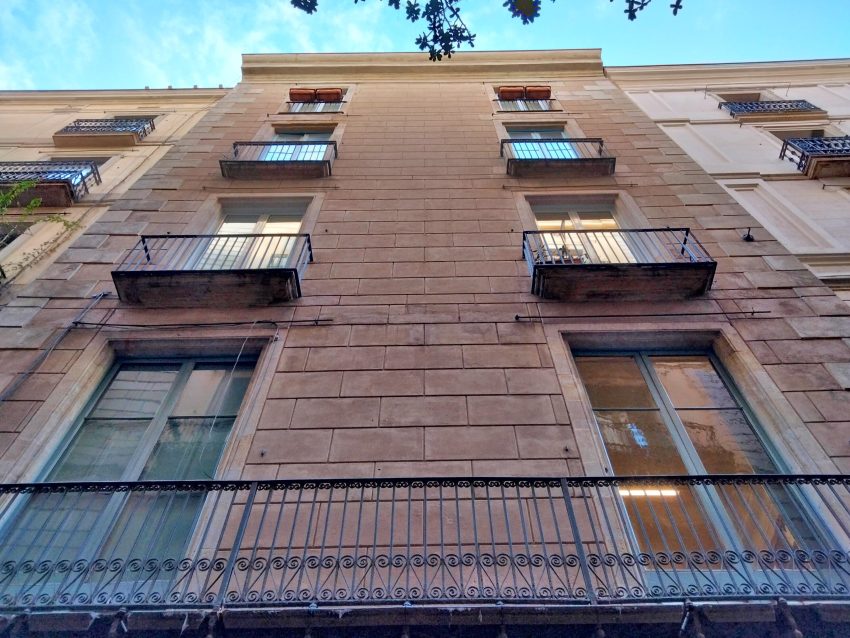
Carrer d'Avinyó, 44 is a specific address on Carrer d'Avinyó, a narrow medieval street in Barcelona's Barri Gòtic within Ciutat Vella. It isn't a “museum entrance” type of stop; it's a story stop, the kind of place you visit to see the street, feel the atmosphere, and understand why one ordinary-looking doorway became a fixed point in modern art mythology.
What pulls most visitors here is the Picasso connection. Carrer d'Avinyó is widely linked to the brothel said to have operated at number 44, the place often cited as an inspiration point behind Les Demoiselles d'Avignon (The Young Ladies of Avignon). Whether you arrive as an art lover or just mildly curious, the idea is the same: this street helps you picture the raw, provocative social world that sat alongside Barcelona's more polished façades in Picasso's era.
Because it sits in one of the most walkable parts of the old city, it's an easy add-on to a self-guided loop between La Rambla, Plaça Reial, the Cathedral area, and the waterfront. It also works well on a Picasso walking tour day: you can treat it as a quick, contextual pause before continuing to El Born and the Museu Picasso, where the biography and the artwork come back together.
Table of Contents
- History and Significance of the Carrer d’Avinyó, 44
- Things to See and Do in the Carrer d’Avinyó, 44
- How to Get to the Carrer d’Avinyó, 44
- Practical Tips on Visiting the Carrer d’Avinyó, 44
- Where to Stay Close to the Carrer d’Avinyó, 44
- Is the Carrer d’Avinyó, 44 Worth Visiting?
- For Different Travelers
- FAQs for Visiting Carrer d’Avinyó, 44
- Nearby Attractions to the Carrer d’Avinyó, 44
History and Significance of the Carrer d’Avinyó, 44
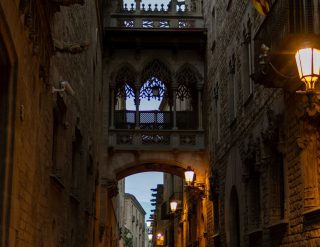
Carrer d'Avinyó is part of the Gothic Quarter's dense, layered street grid, where Roman-era foundations, medieval expansion, and later urban changes overlap in a compact footprint. Streets like this were built for foot traffic and close quarters, and that scale still shapes how the area feels today-intimate, shadowed, and constantly shifting as you move.
Number 44 enters the narrative because of its association with a brothel that, according to long-running popular accounts, fed into Picasso’s thinking as he worked toward Les Demoiselles d’Avignon. That painting is often treated as a turning point: a moment when Picasso’s approach to the human figure became more confrontational, more fractured, and ultimately a bridge toward cubism’s logic of analyzing, deconstructing, and reassembling form in a new visual language.
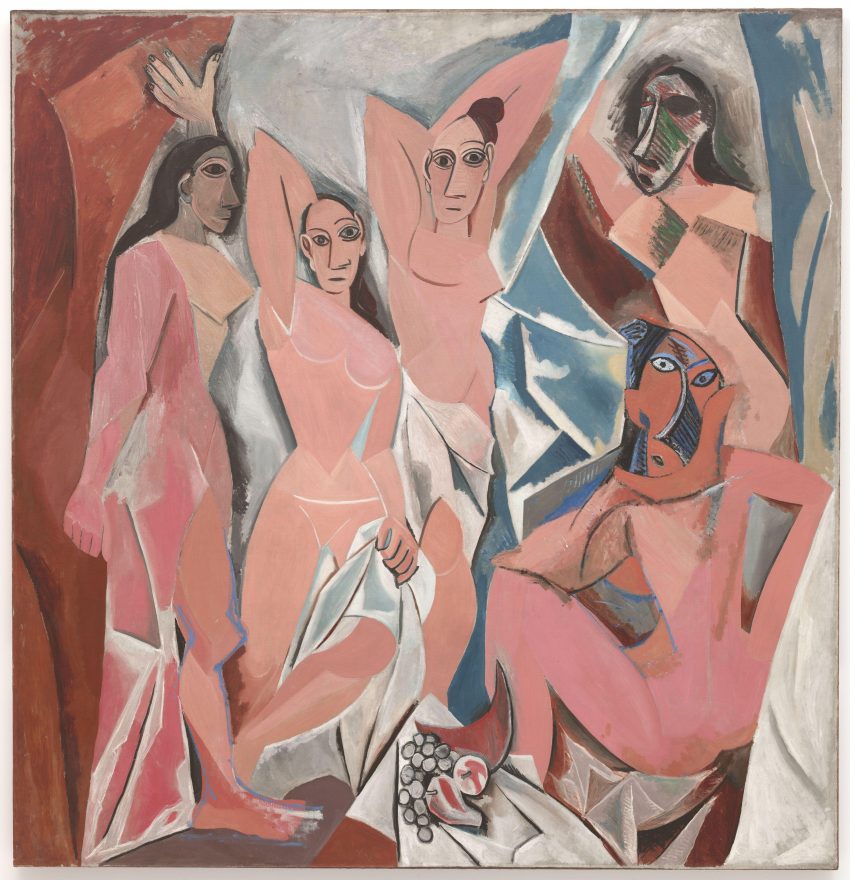
The important thing to understand is that this stop is interpretive rather than curated. You're not here for an interior exhibit; you're here because the street still evokes the kind of old-city atmosphere that surrounded Picasso-tight lanes, private doorways, and the sense that a few steps can take you from respectable public life into more hidden social spaces. In that sense, Carrer d'Avinyó, 44 is less “a place to see” and more “a place to understand.”
Things to See and Do in the Carrer d’Avinyó, 44
Start by looking at the street as a whole. Carrer d'Avinyó is narrow and characterful, and the changing light across the day can make it feel dramatically different from one hour to the next. Look up at balconies and stonework, then pull your gaze back down to doorways and shopfronts-the architectural details are subtle, but they're what give the street its timeworn, medieval texture.
Next, use the stop as a pivot in your itinerary. Today the area is filled with restaurants and cafés, and that contrast is part of the experience: a street known for a scandal-tinged art legend now functioning as an everyday place to eat, drink, and wander. It’s a good moment to slow down, take a photo or two, then continue on foot toward other old-town lanes and small plazas.
Finally, if you want structure, fold it into a Picasso walking tour route rather than treating it as a standalone destination. The stop lands best when it's one scene in a larger storyline: Avinyó for the mythology and social context, then El Born and the Museu Picasso for the works that show how Barcelona shaped his early development. That sequencing turns “a number on a street” into a coherent chapter in Picasso's Barcelona.
How to Get to the Carrer d’Avinyó, 44
Barcelona-El Prat Airport (BCN) is the main airport for international and domestic arrivals, and Girona-Costa Brava Airport (GRO) is sometimes used by low-cost carriers. For the best deals and a seamless booking experience, check out these flights to Barcelona on Booking.com.
If you're arriving by rail, Barcelona Sants is the primary hub for high-speed and regional trains, with easy onward connections into the city by metro and taxi. Train schedules and bookings can be found on Omio..
By car, you can reach Ciutat Vella via the city's ring roads, but driving into the Gothic Quarter itself is often slow and restricted; plan to park outside the old town and walk the last stretch. If you are looking to rent a car in Spain I recommend having a look at Discover Cars, first, as they compare prices and review multiple car rental agencies for you.
Once you're in the center, the easiest approach is on foot from La Rambla or Plaça Reial, or by metro to nearby stations and then a short walk through the lanes. Taxis and ride-hails can drop you close, but final access may still require a brief walk depending on traffic rules and pedestrianized segments.
Practical Tips on Visiting the Carrer d’Avinyó, 44
- Official website: https://www.barcelona.cat/en/what-to-do-in-bcn/parks-and-gardens/esplais-catalans-92086011696
- Entrance fee: Free.
- Opening hours: Monday – Thursday: 09:00–14:00 & 15:00–18:00. Friday: 09:00–14:00. Closed on Saturday, Sunday.
- Best time to visit: Go in the morning for calmer streets and cleaner photos, or early evening for moodier light and a livelier neighborhood feel.
- How long to spend: 5-15 minutes is enough for the address itself; plan 60-120 minutes if you're folding it into a wider Gothic Quarter walk.
- Accessibility: The area is mostly flat but can have uneven paving and narrow sidewalks; expect occasional crowding that slows movement.
- Facilities: There are no dedicated on-site facilities at the address, but cafés, bakeries, and public amenities are easy to find within a few minutes’ walk.
Where to Stay Close to the Carrer d’Avinyó, 44
For the easiest sightseeing days, base yourself in the Gothic Quarter or the adjacent El Born area so you can walk to most of the old-city highlights.
Hotel Neri Relais & Châteaux A top pick for travelers who want a boutique, historic-feeling stay right in the Gothic Quarter, with an atmosphere that matches the neighborhood's lanes and stone façades.
Serras Barcelona Ideal if you want old-town proximity with a more contemporary, polished feel and quick access to the waterfront edge of Ciutat Vella.
Catalonia Catedral A practical, well-located option near major Gothic Quarter sights, great for travelers who want comfort and convenience over a “hidden-gem” vibe.
H10 Madison A strong choice for design-forward rooms and an easy walk to the Cathedral area, making it simple to start early and beat crowds.
K+K Hotel Picasso Best for those who want to be near El Born and Parc de la Ciutadella while still staying within walking distance of Carrer d'Avinyó and the Gothic Quarter lanes.
Is the Carrer d’Avinyó, 44 Worth Visiting?
Yes, if you enjoy story-driven travel and you're already exploring the Gothic Quarter on foot. It's a quick stop that adds a layer of cultural context to streets you'd likely walk anyway, and it works especially well when paired with nearby landmarks and a guided narrative.
Honest Pivot: If you prefer destinations with a clear “inside” experience (museums, viewpoints, or ticketed monuments), you can skip making a special trip for this address. You'll get more value by focusing on major nearby sites and treating Carrer d'Avinyó as a pleasant street to pass through rather than a stand-alone highlight.
For Different Travelers
Carrer d'Avinyó, 44 is less about a single attraction and more about how you like to experience a city: through stories, neighborhoods, and small details. It's most rewarding when you're unhurried and curious, and least rewarding when you're trying to tick off “must-sees” quickly.
Families with Kids
For families, this stop works best as a short “spot the details” moment: balconies, street textures, and the maze-like feel of the Gothic Quarter can be fun in small doses. Keep it brief and combine it with a nearby square where kids can reset.
If you’re using a tour, choose one that’s flexible and not overly heavy on adult-only themes. A guide who focuses on architecture and everyday history will make the walk more engaging for mixed ages.
Couples & Romantic Getaways
Couples will likely enjoy this as part of a slow wander through the Gothic Quarter, especially in the early evening when the streets feel cinematic. It's a good excuse to take a detour, grab a drink nearby, and let the neighborhood set the pace.
For a more romantic flow, pair it with a sunset walk toward the waterfront or a reservation in El Born. The value here is the atmosphere and shared “we found it” feeling rather than a big-ticket attraction.
Budget Travelers
Budget travelers can treat this as a free, high-character stop that fits neatly into a DIY walking route. It's a good reminder that some of Barcelona's most memorable moments come from neighborhoods, not entry fees.
To keep costs down, plan a route that strings together multiple nearby streets and plazas, then stop at a bakery or grab a simple coffee rather than sitting for a full meal in the most touristed pockets.
History Buffs
History buffs will appreciate the address as a prompt to think about how cities preserve (or don’t preserve) everyday places tied to big cultural narratives. The Gothic Quarter’s layers also make it easy to connect Roman, medieval, and modern eras within a short walk.
For deeper context, combine this with a visit to a nearby history-focused site in Ciutat Vella and then return to the streets with fresh eyes. The neighborhood becomes more legible once you've seen how Barcelona interprets its own past.
FAQs for Visiting Carrer d’Avinyó, 44
Getting There
Tickets & Entry
Visiting Experience
Tours, Context & Itineraries
Photography
Accessibility & Facilities
Food & Breaks Nearby
Safety & Timing
Nearby Attractions to the Carrer d’Avinyó, 44
- Plaça Reial: A palm-lined square near La Rambla that's great for a quick pause and people-watching.
- Barcelona Cathedral (Cathedral of the Holy Cross and Saint Eulalia): The Gothic Quarter's headline landmark with an impressive façade and surrounding medieval lanes.
- Basílica de Santa Maria del Pi: A beautiful Gothic church known for its rose window and calm interior atmosphere.
- Las Ramblas: Barcelona's famous promenade, best used as a connector to side streets rather than a place to linger at peak times.
- El Born neighborhood: A nearby district of boutiques, tapas spots, and historic streets that pairs naturally with a Gothic Quarter walk.
The Carrer d'Avinyó, 44 appears in our Complete Guide to Visiting Barcelona!

Moira & Andy
Hey! We're Moira & Andy. From hiking the Camino to trips around Europe in Bert our campervan — we've been traveling together since retirement in 2020!
This website uses affiliate links which may earn a commission at no additional cost to you!
Planning Your Visit
Monday - Thursday: 09:00-14:00 & 15:00-18:00.
Friday: 09:00-14:00.
Closed on Saturday, Sunday.
Free.
Nearby Attractions
- Església de Sant Jaume (0.2) km
Church, Historic Building and Religious Building - Plaça de Sant Jaume (0.2) km
Square - Palau de la Generalitat de Catalunya (0.2) km
Historic Building, Historic Site and Palace - Plaça de Sant Just (0.2) km
Square - Carrer de la Plata, 4 (0.3) km
Historic Site and Street - Temple d'August (0.3) km
Roman Site - Pont del Bisbe (0.3) km
Attraction and Bridge - Gran Teatre del Liceu (0.3) km
Arts Venue, Opera House and Theatre - Barcelona Roman Walls (0.3) km
City Walls and Roman Site - Palau Requesens (0.3) km
Arts Venue, Historic Building and Palace