Capella d'en Marcús, Barcelona
Church, Historic Building and Historic Site in Barcelona
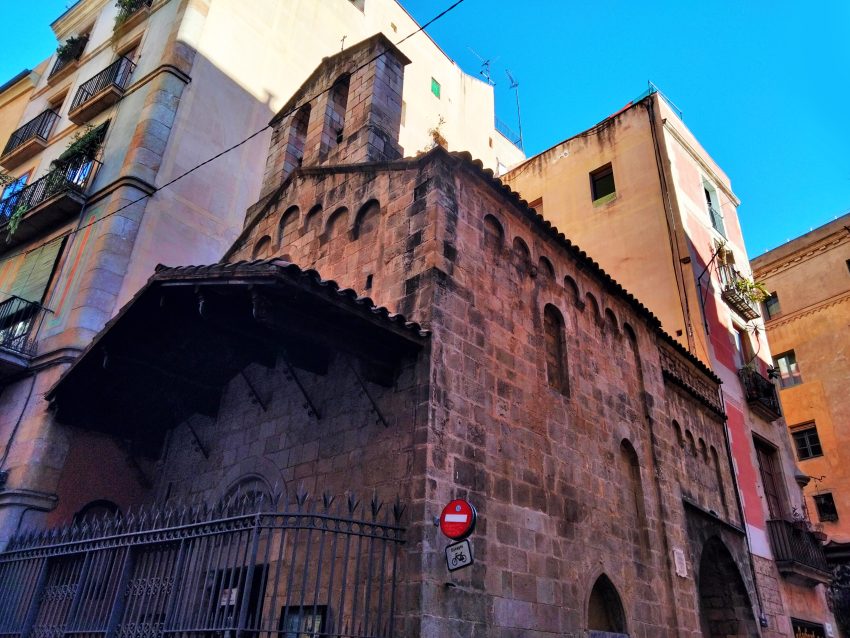
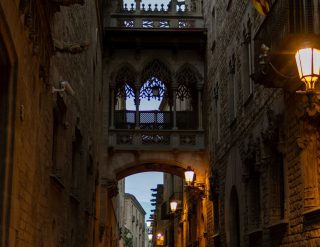
Capella d'en Marcús is one of Barcelona's smallest and most atmospheric medieval surprises: a Romanesque chapel tucked into the narrow lanes of El Born, just a short walk from the Santa Caterina Market and the Basilica of Santa Maria del Mar. It's easy to miss if you're not looking for it, which is exactly why it feels like a secret corner of old Barcelona.
Because it sits right on a classic Ciutat Vella walking route, it works perfectly as a quick stop on a self-guided Gothic Quarter and El Born stroll, or as a “pause point” between bigger sights. The best way to experience it is to approach slowly through the surrounding streets, then step into the little square to take in the chapel's simple stone façade and the sense of time layered into the neighborhood.
Table of Contents
- History and Significance of the Capella d’en Marcús
- Things to See and Do in the Capella d’en Marcús
- How to Get to the Capella d’en Marcús
- Practical Tips on Visiting the Capella d’en Marcús
- Where to Stay Close to the Capella d’en Marcús
- Is the Capella d’en Marcús Worth Visiting?
- For Different Travelers
- FAQs for Visiting Capella d’en Marcús
- Nearby Attractions to the Capella d’en Marcús
History and Significance of the Capella d’en Marcús
Capella d'en Marcús dates back to the 12th century and is closely tied to the growth of medieval Barcelona beyond its earliest walls. Traditionally associated with Bernat Marcús, a prominent local patron, the chapel formed part of a broader charitable and traveler-focused complex in the area, reflecting how faith, care for the poor, and movement along trade routes were intertwined in the Middle Ages.
Architecturally, it’s a compact Romanesque building, and that simplicity is part of its appeal. The chapel’s surviving exterior details and its small scale make it feel more like a living fragment of the city’s earliest layers than a “monument” designed for crowds.
Over the centuries, the surrounding city grew tightly around it, leaving the chapel embedded in the urban fabric. That contrast—an ancient stone chapel pressed up against later buildings—helps explain why visitors often describe it as a vivid snapshot of old Barcelona.
Things to See and Do in the Capella d’en Marcús
Start outside: the chapel is best appreciated from the small open space around it, where you can take in the Romanesque lines and the way the structure sits at an angle within the street grid. Look for the modest decorative stonework and the overall “fortress-like” feel typical of small medieval religious buildings.
If you find it open, step inside briefly for a quiet moment. The interior is very small—more like a neighborhood devotional space than a grand church—so the experience is about atmosphere rather than a long checklist of artworks.
To make the stop feel richer, pair it with nearby medieval Barcelona highlights: walk from here to Santa Maria del Mar, browse the Santa Caterina Market, or continue toward the Picasso Museum area. It's an ideal “connector” sight that adds texture to a walking tour without taking much time.
How to Get to the Capella d’en Marcús
The nearest airports are Barcelona–El Prat (BCN) for most international and domestic flights, and Girona–Costa Brava (GRO) for some low-cost and seasonal routes. For the best deals and a seamless booking experience, check out these flights to Barcelona on Booking.com.
If you're arriving by train, Barcelona Sants is the main station for long-distance and many high-speed services, with onward connections by Metro, taxi, or bus into Ciutat Vella. Train schedules and bookings can be found on Omio.
Traveling by car is possible, but driving and parking in Ciutat Vella is inconvenient and often restricted; it’s usually better to park outside the center and come in by Metro or on foot. If you are looking to rent a car in Spain I recommend having a look at Discover Cars, first, as they compare prices and review multiple car rental agencies for you.
Practical Tips on Visiting the Capella d’en Marcús
- Entrance fee: Free; donations appreciated.
- Opening hours: Check official website.
- Best time to visit: Go early in the day for quieter streets, or late afternoon for softer light on the stone exterior. If you’re visiting in peak season, aim for weekdays to avoid the densest foot traffic.
- How long to spend: Plan 10–20 minutes for a quick look and photos, or 30 minutes if you're pairing it with a slow wander through El Born.
- Accessibility: The surrounding streets are narrow and can be uneven, and the entrance may involve a small step; expect limited space inside.
- Facilities: There are no visitor facilities on-site, but you’ll find plenty of cafés, bakeries, and restrooms in nearby bars and museums.
Where to Stay Close to the Capella d’en Marcús
The best area to base yourself is El Born/Ciutat Vella if you want to explore Barcelona's historic core mostly on foot.
For a stylish stay with easy access to the medieval lanes around the chapel, K+K Hotel Picasso is a strong pick thanks to its central location near El Born’s sights and a comfortable, modern setup after long walking days.
If you want a boutique feel right in the neighborhood’s atmosphere, Hotel Rec Barcelona is well-placed for quick walks to the chapel, Santa Caterina Market, and the waterfront.
For travelers who value design and a slightly quieter pocket while staying close, Catalonia Born offers a dependable base with good connections to both El Born and the Gothic Quarter.
If you prefer a more classic, upscale option with a polished experience, Grand Hotel Central is ideal for being near the old city while enjoying a higher-end retreat between sightseeing blocks.
For a practical, well-known choice with a central old-town address, H10 Madison works well for splitting time between the Gothic Quarter and El Born, with an easy walk to the chapel.
Is the Capella d’en Marcús Worth Visiting?
Yes—if you enjoy small, authentic fragments of history, Capella d'en Marcús is absolutely worth a short detour. It's not a “big ticket” attraction, but it adds depth to a Ciutat Vella walk and gives you a tangible sense of Barcelona's medieval scale.
Honest Pivot: If you're short on time and only want major interiors and headline masterpieces, you can skip it and focus on Santa Maria del Mar, the Cathedral area, or a museum. The chapel's charm is subtle, and the visit is more about ambiance than a long, curated experience.
What Other Travellers Say...

Reviews are strongly positive overall, with visitors praising the chapel as a charming, historic “hidden corner” that evokes medieval Barcelona. Common highlights include its authentic old-town atmosphere, its significance as a very early (12th-century) site, and the sense of discovering something locals still value. The main drawbacks are that it's very small and can feel less special if the surrounding streets are crowded or if you expect a large interior experience.


For Different Travelers
Capella d'en Marcús is a quick-stop attraction that fits best into a walking day rather than being a destination on its own. Think of it as a “texture” sight: small, historic, and easy to combine with markets, churches, and neighborhood wandering.
Families with Kids
Kids who like “hidden spots” may enjoy the feeling of discovering a tiny medieval chapel tucked into the city. It’s also a low-commitment stop—perfect when attention spans are short.
Because the interior is small, families often get more out of the exterior and the surrounding square than a long indoor visit. Pair it with a snack stop nearby to keep the pace relaxed.
Couples & Romantic Getaways
For couples, this is a lovely little pause on an El Born stroll—quiet, historic, and photogenic without feeling staged. It's especially nice as part of an evening walk when the streets calm down.
Combine it with Santa Maria del Mar and a dinner reservation in El Born for a simple, romantic itinerary that stays mostly on foot.
Budget Travelers
This is a great budget-friendly stop because it doesn’t require a big time investment and can be enjoyed largely from the outside. It also sits in an area where you can build a full day of walking between free or low-cost sights.
Budget travelers will appreciate that it adds “old Barcelona” character to your route without needing tickets or a tour booking.
History Buffs
History lovers will enjoy how the chapel represents a surviving slice of 12th-century Barcelona embedded in a much later cityscape. It's a reminder that medieval Barcelona wasn't only grand cathedrals—it also relied on small neighborhood religious spaces.
To deepen the context, visit it as part of a Romanesque-to-Gothic comparison day: start here, then move on to Santa Maria del Mar and the Cathedral area to see how styles and scale evolved.
FAQs for Visiting Capella d’en Marcús
Getting There
Tickets & Entry
Visiting Experience
Tours, Context & Itineraries
Photography
Accessibility & Facilities
Food & Breaks Nearby
Safety & Timing
Nearby Attractions to the Capella d’en Marcús
- Santa Caterina Market: A lively market with a colorful roof and great options for snacks and casual meals.
- Basilica de Santa Maria del Mar: El Born's iconic Gothic church, known for its soaring interior and neighborhood history.
- Picasso Museum: A major collection focused on Picasso's formative years, set in beautiful medieval palaces.
- Palau de la Música Catalana: A masterpiece of Catalan Modernisme and one of the city's most impressive concert halls.
- Barcelona Cathedral (Catedral de Barcelona): The Gothic Quarter's centerpiece, surrounded by atmospheric medieval streets.
The Capella d'en Marcús appears in our Complete Guide to Visiting Barcelona!

Moira & Andy
Hey! We're Moira & Andy. From hiking the Camino to trips around Europe in Bert our campervan — we've been traveling together since retirement in 2020!
This website uses affiliate links which may earn a commission at no additional cost to you!
Planning Your Visit
Check official website.
Free; donations appreciated.
Nearby Attractions
- Picasso Museum (0.1) km
Arts Venue, Gallery and Museum - Mercat de Santa Caterina (0.2) km
Attraction, Bazaar and Market - Museu de la Xocolata (0.2) km
Museum - Plaça de Ramon Berenguer el Gran (0.2) km
Roman Site and Square - Plaça de l'Àngel (0.2) km
Square - Capella de Santa Àgueda (0.3) km
Church, Historic Building and Museum - Palau Requesens (0.3) km
Arts Venue, Historic Building and Palace - Barcelona Roman Walls (0.3) km
City Walls and Roman Site - Plaça del Rei (0.3) km
Square - Picasso’s Last Barcelona Studio (0.3) km
Attraction, Shop and Street