Bridge on the River Kwai, Kanchanaburi
Bridge near Kanchanaburi
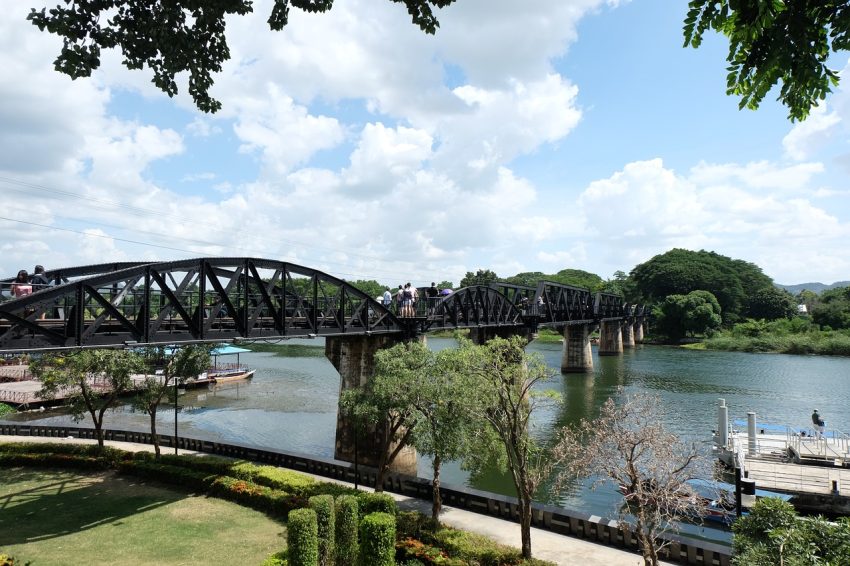
The Bridge on the River Kwai is one of the top attractions in Kanchanaburi and a powerful symbol of the suffering endured during the construction of the Thai-Burma Railway, known as the Death Railway. The bridge became world-famous after the 1957 Oscar-winning film, drawing visitors from around the globe who come to walk its steel spans, take photographs, and reflect on the events that unfolded here. A short distance away lies Kanchanaburi War Cemetery, the resting place of thousands of Allied POWs who lost their lives during the railway's construction, making this area one of the best places to see in Kanchanaburi for history-minded travellers.
Walking the bridge offers views over the river and the surrounding countryside, but those with extra time can take a train journey to Nam Tok. This slow, scenic ride passes sections of original wooden trestles and dramatic cliffs, providing a deeper understanding of the immense human effort-and tragedy-involved in building the railway. It remains one of the things to do in Kanchanaburi that most powerfully connects visitors to the past.
Table of Contents
- History and Significance of the Bridge on the River Kwai
- Things to See and Do in Bridge on the River Kwai
- How to Get to Bridge on the River Kwai
- Practical Tips on Visiting Bridge on the River Kwai
- Where to Stay close to Bridge on the River Kwai
- Is Bridge on the River Kwai Worth Visiting?
- FAQs for Visiting Bridge on the River Kwai
- Nearby Attractions to Bridge on the River Kwai
History and Significance of the Bridge on the River Kwai
The railway was constructed during World War II by tens of thousands of Allied POWs and forced civilian labourers under Japanese occupation. Between 1942 and 1943, nearly 16,000 POWs and up to 100,000 Asian labourers died from starvation, exhaustion, disease, and brutal conditions. The bridge built here was one component of the 415-kilometre railway intended to connect Thailand with Burma as a supply route for the Japanese army.
Two bridges originally existed: a wooden bridge completed in early 1943, followed soon after by the steel bridge that still stands today. Much of the steel came from a dismantled bridge in Java, transported to Thailand by the Japanese. Allied bombing raids damaged parts of the structure in 1945, and the missing spans were later replaced after the war. Today, the bridge functions as both an active railway crossing and one of the must-see places in Kanchanaburi for those seeking to understand wartime history.
Things to See and Do in Bridge on the River Kwai
Visitors can walk along the steel bridge, pausing on the widened pedestrian platforms to take in the river views. The experience is peaceful yet emotionally heavy, knowing the immense suffering that occurred during the railway’s construction.
A small market surrounds the entrance, and information boards provide basic historical context. For a fuller understanding, many travellers combine their visit with the Thailand-Burma Railway Centre, which offers detailed exhibitions and personal accounts. Taking the train to Nam Tok is an especially memorable way to witness the landscape that shaped the railway's story, making this a highlight of any visit to Kanchanaburi.
How to Get to Bridge on the River Kwai
The bridge is located about 5 km north of central Kanchanaburi. The nearest international gateway is Bangkok's Suvarnabhumi Airport. For the best deals and a seamless booking experience, check out these flights to Kanchanaburi on Booking.com.
Kanchanaburi is reachable by train from Bangkok's Thonburi Station, and many services continue over the bridge toward Nam Tok. Train schedules and bookings can be found on Omio.
Driving from Bangkok is straightforward along well-signed highways, and parking areas are available near the bridge.
Practical Tips on Visiting Bridge on the River Kwai
- Suggested tips: Arrive early in the morning or near sunset for fewer crowds and better light.
- Best time to visit: November to February for cooler temperatures.
- Entrance fee: Free to walk the bridge; train fares vary.
- Opening hours: Always accessible; train schedules vary daily.
- Official website: Local tourism sites provide updated details.
- How long to spend: 30 minutes to 2 hours, depending on whether you take the train.
- Accessibility: The bridge walkway includes uneven surfaces; assistance may be required.
- Facilities: Shops, cafés, and restrooms nearby.
- Photography tip: Shoot from the riverbank or station side for strong leading lines across the steel arches.
- Guided tours: Numerous WWII-themed tours include the bridge and nearby sites.
- Nearby food options: Riverside restaurants and snack stalls around the bridge area.
Where to Stay close to Bridge on the River Kwai
Stay near the river for easy access to the bridge and surrounding historical sites. A popular spot is U Inchantree Kanchanaburi, with river views and a peaceful setting. For larger resort-style grounds, consider Felix River Kwai Resort. Another well-located option is Good Times Resort, ideal for sightseeing.
Is Bridge on the River Kwai Worth Visiting?
Yes. The bridge is one of the must-see places in Kanchanaburi, combining scenic beauty with profound historical significance. Walking the iconic steel spans, learning the real story behind the Death Railway, and reflecting on the sacrifices of those who built it create an unforgettable experience.
What Other Travellers Say...

River Kwai Bridge on Maenamkwai Road in Kanchanaburi is a historic rail bridge and section of the Death Railway built during World War II; visitors report it's free to walk across, feels secure underfoot, and offers reflective moments—especially at sunrise—with trains crossing slowly enough for photos and waves from onlookers. Expect a mix of quiet and very busy areas: one side is calmer while the other hosts restaurants, market stalls and crowds of tourists, locals and school groups. Boat rides beneath the bridge are available nearby, and the station-adjacent market provides food, souvenirs and cafés, making it easy to spend a few hours exploring the town beyond the crossing.


FAQs for Visiting Bridge on the River Kwai
Nearby Attractions to Bridge on the River Kwai
- Kanchanaburi War Cemetery - Final resting place of thousands of POWs.
- Thailand-Burma Railway Centre - Detailed museum explaining the Death Railway.
- JEATH War Museum - Exhibits focused on POW conditions.
- Wang Pho Viaduct - Dramatic wooden trestle section of the Death Railway.
- Sai Yok Noi Waterfall - A scenic endpoint for the train journey from Kanchanaburi.
The Bridge on the River Kwai appears in our Complete Guide to Visiting Kanchanaburi!

Moira & Andy
Hey! We're Moira & Andy. From hiking the Camino to trips around Europe in Bert our campervan — we've been traveling together since retirement in 2020!
This website uses affiliate links which may earn a commission at no additional cost to you!
Planning Your Visit
Nearby Attractions
- JEATH War Museum (0.1) km
Museum - Thailand–Burma Railway Centre (2.5) km
Museum - Kanchanaburi War Cemetery (2.6) km
Cemetery - Wang Po Viaduct (3.7) km
Railway - Tiger Cave Temple, Wat Tham Sua (14.6) km
Buddhist Temple - Elephant’s World Sanctuary (22.1) km
Animal Sanctury - Erawan Waterfall (53.2) km
Waterfalls - The Death Railway (72.3) km
Railway - Hellfire Pass (72.3) km
Walk - Damnoen Saduak Floating Market (76.0) km
Market