Biblioteca Nacional, Madrid
Historic Building, Library and Museum in Madrid
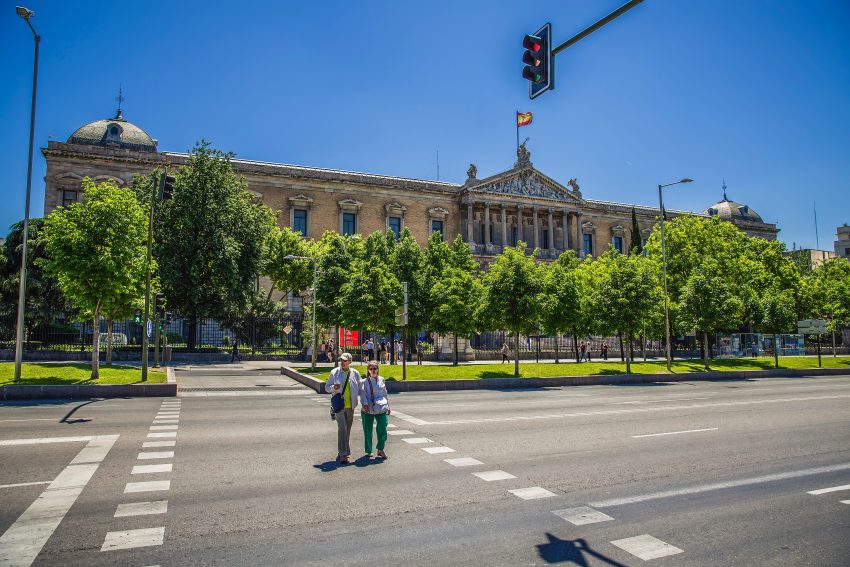
Set on the elegant Paseo de Recoletos, the Biblioteca Nacional (Spain's National Library) is one of Madrid's most impressive cultural buildings—part working research library, part public exhibition space. Even if you're not here to study, it's a rewarding stop for architecture lovers and anyone curious about Spain's written heritage.
It also fits beautifully into a central Madrid walking tour: pair it with the nearby “Golden Mile” of museums and parks, or simply drop in between shopping around Salamanca and a stroll toward Cibeles and Gran Vía. The best first view is from the front steps, where the grand staircase and statues set the tone before you head inside for exhibitions.
Table of Contents
- History and Significance of the Biblioteca Nacional
- Things to See and Do in the Biblioteca Nacional
- How to Get to the Biblioteca Nacional
- Practical Tips on Visiting the Biblioteca Nacional
- Where to Stay Close to the Biblioteca Nacional
- Is the Biblioteca Nacional Worth Visiting?
- For Different Travelers
- FAQs for Visiting Biblioteca Nacional
- Nearby Attractions to the Biblioteca Nacional
History and Significance of the Biblioteca Nacional
Founded in the 18th century, the Biblioteca Nacional de España was created to preserve and organize the country's published heritage—books, manuscripts, maps, prints, newspapers, and more. Over time it became the central legal-deposit library, meaning it plays a key role in safeguarding what is published in Spain.
The current headquarters on Paseo de Recoletos is part of Madrid’s late-19th-century monumental cityscape. Its formal, neoclassical presence reflects the era’s ambition to build public institutions that were both functional and symbolic—places where knowledge was treated as a national treasure.
Today, the BNE balances two identities: a serious research institution for readers and scholars, and a visitor-friendly venue that stages rotating exhibitions drawn from its collections. That mix is exactly what makes it different from a typical museum visit.
Things to See and Do in the Biblioteca Nacional
Start with the exterior: the main façade and staircase are among the most photogenic “civic” landmarks in Madrid, especially in soft morning light. Inside, the atmosphere is noticeably quieter than most attractions nearby, which many travelers find refreshing.
The highlight for most visitors is the exhibition program. Displays often feature rare books, manuscripts, prints, maps, and curated historical themes—ideal if you like cultural storytelling and objects you won’t see elsewhere. If you’re lucky, you’ll catch multiple exhibitions in one visit without feeling rushed.
If you’re interested in the library side of the institution, look out for visitor-oriented routes or guided/audioguided options when available. Just keep expectations aligned: it’s a working national library first, so some areas are designed for researchers rather than casual browsing.
How to Get to the Biblioteca Nacional
Madrid's nearest major airport is Adolfo Suárez Madrid–Barajas Airport (MAD), with frequent metro, bus, and taxi connections into the city center. For the best deals and a seamless booking experience, check out these flights to Madrid on Booking.com.
If you're arriving by rail, Madrid-Puerta de Atocha and Madrid-Chamartín are the main stations, and both connect easily to central Madrid by metro and Cercanías commuter trains. Train schedules and bookings can be found on Omio.
Within the city, the library is easiest by metro (Colón or Serrano are common nearby stops) or by bus along Paseo de Recoletos, and it’s also very walkable from Cibeles. If you’re driving, expect limited street parking and heavy traffic in central neighborhoods, so a paid garage and a short walk is usually the least stressful approach. If you are looking to rent a car in Spain I recommend having a look at Discover Cars, first, as they compare prices and review multiple car rental agencies for you.
Practical Tips on Visiting the Biblioteca Nacional
- Official website: https://www.bne.es
- Entrance fee: Free.
- Opening hours: Monday – Friday: 10:00–20:00. Saturday: 10:00–20:00. Sunday: 10:00–14:00.
- Best time to visit: Go on a weekday morning for the calmest galleries and the most “library-like” atmosphere; weekends can feel busier around exhibition entrances.
- How long to spend: Plan 45–90 minutes for exhibitions and a quick look around; add time if you’re joining a guided/audioguided visit.
- Accessibility: Expect a formal public building with security screening and internal level changes; if you have mobility needs, check in with staff at entry for the smoothest route.
- Facilities: Bring a small bag and be ready for security checks; nearby streets (Recoletos, Serrano) are packed with cafés for a pre- or post-visit break.
Where to Stay Close to the Biblioteca Nacional
Base yourself in central Madrid near Salamanca/Recoletos if you want an easy, walkable stay with museums, shopping, and great transport links all close by.
Only YOU Hotel Atocha A stylish choice with a lively lobby scene and quick access to Atocha for day trips—great if you're mixing the library with broader Madrid exploring.
Hotel Regina A reliable, central pick near Puerta del Sol and Gran Vía, making it easy to reach the Biblioteca Nacional on foot or by a short metro hop.
The Principal Madrid Hotel Chosen for its rooftop vibe and upscale comfort—ideal if you want a romantic, design-forward base near the Recoletos/Gran Vía corridor.
Barceló Emperatriz A polished Salamanca stay that suits shoppers and food lovers, with a quieter feel than the busiest tourist blocks.
VP Jardín de Recoletos A particularly convenient option for this visit, with apartment-style comforts and an easy walk to the library and Paseo de Recoletos.
Is the Biblioteca Nacional Worth Visiting?
Yes—especially if you enjoy architecture, quiet cultural spaces, and exhibitions built around rare historical material. It's a satisfying “smart stop” in Madrid: visually impressive, usually uncrowded compared with the big art museums, and often free to enter.
Honest Pivot: if you’re looking for a highly interactive, English-forward museum experience, you may find the visit less immediately accessible—some displays and on-site guidance can feel geared more toward Spanish-speaking visitors and researchers. In that case, consider treating it as a quick architectural/photo stop and spend your deeper museum time at the Prado, Reina Sofía, or Thyssen.
What Other Travellers Say...

Travelers rate the Biblioteca Nacional very highly overall, praising the stunning architecture, peaceful atmosphere, and the chance to see rare historic books and well-curated exhibitions. Many visitors also mention helpful, professional staff and a memorable sense of “old-world” scholarship. The most common downside is that some exhibit information and on-site guidance can feel Spanish-focused, which may reduce enjoyment for visitors without strong Spanish.


For Different Travelers
The Biblioteca Nacional works best when you match it to your travel style: it's calm, detail-rich, and more about atmosphere and heritage than spectacle. Think of it as a cultural palate cleanser between Madrid's bigger, busier highlights.
Families with Kids
Families who do well here are the ones with curious, patient kids—especially those who like “treasure case” exhibits (old maps, manuscripts, illustrated books). Keep the visit short and goal-based: pick one exhibition and make it a mini scavenger hunt for symbols, animals, or unusual scripts.
If you need high-energy engagement, plan a nearby park stop afterward to balance the quiet indoor time. The surrounding area makes it easy to pivot to snacks, playground time, or a longer walk.
Couples & Romantic Getaways
Couples tend to love the building’s grandeur and the slower pace—perfect for a shared, low-stress cultural moment. It’s also a great pre-dinner stop because you can get a meaningful experience in under two hours.
Pair it with a stroll down Paseo de Recoletos toward Cibeles, or combine it with nearby galleries and cafés for an easy, elegant Madrid afternoon.
Budget Travelers
This is a strong budget-friendly attraction because you can often enjoy exhibitions without paying an entry fee. It also sits in a very walkable zone, so you can fold it into a day of free or low-cost sightseeing.
To keep spending down, plan your route as a walking loop: library exterior photos, exhibitions, then a picnic-style break in a nearby green space or a simple menú del día lunch.
History Buffs
If you’re into Spanish history, print culture, or the evolution of ideas, the exhibitions can be genuinely absorbing. The objects on display often reward slow looking—details like marginal notes, bindings, and historical printing techniques can be the real “wow.”
To get more out of it, skim the exhibition panels first, then circle back to the pieces that connect to your interests (maps, political history, literature, science). Even when some text is Spanish-only, the artifacts themselves often tell a clear story.
FAQs for Visiting Biblioteca Nacional
Getting There
Tickets & Entry
Visiting Experience
Tours, Context & Itineraries
Photography
Accessibility & Facilities
Food & Breaks Nearby
Safety & Timing
Nearby Attractions to the Biblioteca Nacional
- Museo Arqueológico Nacional: A top-tier archaeology museum next door, perfect for extending your history-focused day.
- Plaza de Colón: A major city square with monuments and a lively, central-Madrid feel.
- Paseo de Recoletos: A beautiful boulevard for a relaxed walk lined with cafés and cultural stops.
- Cibeles Fountain and Plaza de Cibeles: One of Madrid's most iconic landmarks and photo spots, a short walk away.
- Retiro Park: Madrid's classic green escape, ideal for unwinding after a quiet indoor visit.
The Biblioteca Nacional appears in our Complete Guide to Visiting Madrid!

Moira & Andy
Hey! We're Moira & Andy. From hiking the Camino to trips around Europe in Bert our campervan — we've been traveling together since retirement in 2020!
This website uses affiliate links which may earn a commission at no additional cost to you!
Planning Your Visit
Monday - Friday: 10:00-20:00.
Saturday: 10:00-20:00.
Sunday: 10:00-14:00.
Free.
Nearby Attractions
- Plaza de Colon (0.1) km
Historic Site, Monument and Square - Museo Arqueologico Nacional (0.2) km
Museum - Puerta de Alcala (0.5) km
Attraction, City Gate and Monument - Palacio de Cibeles (0.6) km
Arts Venue, Historic Building and Town Hall - Parque del Retiro (0.7) km
Park - El Estanque (0.8) km
Attraction, Lake and Park - Edificio Metropolis (0.9) km
Attraction, Historic Building and Notable Building - Círculo de Bellas Artes (0.9) km
Viewing Point - Museo Thyssen-Bornemisza (0.9) km
Arts Venue, Attraction and Museum - Real Academia de Bellas Artes (1.2) km
Arts Venue, Gallery and Museum