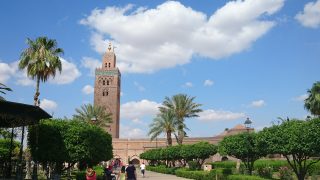
Ben Youssef Madrasa, Marrakesh
Madrasa in Marrakesh
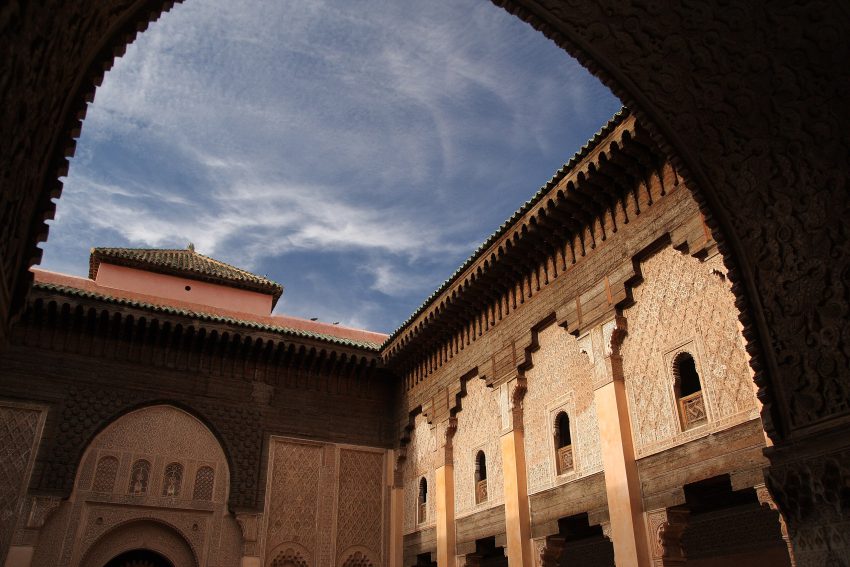
Ben Youssef Madrasa is where centuries of scholarship, devotion, and craftsmanship come together around one unforgettable courtyard. Once the largest Islamic college in Morocco, this Saadian-era madrasa housed hundreds of students in simple cells wrapped around an exquisitely decorated central space, all linked to the neighbouring Ben Youssef Mosque. Today it functions as a historic monument rather than a working school, but the sense of focus and quiet still lingers in its corridors. It is easily one of the best places to visit in Marrakech if you want to understand how faith, learning, and art intertwined in the city's past.
Walking in from the busy medina, you move through a narrow entrance and dim corridor before suddenly emerging into the main courtyard: a shallow reflective pool at your feet, layered zellij tiles on the walls, carved cedar above, and stucco patterns catching the light. It is a carefully staged moment of revelation that still feels powerful, even after hundreds of years. For many visitors, this is a highlight of any walking tour of Marrakech, inviting you to slow down, trace the details with your eyes, and imagine the lives of the students who once lived, studied, and prayed here.
Table of Contents
- History and Significance of the Ben Youssef Madrasa
- Things to See and Do in the Ben Youssef Madrasa
- How to Get to the Ben Youssef Madrasa
- Practical Tips on Visiting the Ben Youssef Madrasa
- Where to Stay close to the Ben Youssef Madrasa
- Is the Ben Youssef Madrasa Worth Visiting?
- FAQs for Visiting Ben Youssef Madrasa
- Nearby Attractions to the Ben Youssef Madrasa
History and Significance of the Ben Youssef Madrasa
Ben Youssef Madrasa takes its name from the adjacent Ben Youssef Mosque, founded in the 12th century by the Almoravid sultan Ali ibn Yusuf, who gave this whole quarter its religious importance. The first madrasa on this site dates to the Marinid dynasty in the 14th century, when Sultan Abu al-Hasan, a great patron of learning and the arts, established an Islamic college here to train students in Qur'anic studies, law, and other disciplines. The Marinids were known for building madrasas across Morocco, and Ben Youssef formed part of that wider educational network.
The building you see today, however, was largely shaped by the Saadian sultan Abdallah al-Ghalib, who ruled from 1557 to 1574. In 1564-65 he commissioned a complete reconstruction of the madrasa, following a layout and decorative scheme rooted in Marinid traditions but executed in the rich Saadian style. Under his patronage the college grew to become the largest in Morocco, with around 130 student rooms arranged over two levels around the central courtyard and six smaller inner courtyards. At its height the madrasa could house up to 800 or even 900 students drawn from across Morocco and beyond.
For several centuries Ben Youssef Madrasa functioned as a major centre of Islamic learning, where students memorised the Qur'an, studied tafsir (exegesis), jurisprudence, grammar, literature, and elements of science and history. Life here was simple: cramped dorms, shared ablutions, and long hours of study balanced by the beauty of the communal spaces. The madrasa closed as a teaching institution in 1960. After careful restoration it reopened as a historic site in 1982, and following another major restoration campaign it welcomed visitors again in April 2022. Today it attracts thousands of people each year, both for its architectural splendour and for the glimpse it gives into Morocco's scholarly past.
Things to See and Do in the Ben Youssef Madrasa
The central courtyard is the heart of any visit to Ben Youssef Madrasa. Almost square in plan, it is organised around a long, shallow pool that mirrors the sky and surrounding architecture. At ground level, the walls are clad in intricate zellij tiles forming geometric patterns; above them, carved stucco displays arabesques, calligraphy, and the distinctive sebka motifs that ripple across Moroccan façades. Higher still, carved cedar wood takes over, culminating in deep eaves and delicately worked balcony elements. Standing here, you can feel how the space was designed to impress and inspire students as they crossed from their dorms to the prayer hall.
Take time to explore the prayer hall at the southeastern end of the courtyard. Its mihrab, indicating the direction of Mecca, is framed by some of the richest stucco decoration in the complex, including a broad Kufic inscription that weaves Quranic verses into the architecture. The hall’s proportions and soft light make it easy to imagine rows of students reciting texts or listening to lessons. Nearby, look out for the wooden mashrabiyya screen that separates the vestibule from the main courtyard: its delicate latticework allowed a gradual reveal of the courtyard beyond while giving a sense of enclosure.
One of the most engaging parts of the visit is climbing up to the student dormitories. The rooms themselves are tiny and plain, but the corridors and small secondary courtyards that connect them have their own carved stucco and wood details. Peering out of narrow windows, you get unusual views down into the main courtyard or across the medina’s rooftops. On the ground floor, seek out the ablutions chamber with its four marble columns, muqarnas cupola, and central water basin-once the practical heart of daily routines. Simple as they are, these routes and rooms bring you closer to the everyday life of the madrasa, balancing the splendour of the courtyard with the austerity of student quarters.
How to Get to the Ben Youssef Madrasa
To visit Ben Youssef Madrasa, you will first need to reach Marrakech. Most international travellers arrive at Marrakech Menara Airport, a short drive from the city centre with regular flights from major European cities and other Moroccan hubs. For the best deals and a seamless booking experience, check out these flights to Marrakesh on Booking.com. From the airport, taxis and pre-booked transfers can bring you towards the medina; ask to be dropped near Ben Youssef Mosque or the northern souks, from where you continue on foot through the lanes to the madrasa entrance.
If you are already in Morocco, trains connect Marrakech with Casablanca, Rabat, Tangier, and other major cities, arriving at the main railway station in the new town.Train schedules and bookings can be found on Omio. From there, a petit taxi will take you to one of the medina gates close to Ben Youssef-such as Bab Doukkala or Bab Taghzout-after which you navigate on foot using signs, offline maps, or simple directions from locals. Long-distance buses from other regions arrive at several bus terminals around Marrakech; taxis from these stations can likewise bring you to the medina edge for the final walk in.
Driving into the medina itself is not possible, as its streets are narrow and largely pedestrian. Instead, park in a guarded car park near the old city walls and walk the rest of the way, or leave the car at your accommodation and rely on taxis and your feet. Because Ben Youssef Madrasa sits close to other major sights like Le Jardin Secret and the Marrakech Museum, many visitors fold it into a wider walking loop through the northern medina.
Practical Tips on Visiting the Ben Youssef Madrasa
- Suggested tips: Visit earlier in the day if you can, before the medina heats up and tour groups arrive, so you can enjoy quieter moments in the courtyard and prayer hall.
- Best time to visit: Late morning or mid-afternoon offer beautiful light in the courtyard, with shadows emphasising the stucco and tile patterns.
- Entrance fee: Adults: 50 DH
- Opening hours: Daily: 9:00 AM to 7:00 PM; During Ramadan: Closes at 6:00 PM
- Official website: https://www.medersabenyoussef.ma/en/
- How long to spend: Allow 45-90 minutes to explore the courtyard, prayer hall, dormitories, and ablutions chamber at an unhurried pace.
- Accessibility: Access involves steps, narrow corridors, and uneven surfaces; upper levels are reached via staircases and may be challenging for visitors with limited mobility.
- Facilities: Basic facilities include a ticket office; for toilets, cafés, and shops you will rely on the surrounding medina streets rather than the madrasa itself.
- Photography tip: Stand at the edge of the pool to capture reflections of the arches and carved façades, and look for quiet moments to photograph the courtyard without too many people.
- Guided tours: Visiting with a guide can help decode the inscriptions, explain the symbolism of the ornamentation, and place the madrasa in the broader history of Islamic education.
- Nearby food options: Cafés and small restaurants in the nearby souks and side streets offer plenty of options for a drink or snack before or after your visit.
Where to Stay close to the Ben Youssef Madrasa
Staying near Ben Youssef Madrasa places you in the heart of the northern medina, close to the main souks and within easy walking distance of sights like Le Jardin Secret and Jemaa el-Fnaa. A charming option nearby is Riad Idra, which offers refined rooms around a peaceful courtyard and convenient access to the madrasa and surrounding markets. For a more intimate, design-forward feel, Riad Adika & Spa combines modern comfort with traditional architecture just a short stroll away. Travellers seeking a slightly livelier atmosphere might choose Riad Yasmine, a photogenic riad with a courtyard pool within walking distance of Ben Youssef and the main medina highlights.
Is the Ben Youssef Madrasa Worth Visiting?
Ben Youssef Madrasa is absolutely worth visiting, especially if you are drawn to architecture, history, or simply beautiful spaces. It is one of the rare places where you can experience a complete historic college rather than just a single hall or courtyard, and the contrast between the richly adorned communal areas and the stark student cells tells a powerful story. The play of light on zellij, stucco, and carved wood, combined with its long scholarly legacy, firmly secures its place as one of the top attractions in Marrakech for travellers who want more than just surface impressions.
What Other Travellers Say...

Madrasa Ben Youssef, on Rue Assouel in Marrakech, is a restored 16th-century college centred on a tiled courtyard and prayer hall with carved wood and plasterwork; visitors praise the intricate zellige tilework, layered arches, carved details and calm, atmospheric symmetry throughout the student rooms and courtyards. Guests recommend arriving early to avoid crowds and queues, note a modest entrance fee (and separate toilet charge), and say you can see the site comfortably in about an hour; there are multilingual video checkpoints and a film about the restoration for extra context, and seating in sunny spots lets you linger over the craftsmanship.


FAQs for Visiting Ben Youssef Madrasa
Nearby Attractions to the Ben Youssef Madrasa
- Ben Youssef Mosque: The historic mosque that gives the madrasa its name, still a key place of worship and an important landmark in the northern medina.
- Marrakech Museum: Housed in the Dar Mnebhi Palace nearby, this museum showcases Moroccan art, artefacts, and a stunning central courtyard.
- Le Jardin Secret: A beautifully restored garden complex and riad offering calm, greenery, and insights into traditional Islamic garden design.
- Marrakech Souks: The bustling network of market streets just a short walk away, perfect for diving into local crafts, spices, and everyday life after your visit.
- Maison de la Photographie de Marrakech: A small photography museum featuring historic images of Morocco, giving a fascinating visual context to the city you are exploring.
The Ben Youssef Madrasa appears in our Complete Guide to Visiting Marrakesh!

Moira & Andy
Hey! We're Moira & Andy. From hiking the Camino to trips around Europe in Bert our campervan — we've been traveling together since retirement in 2020!
This website uses affiliate links which may earn a commission at no additional cost to you!
Planning Your Visit
Daily: 9:00 AM to 7:00 PM; During Ramadan: Closes at 6:00 PM
Adults: 50 DH
Nearby Attractions
- Marrakech Museum (0.0) km
Museum - Almoravid Koubba (0.1) km
Historic Building - Le Jardin Secret (0.3) km
Gardens and Historic Building - Dar el Bacha (0.6) km
Historic Building and Museum - Souks of Marrakesh (0.6) km
Market - Jemaa el-Fnaa (0.7) km
Market and Square - Dar Si Said (1.0) km
Historic Building and Museum - Tiskiwin Museum (1.1) km
Museum - Kasbah Mosque (1.2) km
Mosque - Koutoubia Mosque (1.2) km
Mosque