Basilica Santa Maria della Steccata, Parma
Basilica in Parma
In the heart of Parma, the Basilica Santa Maria della Steccata is a textbook example of the city's Renaissance elegance, built on a Bramante-style Greek cross central plan between 1521 and 1539. Designed by Bernardino and Giovanni Francesco Zaccagni on an unknown original project, the church rises in harmonious proportion, its balanced arms and sweeping balustrades giving it a calm, ordered presence in the urban fabric. Long before the basilica existed, however, this corner of Parma was already a place of devotion: in the late 14th century a small oratory here gained fame thanks to a painting of a breastfeeding Madonna on its façade, which soon drew crowds of worshippers from across the region.
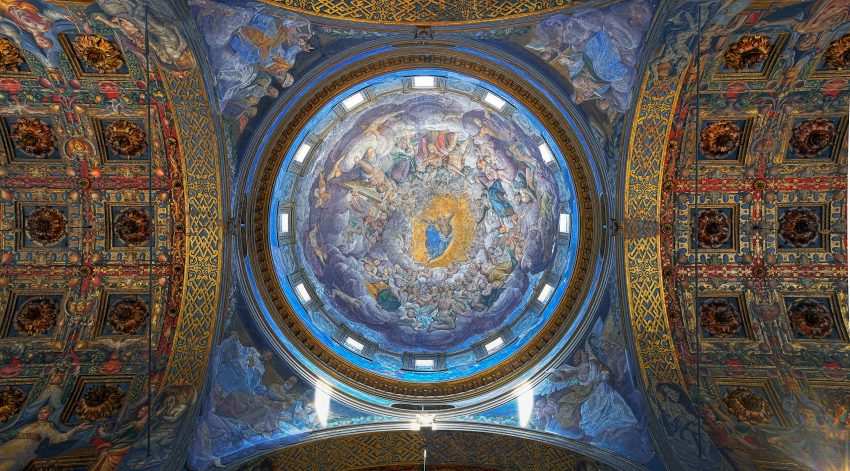
That image, and the need to protect it, eventually led to the construction of the grand sanctuary you see today. A “fence” or steccata was erected around the original oratory to regulate the flow of pilgrims, and the Madonna became known as Madonna della Steccata. As devotion increased and the modest structure could no longer cope, the congregation resolved in 1521 to build a fitting basilica around their cherished image. Inside, the decoration continued across the 16th and 17th centuries, with masters of the Parma Renaissance leaving their mark: Parmigianino's last great work in the arch above the high altar, Michelangelo Anselmi's Coronation from 1540, Bernardino Gatti's dome from 1560, and richly carved tombs and sacristy fittings that make this one of the top attractions in Parma for anyone interested in sacred art.
Table of Contents
- History and Significance of Basilica Santa Maria della Steccata
- Things to See and Do in the Basilica Santa Maria della Steccata
- How to Get to the Basilica Santa Maria della Steccata
- Practical Tips on Visiting the Basilica Santa Maria della Steccata
- Where to Stay close to the Basilica Santa Maria della Steccata
- Is the Basilica Santa Maria della Steccata Worth Visiting?
- FAQs for Visiting Basilica Santa Maria della Steccata
- Nearby Attractions to the Basilica Santa Maria della Steccata
History and Significance of Basilica Santa Maria della Steccata
The story of Santa Maria della Steccata begins not with grand architecture, but with a simple devotional image. In the late 1300s, a painting of a nursing Madonna appeared on the façade of a small oratory on this site. The tenderness of the subject and its placement in a busy part of Parma quickly turned it into an object of intense local veneration. To control the crowds and protect the image, the area in front was enclosed with a wooden fence or steccata, from which the Madonna and later the entire sanctuary took their name.
By the early 16th century, the modest oratory no longer matched the scale of popular devotion. In 1521, the decision was taken to erect a new, architecturally ambitious church that would both honour the Madonna and affirm Parma’s place in the broader Renaissance world. The project, attributed in execution to Bernardino and Giovanni Francesco Zaccagni, drew on a Bramante-inspired Greek cross plan, with four equal arms around a central space, emphasising balance and centrality. The construction proceeded until 1539, producing a building whose proportions and clarity of layout feel distinctly “modern” compared with older, longitudinal churches.
In the later 17th century, the basilica’s interior and exterior details were enriched further. Mauro Oddi designed ornamental elements and the broad balustrade that runs around the arms of the cross, softening the geometry with elegant curves and sculptural accents. Over time, the church also became associated with the Constantinian Order of Saint George, a knightly order tied to imperial traditions. Today, access from the basilica to the Constantinian Museum allows visitors to explore a trove of art and historical objects relating to this order, reinforcing the basilica’s role as both a living sanctuary and a custodian of Parma’s religious and artistic heritage.
Things to See and Do in the Basilica Santa Maria della Steccata
Once inside the basilica, let your eyes adjust to the light and take in the Greek cross plan from the central space. Stand beneath the dome and turn slowly, noticing how the arms of the cross extend symmetrically in four directions, each framed by arches and the ornate balustrade designed by Mauro Oddi. The proportions feel intimate yet monumental, a hallmark of Renaissance central-plan design. Look up to appreciate Bernardino Gatti’s work on the dome from 1560, where painted figures and architectural illusion extend the vertical space above you.
Above the main altar, seek out Parmigianino’s final great work, The Wise Virgins and the Foolish Virgins, painted in the arch and still glowing with an energy that belies its age. The contrast between the prepared, lamp-bearing wise virgins and the unready foolish ones is both a theological lesson and a demonstration of the artist’s ability to orchestrate movement, gesture and light. Near the entrance, do not miss the two organ doors, also painted by Parmigianino, where his refined draughtsmanship and delicate colour sense turn functional elements into works of art.
Continue your exploration by looking for Michelangelo Anselmi's Coronation from 1540, which reinforces the basilica's Marian focus with a sophisticated composition, and then spend time examining the tomb sculptures and the Noble Sacristy created in 1665 by GB Mascheroni and Carlo Rottini. These later Baroque elements bring a different texture to the interior, adding carved wood, marble and decorative detail that still harmonise with the underlying Renaissance structure. Before you leave, follow the route to the Constantinian Museum, where artefacts and artworks linked to the Knightly Order of Emperor Constantine expand the story of the basilica beyond its walls, connecting it to broader currents of European religious and dynastic history. This spot is a highlight of any walking tour of Parma that focuses on the city's sacred art and noble traditions.
How to Get to the Basilica Santa Maria della Steccata
Basilica Santa Maria della Steccata stands in Parma's historic centre, within easy walking distance of major squares and other sights once you are in the city. Parma itself has a small airport and can also be reached from larger airports like Bologna or Milan, followed by regional train, coach or rental car into the city. For the best deals and a seamless booking experience, check out these flights to Parma on Booking.com. From your arrival point, local buses or taxis will bring you close to the centro storico, from where you can walk through the streets to the basilica.
If you are travelling by train, Parma lies on key rail routes linking Milan, Bologna and other northern Italian cities.Use Omnio to easily compare schedules, book train tickets, and find the best prices all in one place for a hassle-free journey across Italy. From the railway station, it takes around 15-20 minutes on foot to reach the historic centre; simply follow signs towards the main squares and ask locally for directions to Santa Maria della Steccata, which is well known to residents.
For those arriving by car, use the A1 motorway or connecting regional roads to reach Parma, then follow signs for the centre and park in one of the public car parks on the edge of the historic zone.If you are looking to rent a car in Italy I recommend having a look at Discover Cars, first, as they compare prices and review multiple car rental agencies for you. From there, it is an easy walk into the old streets and towards the basilica, which you can combine with visits to the cathedral, baptistery and Pilotta Palace on the same outing.
Practical Tips on Visiting the Basilica Santa Maria della Steccata
- Suggested tips: Combine your visit with nearby landmarks such as the cathedral, baptistery and Pilotta Palace for a full picture of Parma's artistic and religious heritage in one compact area.
- Best time to visit: Late morning or mid-afternoon usually offers a calm atmosphere and good natural light to appreciate the dome, paintings and architectural details.
- Entrance fee: Free
- Opening hours: Daily from 7.30 to 12.00 and from 15.00 to 18.30. Functions from Monday to Friday at 8.00, 9.00, 10.00, 16.30 (except July and August); Saturday at 8.00, 9.00, 10.00, 16.30; Sunday at 8.00, 9.30, 11.00, 16.30.
- Official website: http://www.santuari.it/steccata
- How long to spend: Plan 45-60 minutes to see the basilica’s interior, focus on key artworks and, if you choose, visit the Constantinian Museum.
- Accessibility: The basilica is centrally located with generally level access, though some thresholds or steps may remain; visitors with reduced mobility should check current access arrangements.
- Facilities: Expect only basic facilities within or next to the church; cafés, restaurants and shops are plentiful in the surrounding streets of the historic centre.
- Photography tip: Capture wide shots from beneath the dome to show the Greek cross plan and balustrade, then zoom in on Parmigianino’s works above the main altar and on the organ doors, respecting any photography restrictions.
- Guided tours: Consider a guided visit to learn more about the iconography of the frescoes, the Constantinian Order connections and the basilica’s place in Parma’s Renaissance story.
- Nearby food options: Use your visit as a starting point for sampling Parma’s renowned cuisine in nearby trattorias and cafés, many of which are only a short walk from the basilica.
Where to Stay close to the Basilica Santa Maria della Steccata
Staying in Parma's historic centre makes it easy to visit Basilica Santa Maria della Steccata alongside the city's other major sights. A refined option within a comfortable walk of the basilica and Piazza Duomo is Grand Hotel de la Ville Parma, which offers modern comforts and straightforward access to the old town. For a more historic atmosphere close to the cathedral and baptistery, Palazzo Dalla Rosa Prati places you right on the main square, with Santa Maria della Steccata only a pleasant stroll away. If you prefer a smaller, characterful base on traditional streets, Hotel Button gives you easy walking access to the basilica, nearby churches and Parma’s best dining and shopping areas.
Is the Basilica Santa Maria della Steccata Worth Visiting?
Basilica Santa Maria della Steccata is very much worth visiting, particularly if you are interested in Renaissance architecture, Marian devotion or the art of the Parma school. Its Greek cross plan and elegant balustrades create a harmonious setting for an exceptional group of works by Parmigianino, Anselmi, Gatti and others, while the story of the nursing Madonna and the steccata fence anchors the building in popular faith rather than abstract theory. Add the Constantinian Museum and the basilica's central location, and you have a sanctuary that rewards both quick visits and longer, more reflective explorations.
What Other Travellers Say...

Basilica di Santa Maria della Steccata, on Str. Giuseppe Garibaldi in Parma, is a Greek-cross–plan Renaissance church whose gilded, colorful interior, frescoed ceilings (including works attributed to Parmigianino) and marble details create a calm, reverent atmosphere; visitors praise the intricate paintings, sculptures and lighting, note a royal crypt and a Nursing Madonna enshrined within, and recommend visiting early or timing your stop to avoid tour crowds—admission may include access to a nearby museum.


FAQs for Visiting Basilica Santa Maria della Steccata
Nearby Attractions to the Basilica Santa Maria della Steccata
- Cattedrale di Parma: Romanesque cathedral with Correggio's Assumption of the Virgin in the dome, forming the spiritual heart of the city.
- Baptistery of Parma: Pink Verona marble baptistery beside the cathedral, renowned for its medieval sculpture, zodiac symbols and richly decorated interior.
- Pilotta Palace: Monumental complex housing the National Gallery, Farnese Theatre, Archaeological Museum and Bodoni Museum, showcasing centuries of art and history.
- Regio Theatre: Neoclassical opera house famed for Verdi performances and a lavish white-and-gold auditorium.
- Parco Ducale: Elegant historic park across the river, offering tree-lined avenues and lakeside views, ideal for a relaxing walk after visiting the city's churches and museums.
The Basilica Santa Maria della Steccata appears in our Complete Guide to Visiting Parma!

Moira & Andy
Hey! We're Moira & Andy. From hiking the Camino to trips around Europe in Bert our campervan — we've been traveling together since retirement in 2020!
This website uses affiliate links which may earn a commission at no additional cost to you!
Planning Your Visit
Daily from 7.30 to 12.00 and from 15.00 to 18.30. Functions from Monday to Friday at 8.00, 9.00, 10.00, 16.30 (except July and August); Saturday at 8.00, 9.00, 10.00, 16.30; Sunday at 8.00, 9.30, 11.00, 16.30.
Free
Nearby Attractions
- Regio Theatre (0.1) km
Historic Building and Theatre - Piazza Garibaldi (0.1) km
Square - Baptistery of Parma (0.2) km
Baptistery - Pilotta Palace (0.3) km
Museum and Palace - Diocesan Museum (0.3) km
Museum - Chamber of St. Paul and Cell of St. Catherine (0.3) km
Monastery - Teatro Farnese (0.3) km
Historic Building and Theatre - Cattedrale di Parma (0.3) km
Cathedral - Monastic Complex of San Giovanni Evangelista (0.4) km
Monastery - Parco Ducale (0.7) km
Park