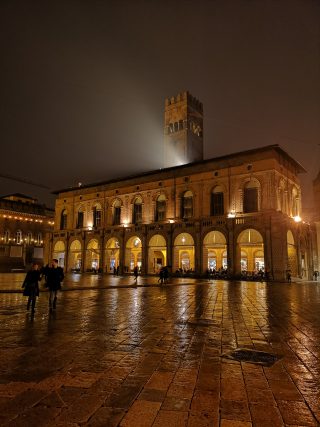
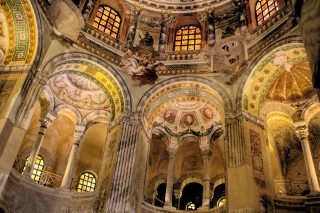
Basilica of Sant’Apollinare in Classe, Ravenna
Basilica in Ravenna

A short trip south of Ravenna's historic centre, the Basilica of Sant'Apollinare in Classe rises from open ground near the small town of Classe, with a distinctive cylindrical bell tower that's visible long before you reach the entrance. It's one of the city's UNESCO monuments, and the setting feels intentionally calm and spacious, like the basilica has been given room to breathe away from the crowds.
Inside, the experience is all about scale, light, and symbolism: a long nave lined with ancient sarcophagi, and an apse that glows with some of the most celebrated mosaics in Italy. For travellers building a UNESCO-focused itinerary, this is one of the top sights in Ravenna, and it's often visited on tours around Ravenna when the route expands beyond the central cluster of monuments.
Table of Contents
- History and Significance of the Basilica of Sant’Apollinare in Classe
- Things to See and Do in the Basilica of Sant’Apollinare in Classe
- How to Get to the Basilica of Sant’Apollinare in Classe
- Practical Tips on Visiting the Basilica of Sant’Apollinare in Classe
- Where to Stay close to the Basilica of Sant’Apollinare in Classe
- Is the Basilica of Sant’Apollinare in Classe Worth Visiting?
- FAQs for Visiting Basilica of Sant’Apollinare in Classe
- For Different Travelers
- Nearby Attractions to the Basilica of Sant’Apollinare in Classe
History and Significance of the Basilica of Sant’Apollinare in Classe
Sant'Apollinare in Classe was built to honour Saint Apollinaris, regarded as the founder and first bishop of the Church of Ravenna. The site itself was already sacred ground: the basilica was constructed over a cemetery area used from roughly the late 2nd to early 3rd century, and tradition links the saint's burial to this very place, giving the building a powerful sense of continuity between memory, worship, and landscape.
The basilica was funded by Giuliano Argentario on behalf of Bishop Ursicino in the mid-6th century, and it was consecrated in 549 under Archbishop Maximian. Even if you arrive knowing nothing about the politics of the era, the building's sheer presence communicates ambition: the monumental façade and the long, solemn interior reflect a period when Ravenna stood at the heart of early Christian power and artistic innovation.
Over the centuries the basilica suffered losses, including damage and the disappearance of parts of its original external features, but what remains is exceptionally coherent. Its importance today rests not only on its age and UNESCO status, but on how clearly it preserves the spiritual and visual language of early Christianity-especially through the apse mosaics that blend theology, nature, and civic identity into a single, unified image.
Things to See and Do in the Basilica of Sant’Apollinare in Classe
Start outside by taking in the basilica's strong brick geometry and the bell tower. The approach sets the tone: the space feels open, almost rural compared with central Ravenna, and that contrast is part of what makes the visit rewarding. Walk around the exterior briefly to appreciate how the building's simple materials create a monumental effect.
Inside, let your eyes travel down the nave first. The length and proportion create a slow, processional feeling, and the marble sarcophagi along the aisles underline the basilica’s long relationship with burial, memory, and status. Even without reading every label, you can sense how this was a place where art and devotion were meant to be experienced at human walking pace.
The apse is the defining masterpiece. Look for Saint Apollinaris standing with arms raised in prayer, set within a vivid green landscape, and the twelve white lambs symbolising the apostles. Above, the imagery lifts upward into a jewel-like theology of sky and salvation: a gemmed cross against a deep blue field of stars, the Alpha and Omega, and figures that connect the scene to the Transfiguration narrative. Spend time here-this is the moment when the basilica’s quiet scale and the mosaics’ intensity fully click into place.
How to Get to the Basilica of Sant’Apollinare in Classe
Most travellers arrive in the region via Bologna Guglielmo Marconi Airport, then continue to Ravenna by onward ground transport. For the best deals and a seamless booking experience, check out these flights to Ravenna on Booking.com.
Ravenna is easy to reach by train, typically via Bologna, and from Ravenna station you can take a local bus, taxi, or a short onward connection toward Classe to reach the basilica area. Use Omnio to easily compare schedules, book train tickets, and find the best prices all in one place for a hassle-free journey across Italy.
If you're travelling by bus, look for services linking Ravenna with Classe and the coastal direction, then walk the final stretch through the quieter outskirts. If you're driving, it's a simple route south from Ravenna and generally easier than navigating the tight streets of the historic centre. If you are looking to rent a car in Italy I recommend having a look at Discover Cars, first, as they compare prices and review multiple car rental agencies for you.
Practical Tips on Visiting the Basilica of Sant’Apollinare in Classe
- Suggested tips: Pair it with central Ravenna monuments, but treat this visit as a slower, quieter counterpoint where you can linger with the mosaics.
- Best time to visit: Morning for soft light and fewer tour groups, or mid-afternoon for a calm, unhurried atmosphere.
- Entrance fee: Adults: €5.00
- Opening hours: From Monday to Saturday: 8.30 am – 7.30 pm Sundays and holidays: 1.30 pm – 7.30 pm Last admission: 30 minutes before closing time.
- Official website: https://www.musei.emiliaromagna.beniculturali.it/musei/sant-apollinare-in-classe
- How long to spend: 45-90 minutes, especially if you want time to study the apse mosaics without rushing.
- Accessibility: The setting is generally straightforward, but historic thresholds and interior surfaces can be uneven; check current step-free access arrangements if needed.
- Facilities: Limited on-site amenities; plan toilets, cafés, and longer breaks in Ravenna or Classe before or after your visit.
- Photography tip: Bring a steady hand for low light, avoid flash, and take one wide shot from the nave that frames the apse in context.
- Guided tours: A guide is particularly valuable here because the apse iconography is dense, and a good explanation makes the symbolism far more readable.
- Nearby food options: For a quick bite, look around Classe and the Ravenna outskirts; for the best choice, return to the historic centre where the selection is broader.
Where to Stay close to the Basilica of Sant’Apollinare in Classe
For the most convenient base, stay in central Ravenna and make day trips out to Classe, since you'll also be close to the city's main UNESCO monuments and evening restaurants. Palazzo Bezzi Hotel works well if you want a stylish stay with easy walking access to the centre. NH Ravenna is a practical option near the station, ideal if you’re arriving by rail and doing day trips. If you prefer a smaller, characterful place for a quieter feel while staying central, Hotel Bisanzio is a dependable choice for exploring on foot.
Is the Basilica of Sant’Apollinare in Classe Worth Visiting?
Yes-especially if you want to see Ravenna beyond the compact centre and experience a basilica that feels monumental in scale but peaceful in mood. The mosaics alone justify the trip, and the iconography is different from the city-centre churches in a way that deepens your understanding of Ravenna's early Christian world.
It’s also worth visiting because the setting changes how you experience the art. In the centre, monuments can feel like a sequence of highlights; here, the open surroundings and long interior invite a slower pace, making the apse mosaics feel less like a checklist item and more like a destination.
FAQs for Visiting Basilica of Sant’Apollinare in Classe
What Other Travellers Say...

Basilica di Sant'Apollinare in Classe sits just outside Ravenna in Classe and greets visitors with a wide nave lined by Proconnesian marble columns and a marbled interior lavishly decorated with colorful Byzantine mosaics; the apse is particularly striking with green and gold mosaics depicting a starry sky, a golden cross and Saint Apollinaris among lambs. The site includes carved sarcophagi along the aisles, a tranquil lawn with modern sculptures nearby, and simple overall architecture that highlights the mosaics. Practical notes from visitors mention easy bus and train connections, free parking across the road, and value in a combined ticket covering nearby museums.


For Different Travelers
Families with Kids
For families, this visit works best when you turn it into a visual scavenger hunt rather than a long history lesson. Encourage kids to spot the lambs, the birds, the stars, and the cross, and you’ll keep attention high without needing to explain every symbol.
Plan for a brisker pace through the nave and a focused pause at the apse, then balance the day with something more open-air afterward. The surrounding area makes it easy to reset with a short walk before you head back to Ravenna.
Couples & Romantic Getaways
For couples, this basilica feels like a calm, spacious escape from the busier city centre. The long nave and luminous apse create a quietly dramatic atmosphere, and it’s an ideal place to visit when you want something meaningful but unhurried.
Make it part of a slow day: start with a few central monuments, come here when crowds peak elsewhere, then return to Ravenna for aperitivo and dinner. The contrast between open surroundings and jewel-like mosaics tends to be especially memorable together.
Budget Travelers
This is a strong value stop because it adds a major UNESCO monument without requiring an expensive plan. Use public transport where possible, and structure your day so you’re not doubling back unnecessarily between the centre and the outskirts.
If you're managing costs, consider combining tickets where available, and pack your visit into a broader walking-and-sightseeing day in Ravenna. The basilica delivers a big cultural payoff for relatively little time and effort.
Nearby Attractions to the Basilica of Sant’Apollinare in Classe
- Basilica of San Vitale: A landmark church in central Ravenna with world-famous mosaics and a powerful imperial-era atmosphere.
- Mausoleum of Galla Placidia: A small, dim interior that opens into a glowing starry mosaic dome, one of Ravenna's most beloved sights.
- Basilica of Sant'Apollinare Nuovo: Known for its long mosaic processions that read like a visual narrative across the nave walls.
- Neonian Baptistery: A compact baptistery with an exceptional dome mosaic that captures the artistry of Ravenna's early Christian period.
- Dante's Tomb: A quiet, moving stop that connects Ravenna's cultural identity to its most famous literary figure.
The Basilica of Sant’Apollinare in Classe appears in our Complete Guide to Visiting Ravenna!

Moira & Andy
Hey! We're Moira & Andy. From hiking the Camino to trips around Europe in Bert our campervan — we've been traveling together since retirement in 2020!
This website uses affiliate links which may earn a commission at no additional cost to you!
Planning Your Visit
From Monday to Saturday: 8.30 am - 7.30 pm
Sundays and holidays: 1.30 pm - 7.30 pm
Last admission: 30 minutes before closing time.
Adults: €5.00
Nearby Attractions
- MAR – Ravenna Art Museum (4.3) km
Historic Building and Museum - Basilica of Sant’Apollinare Nuovo (4.6) km
Basilica - Basilica of San Francesco (4.7) km
Basilica - Dante’s Tomb (4.7) km
Tomb - Museo Dante (4.7) km
Historic Building and Museum - Basilica di San Giovanni Evangelista (4.7) km
Basilica - Archbishop's Museum (4.8) km
Museum - Archbishop's Chapel of St. Andrew (4.8) km
Church - Neonian Baptistery (4.8) km
Baptistery - Ravenna Cathedral (4.8) km
Cathedral