Basilica of San Vitale, Ravenna
Basilica in Ravenna
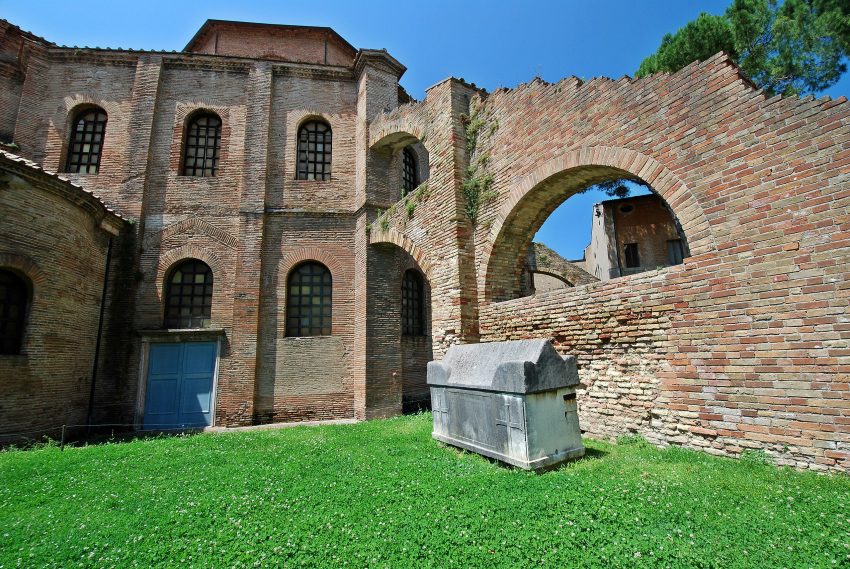
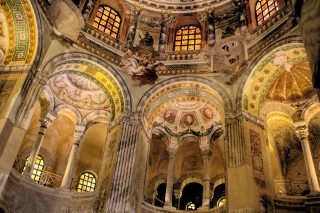
Right in the heart of Ravenna's UNESCO zone, the Basilica of San Vitale is the place where the city's reputation for mosaics becomes unmistakably real. From the outside it's an elegant brick monument with an unusual shape, but once you step inside the space opens up into a luminous world of marble, gold, and jewel-like colour that feels almost impossible to absorb in a single glance.
If you want one site that captures the city's artistic power, this is one of the top attractions in Ravenna, and it's a highlight of any walking tour of Ravenna because it sits close to several other major landmarks. The best approach is to slow down, let your eyes adjust, and allow the details to reveal themselves in layers rather than trying to “see everything” at once.
Table of Contents
- History and Significance of the Basilica of San Vitale
- Things to See and Do in the Basilica of San Vitale
- How to Get to the Basilica of San Vitale
- Practical Tips on Visiting the Basilica of San Vitale
- Where to Stay close to the Basilica of San Vitale
- Is the Basilica of San Vitale Worth Visiting?
- FAQs for Visiting Basilica of San Vitale
- For Different Travelers
- Nearby Attractions to the Basilica of San Vitale
History and Significance of the Basilica of San Vitale
San Vitale was commissioned in the early 6th century, a period when Ravenna was a political and cultural hinge between late Roman traditions and the emerging Byzantine world. The project began under Bishop Ecclesius and was supported by substantial private patronage, then completed and consecrated a couple of decades later, by which time Ravenna's fortunes and imperial connections had shifted. That long timeline matters because the building is not just a church; it's a statement about power, faith, and identity in a city that sat at the centre of Mediterranean politics.
The basilica is closely tied to the cult of Saint Vitale, a Christian martyr, and tradition associates the location with earlier sacred structures and relics connected to the saint. Whether you come for the history or the art, the significance is clear once you understand that this was never meant to be a purely local church. It was designed to project authority and theological certainty, using architecture and image-making as a kind of spiritual and political language.
What makes San Vitale globally important is how fully it preserves that language. The mosaics are not decorative extras; they are the building’s core message, turning scripture, imperial rule, and liturgy into a single visual programme that still reads as bold and deliberate today.
Things to See and Do in the Basilica of San Vitale
Before you focus on the mosaics, take a moment to notice the architecture. San Vitale does not follow the typical long basilica layout; instead, it unfolds as an octagonal, centrally focused space with surrounding ambulatory levels and a gallery above. That unusual plan changes how you move and look: your attention is pulled upward and inward, and the building feels more like a carefully staged experience than a simple hall.
The essential stop is the presbytery and apse, where the most famous mosaics sit. Look for the imperial panels associated with Justinian and his court, and the counterpart imagery that frames authority in religious terms. The figures stand against radiant backgrounds, and the contrast between worldly detail and near-abstract gold creates a tension that feels both human and otherworldly.
Beyond the “headline” scenes, linger with the Old and New Testament imagery in the presbytery, where narrative episodes and symbolic motifs build upward across the surfaces. Pay attention to how light from the windows shifts the colours on different marbles and tesserae; the effect changes minute by minute, and it’s part of why the interior feels alive rather than static.
Finally, look down near the presbytery area for the circular marble labyrinth. It’s easy to miss if you’re only scanning walls and ceilings, but it adds a quiet layer of meaning, inviting a reflection on spiritual journey and renewal that complements the grand imagery above.
How to Get to the Basilica of San Vitale
Most visitors reach Ravenna via Bologna Guglielmo Marconi Airport, with additional options depending on routes and season such as Rimini and Forlì, then continue onward to Ravenna by ground transport. For the best deals and a seamless booking experience, check out these flights to Ravenna on Booking.com.
Ravenna is well connected by rail, typically via Bologna, and from Ravenna station you can walk into the historic centre or take a short bus or taxi ride to the San Vitale area. Use Omnio to easily compare schedules, book train tickets, and find the best prices all in one place for a hassle-free journey across Italy.
Local buses and taxis are convenient if you want to save walking time, but the centre is compact and enjoyable on foot if you’re already staying nearby. If you’re driving, plan to park outside the most restricted central streets and finish the last stretch on foot. If you are looking to rent a car in Italy I recommend having a look at Discover Cars, first, as they compare prices and review multiple car rental agencies for you.
Practical Tips on Visiting the Basilica of San Vitale
- Suggested tips: Arrive early, visit the apse mosaics first while it’s quiet, then do a second slow loop to catch details you missed.
- Best time to visit: Morning for fewer people and steadier light, or later afternoon when the interior can feel especially atmospheric.
- Entrance fee: Adults: € 10.50
- Opening hours: Every day: 9 am – 7 pm
- Official website: https://www.ravennamosaici.it/
- How long to spend: 60-90 minutes if you want time to absorb the mosaics without rushing, longer if you’re visiting multiple nearby sites in one block.
- Accessibility: Expect historic thresholds and potentially uneven surfaces; check current access arrangements if you need step-free routes.
- Facilities: Limited on-site facilities; cafés, toilets, and services are easiest to find in the surrounding central streets.
- Photography tip: Avoid flash, hold steady in lower light, and take one wide shot that captures the apse in context before attempting detail shots.
- Guided tours: A guided visit is valuable here because the iconography is layered, and a good explanation makes the imperial and biblical imagery far more readable.
- Nearby food options: The centre around San Vitale has plenty of choices for lunch and aperitivo, making it easy to plan this visit between meals.
Where to Stay close to the Basilica of San Vitale
To stay close enough to visit early and return easily in the evening, base yourself in central Ravenna, where most UNESCO monuments are within a comfortable walk. Residence La Reunion is a strong option if you like the flexibility of apartment-style space right in the centre. For a classic, straightforward city stay with an excellent location, Hotel Centrale Byron puts you close to the main streets and sights. If you prefer a small, personal base with local character, Casa Masoli B&B is a popular choice for walking everywhere without needing transport.
Is the Basilica of San Vitale Worth Visiting?
Yes, and it's the closest thing Ravenna has to a single “essential” monument if you have limited time. The mosaics are not just impressive; they are among the most influential surviving examples of early Christian and Byzantine visual culture, and they still have the power to stop you in your tracks.
It’s also worth visiting because the experience is multi-sensory in a quiet way: the scale of the space, the rhythm of the architecture, and the shifting light across gold and marble combine into something you can’t replicate through photos. Even travellers who think they’re “not museum people” often find San Vitale surprisingly moving.
FAQs for Visiting Basilica of San Vitale
What Other Travellers Say...

Basilica of San Vitale on Via San Vitale 17 is an octagonal, domed church famed for its richly colored Byzantine mosaics; inside a concentric plan with ambulatory and raised gallery frames glittering mosaics and gold-faced apse scenes, including imperial processions and portraits, while book-matched marble and a luminous dome create a serene, otherworldly atmosphere that many visitors call a must-see in Ravenna.


For Different Travelers
Families with Kids
San Vitale can work very well for families if you treat it as a short, high-impact visit rather than a long lesson. Pick a few visual anchors to keep kids engaged, such as the bright gold backgrounds, the grand figures in the apse, and the idea of the building’s unusual shape. A brief second loop often helps, because children notice different details once the initial “wow” wears off.
To keep the day balanced, pair the basilica with something more open-air afterward, like a walk through the centre or a stop for gelato. The monument cluster nearby makes it easy to create a route that alternates between indoor marvels and outdoor breathing space.
Couples & Romantic Getaways
For couples, San Vitale is one of those places that naturally slows you down. The most enjoyable visit is often late morning or later afternoon, when you can linger without feeling pressed by crowds. Take time to stand quietly in the central space, then move closer to the apse to look at how the gold and blues change with the light.
It also pairs beautifully with a relaxed day plan: San Vitale and nearby monuments in the afternoon, an aperitivo in the centre, and dinner in the evening streets. The experience feels both culturally rich and easy to fit into a romantic itinerary.
Budget Travelers
San Vitale is a strong value visit because it delivers a world-class interior without requiring complicated transport or a long day trip. Keep costs down by staying central and walking between sites, and consider combined tickets if they offer better overall value for the UNESCO cluster you want to see.
If you’re prioritising, make this one of your paid “musts” and balance it with free time wandering Ravenna’s streets, piazzas, and quieter corners. The city rewards slow exploration, and San Vitale gives your wandering a powerful focal point.
Nearby Attractions to the Basilica of San Vitale
- Mausoleum of Galla Placidia: A small, dim interior that opens into a starry mosaic dome and an unforgettable glow.
- Domus dei Tappeti di Pietra: An underground archaeological site with remarkable floor mosaics that add a different angle to Ravenna's artistry.
- National Museum of Ravenna: A compact museum with collections that help connect the monuments to the city's wider history.
- Basilica of Sant'Apollinare Nuovo: A central basilica known for long mosaic processions that read like a visual narrative.
- Dante's Tomb: A quiet landmark that ties Ravenna's identity to its most famous literary figure.
The Basilica of San Vitale appears in our Complete Guide to Visiting Ravenna!

Moira & Andy
Hey! We're Moira & Andy. From hiking the Camino to trips around Europe in Bert our campervan — we've been traveling together since retirement in 2020!
This website uses affiliate links which may earn a commission at no additional cost to you!
Planning Your Visit
Every day: 9 am - 7 pm
Adults: € 10.50
Nearby Attractions
- National Museum of Ravenna (0.0) km
Historic Building and Museum - Mausoleum of Galla Placidia (0.1) km
Mausoleum - Domus dei Tappeti di Pietra (0.2) km
Historic Site and Museum - Piazza del Popolo (0.4) km
Square - Arian Baptistery (0.5) km
Baptistery - Neonian Baptistery (0.6) km
Baptistery - Ravenna Cathedral (0.6) km
Cathedral - Museo Dante (0.6) km
Historic Building and Museum - Archbishop's Museum (0.6) km
Museum - Dante’s Tomb (0.6) km
Tomb