Barcelona Roman Walls
City Walls and Roman Site in Barcelona
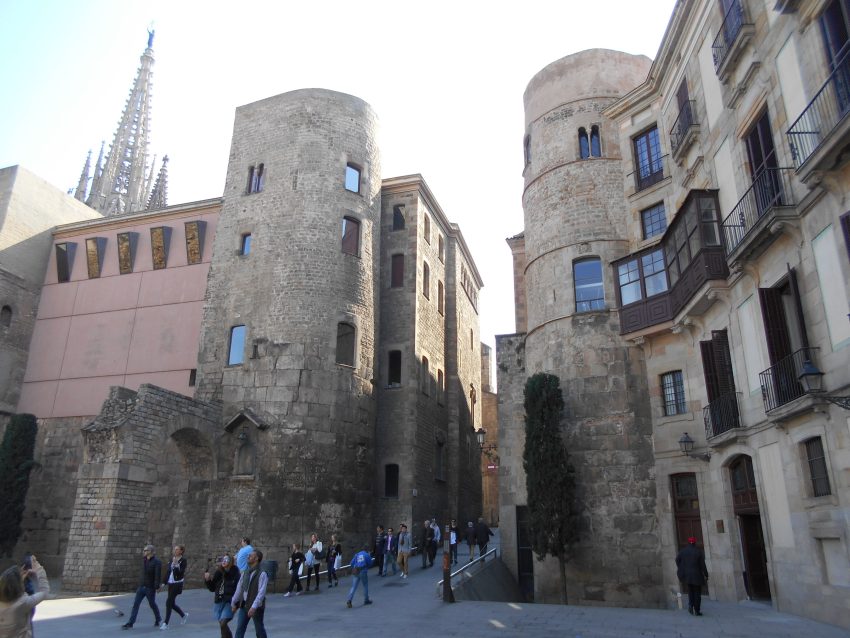
Barcelona's Roman Walls are one of those “hidden in plain sight” sights: huge stretches of ancient stonework threaded through the Barri Gòtic, sometimes standing proudly in open squares, sometimes stitched into later medieval buildings. You're essentially walking the outline of Barcino, the Roman city that became modern Barcelona's historic core.
They're also ideal for a self-guided walking tour because the best sections appear in a natural loop around the Cathedral area-easy to combine with the Gothic Quarter's lanes, small museums, and café stops. If you want one anchor sight that makes the Old City feel older, this is it.
Table of Contents
- History and Significance of the Barcelona Roman Walls
- Things to See and Do in the Barcelona Roman Walls
- How to Get to the Barcelona Roman Walls
- Practical Tips on Visiting the Barcelona Roman Walls
- Where to Stay Close to the Barcelona Roman Walls
- Is the Barcelona Roman Walls Worth Visiting?
- For Different Travelers
- FAQs for Visiting Barcelona Roman Walls
- Nearby Attractions to the Barcelona Roman Walls
History and Significance of the Barcelona Roman Walls
Barcelona began as the Roman colony of Barcino, and its first defenses evolved over time as the city's importance-and the threats around it-grew. The most substantial surviving walls date to the later Roman period, when fortifications were strengthened with thicker masonry and more towers, creating a serious defensive ring around the heart of the settlement.
What makes the walls especially interesting today is the way later Barcelona built on top of them. Medieval chapels, civic buildings, and Gothic-era structures often reuse the Roman footprint, so you can see (and feel) the city's layers in one glance: Roman stone, medieval additions, and modern street life all sharing the same line.
Things to See and Do in the Barcelona Roman Walls
Start at Plaça Nova, beside Barcelona Cathedral, where the preserved towers make an immediate impression and give you a clear “gateway” moment into old Barcino. From there, follow the wall line through the Gothic Quarter streets, watching for sections that appear unexpectedly between buildings.
One of the most dramatic stretches is around Plaça de Ramon Berenguer el Gran, where the wall reads like a backdrop to medieval Barcelona-massive stonework with later elements perched above it. It's a good spot to pause for photos and to appreciate how the defensive line shaped the neighborhood's layout.
To round out the experience, treat the walls as a route rather than a single stop: pick 2-3 major fragments, then connect them with small detours for hidden courtyards, quiet alleys, and short breaks. If you want more context beyond the outdoor fragments, pair the walk with a MUHBA Roman site nearby for an “above ground + below ground” day.
How to Get to the Barcelona Roman Walls
Most visitors start near Plaça Nova (next to Barcelona Cathedral) because it's central and the wall fragments are immediately visible from the street. The easiest approach is on foot from anywhere in the Gothic Quarter, especially from La Rambla or Plaça de Catalunya.
Barcelona-El Prat Airport (BCN) is the nearest airport, and the simplest route is to head into the city centre and then walk or take the Metro to the Gothic Quarter. For the best deals and a seamless booking experience, check out these flights to Barcelona on Booking.com.
Barcelona Sants is the main rail hub, and from there you can take the Metro/taxi into Ciutat Vella for an easy walk to Plaça Nova. Train schedules and bookings can be found on Omio.
Driving is rarely worth it in the old town due to restricted access, narrow lanes, and expensive parking-aim to arrive by Metro or on foot instead. If you are looking to rent a car in Spain I recommend having a look at Discover Cars, first, as they compare prices and review multiple car rental agencies for you.
Practical Tips on Visiting the Barcelona Roman Walls
- Entrance fee: Free
- Opening hours: 24 Hours
- Official website: https://www.meet.barcelona/en/visit-and-love-it/points-interest-city/la-muralla-romana-99400387424
- Best time to visit: Early morning for quieter lanes and cleaner sightlines, or late afternoon for warmer light on the stone.
- How long to spend: 30-60 minutes for the main highlights, or 1.5-2 hours if you treat it as a connected walking loop with stops.
- Accessibility: The walls themselves are viewed from streets and squares, but the Gothic Quarter has uneven paving and occasional steps; plan a flatter route if mobility is limited.
- Facilities: No dedicated visitor centre for the outdoor fragments, so use nearby cafés, public restrooms in larger attractions, and museums for breaks.
Where to Stay Close to the Barcelona Roman Walls
For a culture-heavy itinerary, base yourself in or right beside the Gothic Quarter/El Born so you can walk to the walls early and late when the area feels most atmospheric; if your trip prioritizes transport links and easy citywide access, stay closer to Plaça de Catalunya or along a central Metro line and commute into Ciutat Vella.
If you want to sleep almost on top of the old town, Hotel Neri Relais & Châteaux is a refined boutique choice tucked into the Gothic Quarter’s quieter lanes. For a reliable, well-located stay near the Cathedral with a classic “walk everywhere” advantage, Catalonia Catedral puts you steps from multiple wall fragments. If you prefer a modern hotel feel with a prime central position for sightseeing loops, H10 Madison is close enough to dip in and out of the Gothic Quarter without the nightly noise of the busiest streets.
Is the Barcelona Roman Walls Worth Visiting?
Yes-especially because it’s free, central, and genuinely evocative. The best fragments make Barcelona’s Roman past feel tangible, and the “city built on itself” effect is one of the most memorable parts of wandering Ciutat Vella.
Honest pivot: if you prefer attractions with a curated, museum-style narrative (labels, guided flow, set entry points), the outdoor fragments can feel scattered and a bit “blink and you miss it.” In that case, you’ll get more satisfaction from pairing a quick look at the walls with a MUHBA Roman site where the context is clearer.
What Other Travellers Say...

Visitors describe the remaining section of Barcelona's Roman wall as a fascinating, well-preserved glimpse into the city's ancient past, especially given its location in the Gothic Quarter. The architecture is widely appreciated, and some note it's a calm spot to pause and take in the surroundings. A few reviews mention that only parts of the wall survive due to demolition in the 19th century, and suggest pairing the visit with the nearby MUHBA to see more of the remains.



For Different Travelers
Families with Kids
Treat the walls like a short “ancient treasure hunt” rather than a history lesson-pick two big fragments (Plaça Nova and Ramon Berenguer) and let kids spot towers, stones, and “defense features” along the way.
Keep the route stroller-friendly by sticking to wider streets and squares, and plan a snack stop nearby so the walk feels like a series of quick wins instead of one long march.
Couples & Romantic Getaways
Go early or after dinner for a calmer, moodier walk-stone textures and lamplight make the Roman fragments feel cinematic when the crowds thin out.
Pair it with a slow loop through the Gothic Quarter’s back lanes, a courtyard stop, and a nearby wine bar or tapas spot to turn the walls into a simple, memorable evening itinerary.
Budget Travelers
This is one of the best free “big history” experiences in central Barcelona-no ticket, no queue, and it slots between paid sights without padding your budget.
Build a low-cost day by combining the wall walk with free viewpoints, churches you can enter without a ticket, and a picnic-style lunch from a market or bakery.
FAQs for Visiting Barcelona Roman Walls
Getting There
Tickets & Entry
Visiting Experience
Tours, Context & Itineraries
Photography
Accessibility & Facilities
Nearby Attractions to the Barcelona Roman Walls
- Barcelona Cathedral: A Gothic landmark right beside major wall fragments, ideal as a combined stop.
- Plaça del Rei (MUHBA area): A historic square linked to Barcelona's layered past, with strong Roman-to-medieval context nearby.
- Plaça de Sant Jaume: The civic heart of the old city, surrounded by historic buildings and easy walking streets.
- El Call (Jewish Quarter): A maze of narrow lanes that adds another deep historical layer to the same neighborhood.
- Basilica of Santa Maria del Mar: A soaring Gothic church in El Born that pairs well with a Roman-to-medieval walking route.
The Barcelona Roman Walls appears in our Complete Guide to Visiting Barcelona!

Moira & Andy
Hey! We're Moira & Andy. From hiking the Camino to trips around Europe in Bert our campervan — we've been traveling together since retirement in 2020!
This website uses affiliate links which may earn a commission at no additional cost to you!
Planning Your Visit
24 Hours
Free
Nearby Attractions
- Palau Requesens (0.0) km
Arts Venue, Historic Building and Palace - Plaça de l'Àngel (0.0) km
Square - Plaça de Sant Just (0.1) km
Square - Plaça del Rei (0.1) km
Square - Capella de Santa Àgueda (0.1) km
Church, Historic Building and Museum - Temple d'August (0.1) km
Roman Site - Palau del Lloctinent (0.1) km
Archive, Historic Building and Palace - Plaça de Sant Jaume (0.1) km
Square - Plaça de Ramon Berenguer el Gran (0.2) km
Roman Site and Square - Palau de la Generalitat de Catalunya (0.2) km
Historic Building, Historic Site and Palace