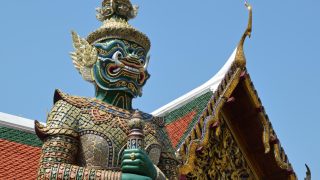
Bangkok Wat Suthat (Giant Swing)
Historic Site in Bangkok
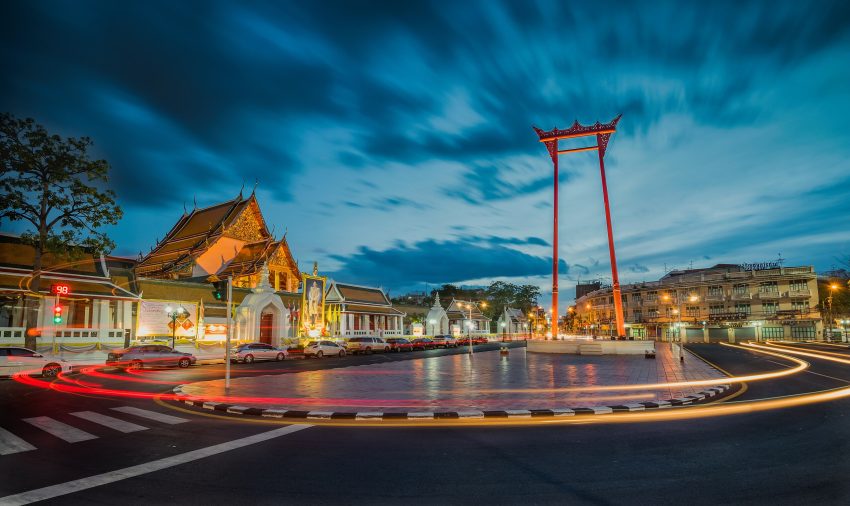
In the heart of Bangkok's Old City, towering against the skyline of the Phra Nakhon district, stands the Giant Swing-a vivid crimson structure that has become one of the top attractions in Bangkok. Located in front of Wat Suthat, this striking landmark once played a central role in an ancient Brahmanic ceremony, blending Hindu ritual with Thai royal tradition. Today, it remains one of the most photographed and revered symbols of Bangkok, admired for both its historical significance and architectural elegance.
A highlight of any walking tour of Bangkok, the Giant Swing is more than a monument-it's a living connection to the city's spiritual roots. Its bold red silhouette against the blue sky makes it an irresistible stop for anyone exploring Rattanakosin Island, the historic core of the Thai capital.
History and Significance of The Giant Swing
The Giant Swing was erected in 1784, just two years after King Rama I founded Bangkok as the capital of Siam. It was built at the request of a Brahmin named Kratai, who wished to preserve ancient Brahmanic rituals that honored the Hindu god Shiva. The swing became the focal point of the annual Triyampavai-Tripavai ceremony-one of twelve royal rituals performed according to the Thai lunar calendar.
During this ceremony, young men would swing high into the air to grab a bag of gold suspended from a tall bamboo pole, symbolizing the arrival of Shiva to earth and the bounty of a good harvest. However, due to repeated accidents and fatalities, the ritual was discontinued in the 1930s. The swing, though silent now, continues to symbolize Thailand’s spiritual diversity and the intertwining of Hindu and Buddhist traditions.
King Rama I authorized not only the swing's construction but also the establishment of three Brahmanic temples in Bangkok, underscoring the importance of these ancient rites in the capital's early days. Over time, the Giant Swing became an emblem of Thai identity-a symbol of faith, history, and the resilience of cultural traditions.
Things to See and Do at The Giant Swing
While the swing itself cannot be used today, it remains a stunning piece of craftsmanship and a magnet for photographers. The current version, standing about 21 meters tall, is made from strong teak wood painted in a rich red hue. Its dramatic silhouette makes it one of the must-see places in Bangkok, especially at sunset when it glows in the golden light.
Directly behind the Giant Swing stands Wat Suthat Thepwararam, one of Bangkok's most beautiful temples. Inside, visitors can admire the 25-foot-tall Phra Sri Sakyamuni Buddha statue, brought from Sukhothai, as well as exquisite murals depicting the last 24 lives of the Buddha. The temple's cloister is lined with over 150 Buddha images that once served as ballast in rice boats traveling from China.
In the early 20th century, the swing underwent several reconstructions due to natural wear and damage. The current version was completed in 2006 using carefully selected golden teak from Phrae province, ensuring that the structure would endure for future generations.
How to Get There
The Giant Swing is located in front of Wat Suthat on Bamrung Muang Road in the Phra Nakhon district, close to Ratchadamnoen Avenue. It's easily accessible from anywhere in central Bangkok. The nearest MRT station is Sam Yot, about a 10-minute walk away. For those exploring nearby attractions like the Grand Palace or Wat Pho, the swing is within comfortable walking distance. Taxis and tuk-tuks are also readily available, though walking allows visitors to take in the local atmosphere and street life.
Practical Tips on Visiting The Giant Swing
- Best time to visit The Giant Swing: Early morning or late afternoon for the best light and fewer crowds.
- Entrance fee in Thai Baht: Free.
- Opening hours: Accessible all day, though Wat Suthat is open from 8:00 AM to 5:00 PM.
- Official website: None; information available via the Tourism Authority of Thailand.
- How long to spend: 30-45 minutes, including a visit to Wat Suthat.
- Accessibility: Flat area with paved pathways; easy to navigate.
- Facilities: Restrooms available at Wat Suthat; shops and cafés nearby.
- Photography tip: Capture the swing with Wat Suthat in the background or during twilight when the red frame contrasts beautifully with the sky.
- Guided tours: Included in many Old City or Rattanakosin walking tours.
- Nearby food options: Street stalls around Bamrung Muang Road serve traditional Thai snacks and iced drinks.
Is The Giant Swing Worth Visiting?
Yes-without a doubt. The Giant Swing is one of the best places to visit in Bangkok for travelers seeking a glimpse into the city's spiritual past. It's not only an architectural landmark but also a monument to a once-vibrant ritual that shaped Bangkok's cultural identity. Whether you're touring temples or simply exploring Bangkok's historic center, this is a stop that ties together art, history, and faith in one striking symbol.
What Other Travellers Say...

Wat Suthat Thepwararam Ratchaworamahawihan, at 146 Thanon Bamrung Mueang in Bangkok, is a spacious, well‑maintained 19th‑century royal temple known for its 8 m bronze Buddha and the adjacent 20 m red teak Giant Swing; visitors note a peaceful, reflective atmosphere, impressive mural paintings inside the main ordination hall, shaded lawns and gardens, occasional chanting and festivals, free entry policies for locals with an entrance fee for foreigners, available shawls for women to cover up, and easy access on foot from nearby MRT stations.


FAQs for Visiting The Giant Swing
Nearby Attractions to The Giant Swing
- Wat Suthat - A grand temple housing the Phra Sri Sakyamuni Buddha and intricate murals.
- Wat Ratchabophit - A fusion of Thai and European design, built under King Rama V.
- Sanam Luang - The royal ceremonial field surrounded by historic buildings.
- The Grand Palace - The heart of Thai royalty and home to the Temple of the Emerald Buddha.
- The National Museum Bangkok - A fascinating collection of art and artifacts tracing Thailand's history.
The Bangkok Wat Suthat (Giant Swing) appears in our Complete Guide to Visiting Bangkok!

Moira & Andy
Hey! We're Moira & Andy. From hiking the Camino to trips around Europe in Bert our campervan — we've been traveling together since retirement in 2020!
This website uses affiliate links which may earn a commission at no additional cost to you!
Planning Your Visit
Nearby Attractions
- Wat Thepthidaram (0.4) km
Buddhist Temple - Wat Ratchabophit (0.5) km
Buddhist Temple - Wat Ratchanatdaram (Temple of the Royal Niece) (0.5) km
Buddhist Temple - Wat Ratchapradit (0.6) km
Buddhist Temple - Wat Saket (Temple of the Golden Mount) (0.7) km
Buddhist Temple - Saranrom Palace (0.7) km
Palace - Phahurat Market (0.8) km
Market - Lak Mueang (0.8) km
Historic Site - Wat Phra Kaew (Temple of the Emerald Buddha) (0.9) km
Buddhist Temple - Khaosan Road (1.0) km
Street