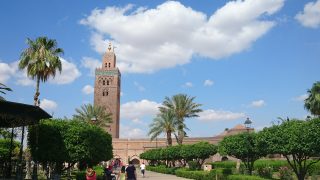
El Badi Palace, Marrakesh
Palace in Marrakesh

El Badi Palace is one of those places where your imagination does half the work: today it is a sunlit ruin of red walls, vast courtyards, and stork-topped ramparts, but once it was one of the most lavish palaces in North Africa. Commissioned in the late 16th century by the Saadian sultan Ahmad al-Mansur, it was designed to impress ambassadors with imported marble, glittering pools, and lush gardens fed by complex water systems, making it one of the must-see places in Marrakech if you are curious about the city's royal past.
As you wander through the immense central courtyard and peer into empty pavilions, it is easy to picture the palace at its height, filled with courtiers, musicians, and richly dressed guests arriving after the Saadians' victory at the Battle of the Three Kings. The palace's name, “El Badi” - “the Incomparable” - is one of the 99 Names of God in Islam, and it hints at the scale of ambition behind the complex. Today the ruins are atmospheric rather than gilded, and they are a highlight of any walking tour of Marrakech for travellers who enjoy archaeology, views, and a strong sense of history.
Table of Contents
- History and Significance of the El Badi Palace
- Things to See and Do in the El Badi Palace
- How to Get to the El Badi Palace
- Practical Tips on Visiting the El Badi Palace
- Where to Stay close to the El Badi Palace
- Is the El Badi Palace Worth Visiting?
- FAQs for Visiting El Badi Palace
- Nearby Attractions to the El Badi Palace
History and Significance of the El Badi Palace
Before El Badi Palace was built, Marrakesh's rulers lived in the older Almohad kasbah, a fortified citadel dating from the late 12th and early 13th centuries. In the mid-16th century, Saadian sultan Moulay Abdallah al-Ghalib began constructing a new palace near the Kasbah Mosque and the newly started Saadian Tombs. Ahmad al-Mansur, who came to power in 1578, took this foundation and transformed it into El Badi Palace proper, a grand reception palace within a broader Saadian palace complex that spread across the whole kasbah district.
The timing of its construction was no accident. After the Battle of the Three Kings in 1578, Portugal paid a substantial ransom, and the Saadians also controlled lucrative sugar exports and trans-Saharan trade routes to Timbuktu and Gao. This flow of gold, sugar, and enslaved labour underpinned a period of extraordinary wealth, which al-Mansur channelled into architectural projects that would broadcast Morocco’s power to visiting ambassadors. The name “El Badi’ ”-“the Incomparable”-reflected both religious devotion and a desire to create a palace without equal.
Work on El Badi began soon after Ahmad al-Mansur’s accession and continued throughout his reign. Thousands of workers and artisans, some brought from Europe, laboured on the site, while materials arrived from across the Mediterranean and beyond: marble columns from Italy, fine plaster and lime from Timbuktu, carved wood and intricate stucco from Moroccan workshops. Contemporary sources describe a construction campaign so intense that a whole market sprang up nearby to serve the workforce, and the sultan even arranged childcare so labourers would not be distracted. Though major structures seem to have been finished by the early 1580s, al-Mansur continued embellishing the palace until his death in 1603.
Things to See and Do in the El Badi Palace
Today El Badi Palace is a vast shell, but that is part of its charm. Entering the complex, you step into a huge rectangular courtyard dominated by sunken gardens and large water basins, surrounded by high red pisé walls. It takes a few moments to register the scale of the place: long walkways, deep orange-tree beds, and distant doorways hint at the opulent pavilions that once lined the courtyard. The empty space and strong light make it a fantastic spot for photography, especially in the early morning or late afternoon.
Take time to explore the side chambers and underground passages, many of which once housed storerooms, service areas, or private rooms. Some of these spaces now serve as exhibition halls, including the one displaying the magnificent 12th-century Almoravid minbar from the Kutubiyya Mosque, a carved wooden pulpit of extraordinary craftsmanship. Walking through these cool, shadowed rooms and emerging back into the bright courtyard gives you a physical sense of how the palace might have been experienced by its residents and guests.
Climb up to the ramparts for sweeping views over the palace, the kasbah district, and the wider city. From here you can appreciate the palace's position within the old Saadian complex and look towards the Agdal Gardens, which Ahmad al-Mansur renovated as part of his wider landscape vision. Storks often nest on the walls, adding a slightly wild, romantic touch to the ruins. As you wander, look out for interpretive panels that explain the original layout: the mechouar (ceremonial courtyards), the private quarters, hammams, mosques, mint, and the lost pleasure gardens like the Crystal Garden and al-Mustaha.
How to Get to the El Badi Palace
To visit El Badi Palace, you will first need to reach Marrakech, and most visitors arrive via Marrakech Menara Airport, a short drive from the historic centre with frequent flights from major European and Moroccan cities. For the best deals and a seamless booking experience, check out these flights to Marrakesh on Booking.com. From the airport, taxis and pre-arranged transfers can bring you towards the medina; asking to be dropped near the Kasbah Mosque or El Badi Palace is usually understood by drivers.
If you are travelling within Morocco, trains connect Marrakech with cities such as Casablanca, Rabat, and Tangier, terminating at the modern main railway station in the new town.Train schedules and bookings can be found on Omio. From there, it is easy to take a petit taxi directly to the kasbah district; simply mention El Badi Palace, and most drivers will know the entrance area. Long-distance buses from other regions arrive at various depots around the city, where taxis can again bring you to the palace in around 15-20 minutes, depending on traffic.
Driving into the heart of the medina is not possible, but El Badi Palace lies close to the southern city walls, making it more accessible than deeper medina locations. You can park in one of the guarded car parks near the Kasbah Mosque or Bab Agnaou gate and then walk a short distance through the neighbourhood to reach the palace entrance. Signage and the flow of other visitors usually make the final approach straightforward.
Practical Tips on Visiting the El Badi Palace
- Suggested tips: Bring water, a hat, and sun protection; much of the site is exposed and can get very hot in the middle of the day, especially in summer.
- Best time to visit: Early morning or late afternoon offers softer light, cooler temperatures, and fewer crowds, making it easier to appreciate the scale of the ruins.
- Entrance fee: adult/child Dh70/30
- Opening hours: 9am-5pm
- Official website: https://badipalace.com/
- How long to spend: Allow 1-1.5 hours to explore the courtyard, ramparts, underground chambers, and exhibitions without rushing.
- Accessibility: Surfaces are uneven and there are steps, narrow passages, and steep ramps, so access can be challenging for visitors with limited mobility.
- Facilities: Basic facilities such as ticket office and toilets are available near the entrance; small kiosks or nearby cafés offer drinks and snacks just outside the palace.
- Photography tip: Climb the ramparts for wide shots of the courtyard and Marrakech skyline, and look for shadows cast by arches and walls to create dramatic compositions.
- Guided tours: Consider visiting with a local guide who can explain the Saadian dynasty, the palace’s role in diplomatic theatre, and the stories behind the ruins.
- Nearby food options: Head towards the Kasbah streets or back towards Jemaa el-Fnaa for cafés, small restaurants, and rooftop terraces where you can relax after your visit.
Where to Stay close to the El Badi Palace
Staying near El Badi Palace puts you in the atmospheric kasbah district, slightly quieter than the streets around Jemaa el-Fnaa but still within easy walking distance of the main sights. A characterful option is La Sultana Marrakech, a luxurious riad-style hotel with courtyards and rooftop terraces just a short walk from the palace and Saadian Tombs. For a more intimate, mid-range stay, Riad Les Jardins de la Medina combines lush gardens, a pool, and traditional architecture tucked behind the kasbah walls. Travellers looking for warm hospitality close to both El Badi and Jemaa el-Fnaa might choose Riad Dar Anika, which offers cosy rooms and a convenient location on the route between the square and the palace.
Is the El Badi Palace Worth Visiting?
El Badi Palace is absolutely worth visiting if you enjoy historic sites that leave room for imagination. You will not find glittering interiors or intact throne rooms here, but you will find scale, atmosphere, and a powerful sense of how Marrakech once projected its wealth to the world. The vast courtyard, sunken gardens, views from the ramparts, and the presence of the Kutubiyya minbar exhibition all combine into a visit that feels both educational and quietly evocative, firmly justifying its status as one of the best places to visit in Marrakech for history lovers.
What Other Travellers Say...

El Badi Palace in Ksibat Nhass, Marrakech, presents vast 16th-century ruins to wander through, with sunlit courtyards, garden walls and an ornamental orange orchard still standing; visitors praise its dramatic scale and good photo opportunities, note resident storks nesting on walls and nearby masts, and say the site feels largely unrestored so you see the raw architecture, though some complain about event structures disrupting access and inconsistent visitor information and translations.


FAQs for Visiting El Badi Palace
Nearby Attractions to the El Badi Palace
- Saadian Tombs: Beautifully decorated royal burial chambers from the Saadian era, located close to the Kasbah Mosque and easily combined with a visit to El Badi.
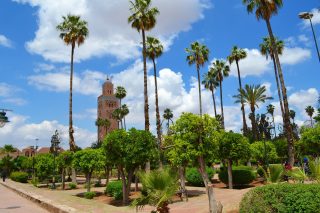
- Kasbah Mosque: An important historic mosque anchoring the kasbah district, notable for its distinctive minaret and surrounding neighbourhood.
- Agdal Gardens: Vast historic gardens south of the kasbah, renovated by Ahmad al-Mansur and still used today as orchards and reservoirs.
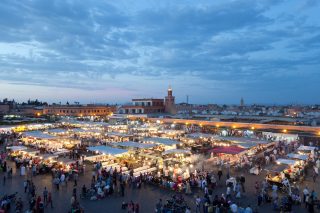
- Jemaa el-Fnaa: Marrakech's famous main square, full of food stalls and performers, a pleasant walk away through the medina streets.
- Bahia Palace: A 19th-century palace with intact, richly decorated rooms and courtyards that provide a striking contrast to the ruins of El Badi.
The El Badi Palace appears in our Complete Guide to Visiting Marrakesh!

Moira & Andy
Hey! We're Moira & Andy. From hiking the Camino to trips around Europe in Bert our campervan — we've been traveling together since retirement in 2020!
This website uses affiliate links which may earn a commission at no additional cost to you!
Planning Your Visit
9am-5pm
adult/child Dh70/30
Nearby Attractions
- Saadian Tombs (0.3) km
Palace - Bahia Palace (0.3) km
Palace - Walls of Marrakesh (0.5) km
City Gate and City Walls - Tiskiwin Museum (0.5) km
Museum - Dar Si Said (0.6) km
Historic Building and Museum - Jemaa el-Fnaa (0.9) km
Market and Square - Souks of Marrakesh (1.0) km
Market - Kasbah Mosque (1.0) km
Mosque - Koutoubia Mosque (1.0) km
Mosque - Koutoubia Gardens (Lalla Hassna Park) (1.0) km
Gardens