Auberge de France, Birgu
Historic Building in Birgu
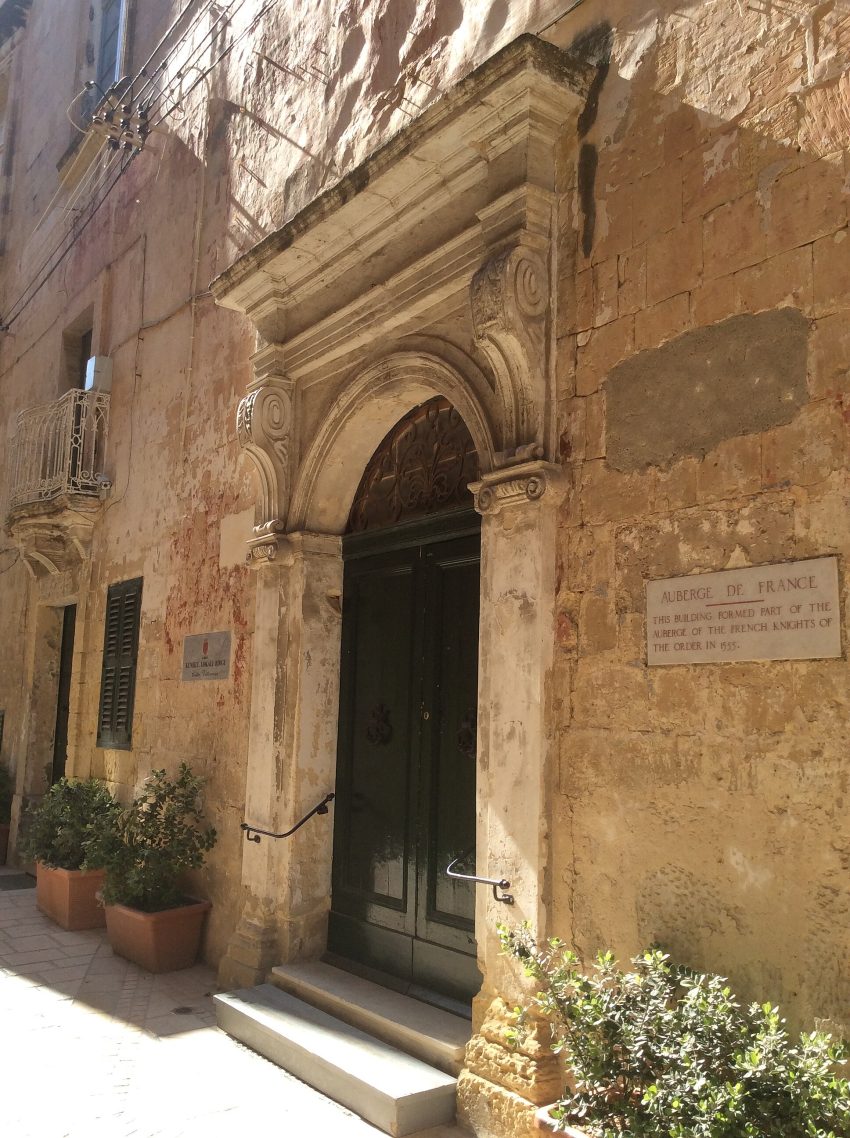
In the quiet streets of the Collachio, the medieval knightly quarter of Birgu, the Auberge de France stands as one of the top attractions in Birgu for anyone interested in the earliest phase of the Order of St. John on the island. Built around 1533 and incorporating an even older residence, it served as the first auberge of the French Langue before the Order established its grander headquarters in Valletta. Its façade, with carved stonework, moulded windows, and the wrought iron fleur-de-lys above the doorway, still reflects the pride and identity of the French knights who once lived here.
The auberge is a great place to visit on a walking tour of Birgu, not only for its well-preserved Melitan architecture but also for its layered history. Over the centuries, it has been a knightly residence, a wealthy family's palace, a school, a factory, a museum, and now the seat of the Birgu Local Council. Each era has left traces that make this one of the most characterful buildings in the Three Cities.
History and Significance of Auberge de France
The story of the Auberge de France begins in 1533, when the French Langue of the Knights of St. John established their headquarters in Birgu shortly after the Order settled in Malta. The first conversion of the building is attributed to Nicolò Flavari, an early architect of the Order, and its later façade modifications were likely carried out by Bartolommeo Genga. Positioned within the Collachio and flanked by the Auberge d'Auvergne et Provence and Auberge d'Aragon, it formed part of the tightly knit administrative and residential heart of the Knights' early years on the island.
When the Knights shifted their capital to Valletta in the 1570s, the French Langue moved to the newly built Auberge de France in the new city. However, the Birgu auberge remained in use until 1586 before passing into private ownership. In the 19th century, the property was purchased by the affluent Vella family and became known as il-Palazz tal-Miljunarju, or “The Palace of the Millionaire,” a name that reflected its prestige and grandeur.
Throughout the following century, the building saw a variety of uses, serving as a primary school from 1852 to 1918, later functioning as a furniture factory, and eventually being transformed into a political history museum in the 1980s. Despite periods of neglect, the auberge was restored in 1990 and formally protected as part of Malta’s cultural heritage. It appeared on the Antiquities List of 1925 and was designated a Grade 1 national monument in 2009.
In 2010, the auberge was transferred to Heritage Malta and refurbished for its new civic function as the seat of the Birgu Local Council. Its continued use ensures that it remains a vibrant part of the community rather than a static relic of the past.
Things to See and Do in Auberge de France
Although access to the interior is limited due to its role as a civic building, the auberge’s exterior is well worth exploring. Its Melitan architectural style reflects traditional Maltese domestic design, with rooms historically organised around a central courtyard. The symmetrical façade is beautifully composed, featuring moulded window frames and a finely carved stone doorway topped by a wrought iron fleur-de-lys - a subtle but unmistakable nod to the French Langue.
For those able to view the entrance hall during open events or cultural activities, the carved stone lion set on the mid-landing of the staircase is a distinctive feature. This type of ornamentation was common in noble residences of the period, asserting the building’s status. The upper hall once served as the assembly room of the French Langue, while the basement incorporates vestiges of earlier structures predating the Order’s arrival.
Outside, the surrounding streets offer an atmospheric glimpse into Birgu's medieval layout. Standing between its former neighbouring auberges, the Auberge de France provides a striking sense of how the Knights organised their residential quarters during their earliest decades in Malta.
How to Get There
Reaching the Auberge de France is straightforward. From Valletta, the Grand Harbour ferry provides a scenic route directly to Birgu's waterfront, from which the Collachio is a short walk uphill. Regular buses also link Valletta with Birgu. If arriving by car, parking can be found near the marina and around the outskirts of the old town, though spaces may be limited, especially during weekends or local events.
Practical Tips on Visiting Auberge de France
- Best time to visit Auberge de France: Early morning or late afternoon for the best light on the façade.
- Entrance fee in Euros: Free; exterior viewing only unless open during special events.
- Opening hours: The exterior is viewable at any time; interior access depends on council activities.
- Official website: Birgu Local Council provides updates on events and access.
- How long to spend: Around 10-20 minutes, plus time to explore the Collachio’s nearby auberges.
- Accessibility: Narrow, uneven streets may pose challenges for wheelchair users.
- Facilities: No facilities on-site; cafés and amenities available nearby.
- Photography tip: The fleur-de-lys above the doorway makes a great close-up detail shot.
- Guided tours: Many walking tours of Birgu include the auberge in their historic itineraries.
- Nearby food options: Waterfront cafés and restaurants offer plenty of dining choices.
Where to Stay close to Auberge de France
Birgu and the wider Three Cities offer several charming boutique stays. Just steps away, Locanda La Gelsomina combines artistic interiors with a historic setting. In nearby Senglea, Cugó Gran Macina Malta offers luxury accommodation within restored fortifications. Travellers preferring to stay in Valletta with easy ferry access might enjoy Casa Asti.
Is Auberge de France Worth Visiting?
Yes. As the second best-preserved Hospitaller auberge in Birgu, the Auberge de France offers an evocative window into the early decades of the Knights of St. John in Malta. Its architecture, history, and ongoing civic role make it an enriching stop for travellers seeking a deeper understanding of Birgu's past.
What Other Travellers Say...

Auberge De France in Birgu is a small, romantic historic building you can easily explore on foot in about an hour, with lovely streets to wander; visitors note a twin-arched first-floor window with a slender central pillar and zigzag decoration in a Siculo‑Norman style, and that the building houses the Birgu council.


FAQs for Visiting
Nearby Attractions to Auberge de France
- Auberge d'Angleterre: The best-preserved Hospitaller auberge in Birgu with an elegant Melitan façade.
- Inquisitor's Palace: One of Europe's few surviving inquisitorial palaces, now a major museum.
- St. Lawrence's Church: Birgu's Baroque parish church with deep connections to the Knights.
- Fort St. Angelo: The city's iconic fortress overlooking the Grand Harbour.
- Malta Maritime Museum: A superb introduction to Malta's naval and maritime history.
The Auberge de France appears in our Complete Guide to Visiting Birgu!

Moira & Andy
Hey! We're Moira & Andy. From hiking the Camino to trips around Europe in Bert our campervan — we've been traveling together since retirement in 2020!
This website uses affiliate links which may earn a commission at no additional cost to you!
Nearby Attractions
- Auberge d'Auvergne et Provence (0.0) km
Historic Building - Auberge d’Angleterre (0.0) km
Historic Building - Auberge d’Aragon (0.0) km
Historic Building - Auberge de Castille et Portugal (0.1) km
Historic Building - Armoury of the Knights of Malta (0.1) km
Historic Building - Inquisitor’s Palace (0.1) km
Historic Building - Post of Castile (0.2) km
Castle - St. Lawrence’s Church (0.2) km
Church - Malta Maritime Museum (0.2) km
Museum - St. John Bastion and the Advanced Gate (0.3) km
City Gate