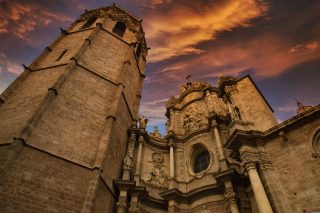
Asilo del Marques de Campo, Valencia
Church and Historic Building in Valencia
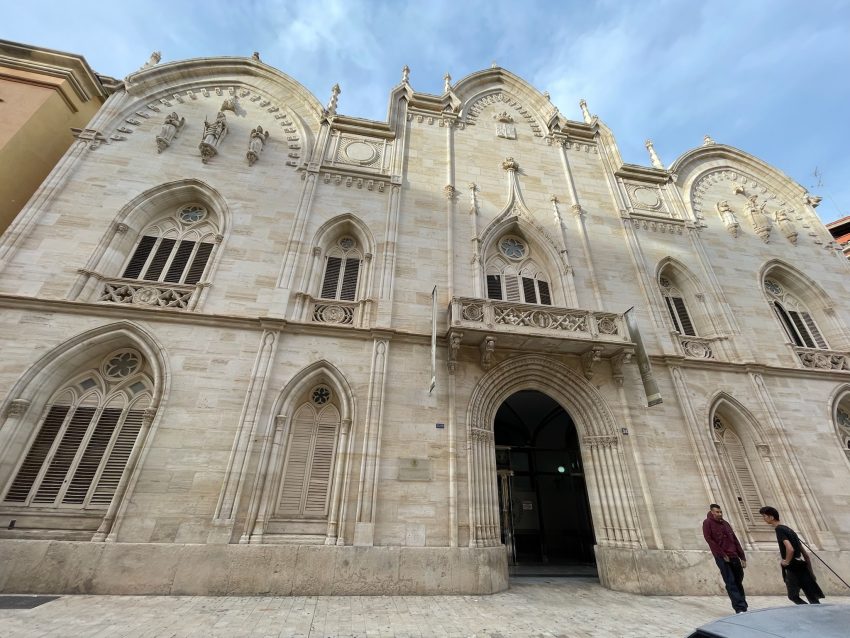
The Asilo del Marques de Campo is a distinctive neo-Gothic landmark in Valencia's historic core, best known today as part of the Universidad Católica de Valencia (UCV) complex on Carrer de la Corona. Even if you only have a few minutes, the building's pointed arches, decorative stonework, and institutional scale make it a memorable architectural stop in the El Carmen area.
It fits naturally into a self-guided walking tour linking the Torres de Quart, the old streets around Guillem de Castro, and the cultural cluster near the former Casa de la Beneficència. If you enjoy photographing historic façades and spotting layers of Valencia's 19th-century urban story, this is one of the best quick “look up” moments in the neighborhood.
Table of Contents
- History and Significance of the Asilo del Marques de Campo
- Things to See and Do in the Asilo del Marques de Campo
- How to Get to the Asilo del Marques de Campo
- Practical Tips on Visiting the Asilo del Marques de Campo
- Where to Stay Close to the Asilo del Marques de Campo
- Is the Asilo del Marques de Campo Worth Visiting?
- For Different Travelers
- FAQs for Visiting Asilo del Marques de Campo
- Nearby Attractions to the Asilo del Marques de Campo
History and Significance of the Asilo del Marques de Campo
The building traces back to Valencia’s late-19th-century wave of philanthropic institutions, when prominent local figures funded social projects that reshaped the city’s civic landscape. The Marqués de Campo (José Campo Pérez) is closely associated with that era, and the asilo reflects the period’s belief in purpose-built, morally “uplifting” architecture for education and care.
Architecturally, the Asilo del Marques de Campo is often described as neo-Gothic or Gothic revival in spirit: pointed arches, vertical emphasis, and ornamental detailing that nods to medieval forms while using 19th-century construction logic. The result is a façade that reads as ceremonial and symbolic, designed to communicate seriousness and public purpose.
In its current life, the complex is integrated into university use, which means it’s not a conventional museum-style attraction. That said, its continued institutional role is part of its significance: it remains a working building in the city rather than a preserved shell.
Things to See and Do in the Asilo del Marques de Campo
Start outside. The main draw is the exterior: step back to take in the pointed-arch entrance elements, the decorative tracery-like motifs, and the overall composition that feels more like a civic monument than a typical residential building. Morning or late-afternoon light tends to bring out the relief and texture in the stonework.
If the chapel area is open, it’s worth a brief look for a contrast between the busy street and the quieter interior atmosphere. Even a short peek can help you understand why this building is frequently mentioned as one of the more unusual historic façades in El Carmen.
Pair the stop with nearby highlights: the Torres de Quart are close enough to combine in a single loop, and the surrounding streets are ideal for slow wandering. Treat this as a 10–20 minute architectural pause rather than a long-form visit.
How to Get to the Asilo del Marques de Campo
Valencia Airport (VLC) is the nearest airport for most travelers, with Alicante–Elche Airport (ALC) as a secondary option if you're comparing flight prices or routes. For the best deals and a seamless booking experience, check out these flights to Valencia on Booking.com.
Valencia is well connected by rail, and arriving at Estació del Nord (or Joaquín Sorolla for many high-speed services) makes it easy to continue by taxi, bus, or metro toward the historic center. Train schedules and bookings can be found on Omio.
If you’re driving, aim to park outside the tightest old-town streets and finish the last stretch on foot to avoid restricted-access zones and scarce curb parking. If you are looking to rent a car in Spain I recommend having a look at Discover Cars, first, as they compare prices and review multiple car rental agencies for you.
Practical Tips on Visiting the Asilo del Marques de Campo
- Official website: https://www.ucv.es/
- Entrance fee: Check official website.
- Opening hours: Check official website.
- Best time to visit: Go on a weekday morning or mid-afternoon for calmer streets and better façade lighting for photos.
- How long to spend: Plan 10–20 minutes for the exterior, or up to 30 minutes if you’re pairing it with nearby landmarks on a walking loop.
- Accessibility: Streets in El Carmen can be uneven; the easiest approach is via the broader roads near Guillem de Castro, then a short, flatter walk.
- Facilities: Treat this as a neighborhood stop—use cafés and public facilities around the historic center rather than expecting visitor services on-site.
Where to Stay Close to the Asilo del Marques de Campo
Base yourself in the historic center (Ciutat Vella) for the easiest walks to El Carmen, major sights, and a strong choice of cafés and tapas bars.
Caro Hotel Chosen for its boutique feel and design-forward rooms in a prime old-town location that keeps you close to El Carmen without sacrificing comfort.
Hotel Dimar A reliable, well-located option between the center and the Turia Gardens, great if you want quick access to both walking routes and greener breaks.
Only YOU Hotel Valencia Included for a polished, modern stay right by the city’s central arteries—ideal for travelers who want a stylish base with easy transport links.
Vincci Palace A strong pick for being close to the old town’s most walkable streets; it works well for short trips where location matters most.
NH Collection Valencia Colón Best for travelers who want a more contemporary, full-service feel near shopping and major connections while still being a manageable walk to Ciutat Vella.
Is the Asilo del Marques de Campo Worth Visiting?
Yes—if you like architecture and you're already exploring El Carmen, it's absolutely worth a short detour. The building delivers a distinctive neo-Gothic look that stands out in Valencia, and it adds texture to a walking tour that might otherwise focus only on the headline monuments.
Honest Pivot: if you prefer attractions with guaranteed interior access, curated exhibits, or clear visitor infrastructure, you may find this stop underwhelming. In that case, prioritize nearby museums and major churches, and treat the Asilo as a quick exterior photo stop only if you pass naturally through the area.
What Other Travellers Say...


For Different Travelers
Different travel styles will get different value here: some visitors will love the façade-first experience, while others will prefer a more structured attraction. Use it as a flexible add-on rather than the main event.
Families with Kids
This works best as a short “spot the shapes” stop—point out the pointed arches and decorative details, then move on before attention spans fade. Pair it with something more interactive nearby, like a museum visit or a climb at the Torres de Quart.
If you’re traveling with a stroller, plan your approach on the widest, smoothest streets you can and keep expectations simple: exterior viewing, a couple of photos, and then a snack break.
Couples & Romantic Getaways
For couples, the appeal is the atmosphere of El Carmen and the sense of discovery—turning a corner and finding an unexpectedly dramatic façade. It's a good stop for photos that feel “Valencia-local” rather than postcard-obvious.
Make it part of a slow walk that ends with tapas or a wine bar nearby. The neighborhood’s evening energy is a plus, even if you visit the building itself earlier in the day.
Budget Travelers
Budget travelers will like that this is easy to enjoy without committing to a ticketed experience. You can fold it into a full day of walking through Ciutat Vella and still feel like you’ve found something specific and memorable.
If you're optimizing time, combine it with other free or low-cost highlights in the area and focus on the streetscape: plazas, towers, and the Turia Gardens are all compatible with a low-spend itinerary.
History Buffs
History buffs will appreciate the building as a clue to Valencia’s 19th-century civic identity—philanthropy, social institutions, and the way architecture was used to project values. It’s a good prompt to read up on the Marqués de Campo and the city’s modernization period.
To deepen the context, pair this stop with nearby historic structures and museums in the center so you can connect the late-19th-century layer to Valencia’s older Roman, medieval, and early modern timelines.
FAQs for Visiting Asilo del Marques de Campo
Getting There
Tickets & Entry
Visiting Experience
Tours, Context & Itineraries
Photography
Accessibility & Facilities
Food & Breaks Nearby
Safety & Timing
Nearby Attractions to the Asilo del Marques de Campo
- Torres de Quart: A monumental medieval gate-tower complex you can visit for history and city views.
- IVAM (Institut Valencià d'Art Modern): Valencia's flagship modern-art museum, ideal for a longer cultural stop.
- Centre del Carme Cultura Contemporània: A lively contemporary culture space in a former convent with a beautiful courtyard.
- La Lonja de la Seda: A UNESCO-listed Gothic masterpiece that showcases Valencia's mercantile golden age.
- Valencia Cathedral and El Micalet: A classic old-town pairing for architecture lovers, with a tower climb for panoramic views.
The Asilo del Marques de Campo appears in our Complete Guide to Visiting Valencia!

Moira & Andy
Hey! We're Moira & Andy. From hiking the Camino to trips around Europe in Bert our campervan — we've been traveling together since retirement in 2020!
This website uses affiliate links which may earn a commission at no additional cost to you!
Planning Your Visit
Check official website.
Check official website.
Nearby Attractions
- Museum of Prehistory and Culture (0.1) km
Museum - IVAM (0.2) km
Arts Venue and Museum - Torres de Quart (0.3) km
City Gate, Historic Site and Tower - Palace of the Alpuente Counts (0.4) km
Historic Building, Historic Site and Palace - Pineda Palace (0.4) km
Historic Building, Historic Site and Palace - Iglesia de San Nicolas de Bari (0.4) km
Church, Historic Building and Religious Building - Iglesia del Carmen (0.4) km
Church and Religious Building - Jardin Botanico (0.4) km
Attraction and Gardens - Iglesia de los Santos Juanes (0.5) km
Church, Historic Building and Religious Building - Mercado Central (0.5) km
Historic Building and Market