Arco dei Gavi, Verona
in Verona
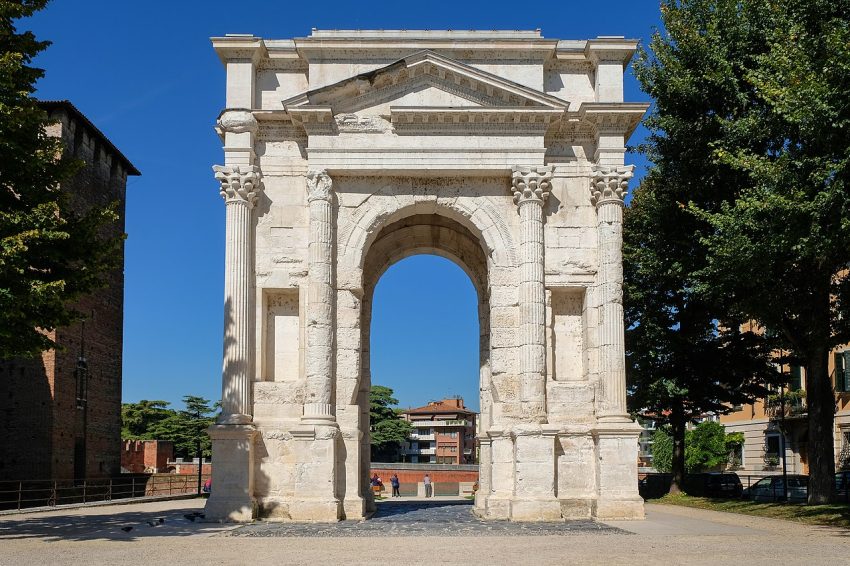
Arco dei Gavi (often called the Arch of the Gavi) is a freestanding Roman arch set in a small green pocket next to Castelvecchio, right on the edge of the Adige. It's not the biggest monument in town, but it's one of the things to see in Verona because it feels unexpectedly intimate: a slice of ancient city life sitting quietly beside a major medieval fortress, with just enough space around it to step back and appreciate the proportions.
It's also a natural “stitch point” on a walking tour of Verona, especially if you like linking landmarks with simple, walkable transitions rather than hopping between ticketed interiors. Think of it as a pause that adds texture to your day: a few minutes to see Roman craftsmanship up close, then straight back into the flow of the historic centre.
Table of Contents
- History and Significance of the Arco dei Gavi
- Things to See and Do in the Arco dei Gavi
- How to Get to the Arco dei Gavi
- Practical Tips on Visiting the Arco dei Gavi
- Where to Stay Close to the Arco dei Gavi
- Is the Arco dei Gavi Worth Visiting?
- For Different Travelers
- FAQs for Visiting Arco dei Gavi
- Nearby Attractions to the Arco dei Gavi
History and Significance of the Arco dei Gavi
The arch was built in the 1st century AD to honour the gens Gavia, a prominent family in Roman Verona, and it originally stood along the Via Postumia, one of the key Roman roads connecting northern Italy. Unlike triumphal arches commissioned by emperors, this one is tied to local status and civic identity, which gives it a slightly different feel: refined, proud, and firmly rooted in Verona's own Roman story.
In the Middle Ages, the arch’s role shifted from monument to infrastructure, becoming part of the city’s defensive system and functioning as a gate. That re-use is part of what makes it interesting today: it wasn’t preserved in a museum-like bubble, but pulled into the practical needs of a changing city.
Its modern location is the result of a dramatic detour. During the Napoleonic occupation, it was demolished in 1805, its stones moved and stored, and then reassembled in 1932 using original blocks, close to its earlier position. That reconstruction story matters, because it explains why the arch sits where it does now and why it’s often described as both ancient and “returned.”
Things to See and Do in the Arco dei Gavi
Start by walking a slow loop around it, because the arch is designed to be read from multiple sides. The Corinthian columns and framing details are easier to appreciate when you give yourself a few angles, rather than standing only on the road-facing side.
Look for the details that make it unusually personal for a Roman monument, including the emphasis on names and identity, and the sense that it was meant to impress visitors arriving along a major route. Even if you do not know the full backstory, the carved geometry and balanced proportions still communicate that Roman “function with elegance” language.
Then use it as a connector stop. From here you can drift straight into Castelvecchio’s surroundings, follow the riverside edge for views, or continue along Corso Cavour toward the older centre lanes. It’s a small sight that fits beautifully between bigger ones, especially when you want your day to feel seamless.
How to Get to the Arco dei Gavi
Arco dei Gavi is next to Castelvecchio, in the small green area by the Adige, with the address commonly listed as Corso Cavour, 2. If you are already in the historic centre, it's an easy walk from Piazza Bra and the Arena area, and it's just as simple to reach from the river promenades.
For flights, the nearest airport is Verona Villafranca Airport (VRN), with additional options at Bergamo (BGY) and Venice Marco Polo (VCE) if you want broader route choice. For the best deals and a seamless booking experience, check out these flights to Verona on Booking.com. From VRN, shuttle buses and taxis bring you into the centre, then you can continue on foot to the Castelvecchio area.
By train, arrive at Verona Porta Nuova and take a short bus or taxi ride into the centre, then walk to Castelvecchio and the arch in minutes. Use Omnio to easily compare schedules, book train tickets, and find the best prices all in one place for a hassle-free journey across Italy. Local buses also work well if you want a straightforward budget transfer without adding much walking.
If you’re travelling by car, park at the edge of the historic centre in a garage and walk in, since central traffic patterns and limited access streets can make short drives feel slower than they look. If you are looking to rent a car in Italy I recommend having a look at Discover Cars, first, as they compare prices and review multiple car rental agencies for you.
Practical Tips on Visiting the Arco dei Gavi
- Entrance fee: Free
- Opening hours: 24 hours
- Best time to visit: Early morning for quiet, or late afternoon for softer light on the stone and a calmer riverside feel.
- How long to spend: 10-20 minutes is ideal as a stand-alone stop; 30 minutes if you combine it with a slow loop around Castelvecchio and the river edge.
- Accessibility: It’s largely flat and easy to approach, but sidewalks and crossings nearby can be busy, so take care when moving between viewpoints.
- Facilities: No dedicated visitor facilities on-site; plan cafés and restrooms around Piazza Bra, Castelvecchio, or nearby central streets.
Where to Stay Close to the Arco dei Gavi
For a culture-heavy itinerary, base yourself in Verona's Centro Storico around Piazza Bra and the main sights; if your priority is easy arrivals and fast rail connections, staying nearer Verona Porta Nuova can be more practical while still keeping the centre walkable.
If you want to be close to Castelvecchio and have an easy walk to the arch at any time of day, Hotel Milano & SPA is a strong central base for a landmark-focused itinerary. For a comfortable stay that sits neatly between the station and the historic core (and keeps Corso Cavour within easy reach), Hotel Mastino is a practical choice. If you prefer a classic old-town feel with quick access to both Piazza Bra and the Castelvecchio side of the centre, Hotel Accademia works very well.
Is the Arco dei Gavi Worth Visiting?
Yes, especially if you like small monuments with a strong story and an easy fit in a walkable day. It’s quick, free, and sits right on a route most visitors take anyway, which makes it one of those “high-impact, low-effort” stops that improves your sense of Verona’s Roman layers.
It’s also worth it because it changes the mood: after the spectacle of the Arena and the energy of the main squares, the arch feels quieter and more personal. You get a close-up Roman moment without the crowds that often gather at the headline sites.
What Other Travellers Say...

Arco dei Gavi on Corso Cavour in Verona is a large white-marble Roman triumphal arch that was dismantled in the Napoleonic era and later reassembled; it sits outdoors near Castelvecchio and the river, making it an easy, free sight to admire while strolling the city, appreciated for its classical design and romantic setting with nearby gardens, bridges and ducks.


For Different Travelers
Families with Kids
For families, the Arco dei Gavi is a great micro-stop because it's visual and easy to understand without a long explanation. Kids can walk around it, look up, and immediately grasp that it's an ancient gateway-style monument, which often works better than a dense interior visit.
Pair it with a simple “bridge-and-castle” loop nearby so it feels like part of an active walk rather than a static lesson. Keeping it brief and combining it with open space tends to make it a smoother win.
Couples & Romantic Getaways
For couples, this stop is more about atmosphere than checklist sightseeing. The small green setting and the riverside proximity give it a calm, slightly cinematic feel, especially late in the day when Verona softens and the stone takes on warmer tones.
It also works nicely as a transition between bigger moments: the Arena earlier, then a quieter walk via Castelvecchio and the arch, then dinner back in the centre. That pacing makes the day feel thoughtfully shaped.
Budget Travelers
Budget travellers should absolutely include it, because it’s free, central, and genuinely interesting even if you only give it ten minutes. It adds a Roman layer to your day without turning into a ticket decision or a time-consuming detour.
Use it as a connector between free experiences: riverside walking, exterior architecture, and the city's main squares. Verona is at its best when your itinerary mixes a few “big names” with these smaller, texture-rich stops.
FAQs for Visiting Arco dei Gavi
Getting There
Tickets & Entry
Visiting Experience
Tours, Context & Itineraries
Photography
Accessibility & Facilities
Food & Breaks Nearby
Safety & Timing
Nearby Attractions to the Arco dei Gavi
- Castelvecchio: Verona's fortress-castle complex with strong medieval character and a riverside setting that pairs naturally with the arch.
- Ponte Scaligero: The striking Castelvecchio bridge, ideal for river views and dramatic stone-and-water photos.
- Piazza Bra: Verona’s grand central square and the natural next stop if you want to reconnect with the city’s main energy.
- Arena di Verona: The city's headline Roman monument, perfect to compare with the smaller, more intimate scale of the arch.
- Porta Borsari: Another Roman-era gateway experience in the centre, great for building a short “Roman Verona” mini-route on foot.
The Arco dei Gavi appears in our Complete Guide to Visiting Verona!

Moira & Andy
Hey! We're Moira & Andy. From hiking the Camino to trips around Europe in Bert our campervan — we've been traveling together since retirement in 2020!
This website uses affiliate links which may earn a commission at no additional cost to you!
Planning Your Visit
24 hours
Free
Nearby Attractions
- Castelvecchio Museum (0.1) km
Castle and Museum - Ponte Scaligero (0.1) km
Bridge - Piazza Brà (0.4) km
Square - Porta Borsari (0.4) km
Historic Building - Arena di Verona (0.4) km
Amphitheatre - Piazza Delle Erbe (0.7) km
Square - Palazzo Miniscalchi (0.8) km
Museum - Torre dei Lamberti (0.8) km
Tower - Juliet's House (0.8) km
Historic Building - Basilica of San Zeno Maggiore (0.8) km
Church