Archbishop's Museum, Ravenna
Museum in Ravenna
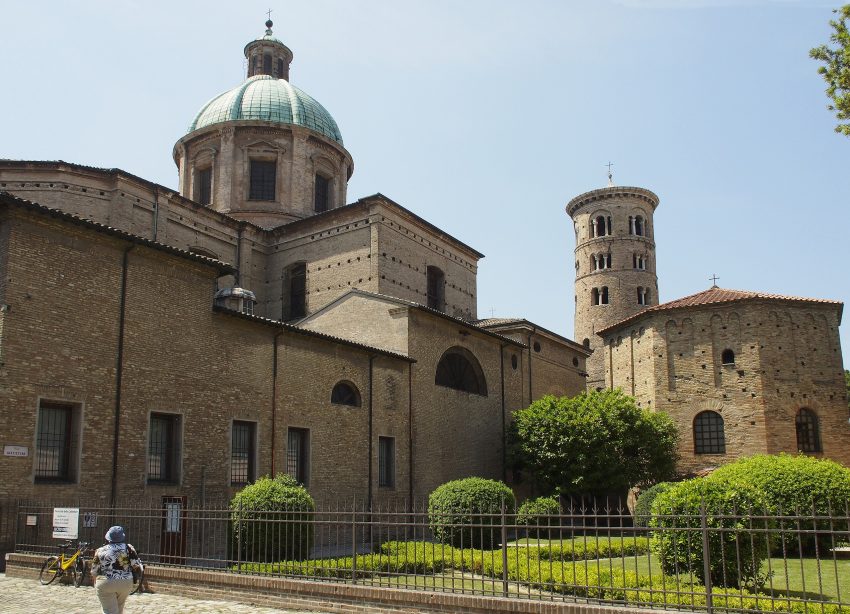
Tucked behind Ravenna's Cathedral and the Neonian Baptistery, the Archbishop's Museum sits within the Archbishop's Palace, a complex with roots in the 5th century that has been reshaped and renovated over many centuries. It's a compact, rewarding museum that feels like a backstage pass to the ecclesiastical heart of the city, where objects once tied to liturgy and power are now displayed at a pace that invites close looking rather than quick scanning.
Because it's so close to the Cathedral area, this is one of the top attractions in Ravenna for travellers who want to add depth to the city's better-known mosaics. It's also a highlight of any walking tour of Ravenna, since you can move from baptistery to museum to cathedral in one seamless cluster without spending time on transport.
Table of Contents
- History and Significance of the Archbishop’s Museum
- Things to See and Do in the Archbishop’s Museum
- Practical Tips on Visiting the Archbishop’s Museum
- Where to Stay close to the Archbishop’s Museum
- Is the Archbishop’s Museum Worth Visiting?
- FAQs for Visiting Archbishop’s Museum
- For Different Travelers
- Nearby Attractions to the Archbishop’s Museum
History and Significance of the Archbishop’s Museum
The Archbishop's Museum is closely tied to the long life of the Archbishop's Palace itself, originally established in late antiquity and repeatedly adapted as Ravenna evolved. The museum's modern role was strongly shaped in the 18th century, when Archbishop Maffeo Niccolò Farsetti championed the idea of safeguarding stones, marbles, and ecclesiastical objects removed during cathedral renovations. That origin story matters because it explains why the museum feels so rooted in place: much of what you see here was never meant to travel, and it sits within a living cathedral complex rather than a standalone cultural district.
The museum's significance also lies in how it complements Ravenna's UNESCO interiors. Where San Vitale and the baptisteries overwhelm through mosaic brilliance, the Archbishop's Museum rewards slow, object-focused attention. It offers a closer view of materials-silver, ivory, carved marble-and of the administrative and ceremonial world that supported the city's religious monuments.
Finally, the museum’s setting gives it an extra layer of interest. You are not only moving through galleries; you are moving through spaces within a historic palace complex, where remnants of earlier infrastructure and later additions sit side by side, reflecting Ravenna’s layered civic and ecclesiastical history.
Things to See and Do in the Archbishop’s Museum
The must-see object is the Chair of Bishop Maximian, a 6th-century ivory masterpiece carved by Byzantine artists. Even if you don’t consider yourself an “ivory person,” it’s hard not to be impressed by the density of carving and the precision of the narrative panels. This is the kind of object that makes you step closer almost instinctively, because every surface seems to hold another detail that rewards patience.
Next, look for the museum’s standout liturgical and documentary pieces, especially the silver cross associated with Archbishop Agnello and the carved marble slab with the Easter calendar. These are objects that make church history feel concrete: not abstract dates and names, but tools and records that shaped how the community worshipped and organised time.
The headless Byzantine-era statue, traditionally linked with imperial imagery, is another strong stop because it hints at Ravenna’s relationship with power beyond Italy. Even without the head, the body language and the sculptural treatment still convey authority, and it’s an effective counterpoint to the more delicate materials elsewhere in the museum.
Make time for the Sala delle Pianete, the small gallery space that introduces a later artistic register with works from the 16th to 18th centuries, and then look for the collection of sacred robes, which adds a textile layer that many Ravenna itineraries otherwise miss. Finally, the Sala della Torre Salustra is worth seeking out for its unusual story: it connects the museum to the city's older infrastructure, linked to the terminal of an aqueduct and the logic of urban water distribution, a reminder that a bishop's palace was also a hub in a functioning city.
Practical Tips on Visiting the Archbishop’s Museum
- Suggested tips: Visit immediately after the Neonian Baptistery so you stay in the same area and keep the historical context fresh, then take your time with the ivory chair before moving on.
- Best time to visit: Mid-morning on a weekday for a quieter museum experience and more space to linger around the key objects.
- Entrance fee: €10.50 - The ticket is cumulative only and includes: the Basilica of Sant'Apollinare Nuovo, the Neonian Baptistery (**), the Basilica of San Vitale, the Mausoleum of Galla Placidia (**), the Museum and the Archbishop's Chapel.
- Opening hours: Daily: 9.00-19.00
- Official website:
- How long to spend: 45-90 minutes, depending on how deeply you want to focus on the Chair of Maximian and the liturgical collections.
- Accessibility: As a historic palace complex, expect stairs or level changes; check current lift availability and step-free routes if required.
- Facilities: Limited on-site; cafés and services are easy to find in the surrounding central streets.
- Photography tip: If photography is permitted, avoid flash and take time to steady your shot, especially around ivory and silver objects where reflections can be distracting.
- Guided tours: A guide is useful here because many objects make more sense with brief context about cathedral renovations, liturgy, and Byzantine Ravenna.
- Nearby food options: This area is ideal for a quick break between sights, with cafés and casual lunch options within a short walk.
Where to Stay close to the Archbishop’s Museum
For maximum convenience, stay in central Ravenna so you can walk to the Cathedral complex and visit early in the day. Albergo Cappello is a characterful base within easy reach of the museum and nearby monuments. Hotel Centrale Byron is a practical option that keeps the whole historic centre walkable. If you want a slightly more polished hotel feel while staying close to the main sights, Palazzo Bezzi Hotel is well placed for a museum-and-monuments itinerary.
Is the Archbishop’s Museum Worth Visiting?
Yes, particularly if you want to balance Ravenna’s mosaic-heavy highlights with objects that reveal how the city’s religious life actually functioned. The Chair of Bishop Maximian alone is a strong reason to go, but the museum’s real appeal is how it layers together stone, metalwork, textiles, and documentary pieces in a compact, easily navigated visit.
It’s also a smart stop because of location. You are already in the Cathedral and baptistery area, so the museum fits naturally into your route without adding travel time, and it deepens the story of Ravenna’s ecclesiastical world in a way that photos of mosaics alone cannot.
FAQs for Visiting Archbishop’s Museum
What Other Travellers Say...

Archiepiscopal Museum, Ravenna, at P.za Arcivescovado 1, showcases a compact but rich collection of local religious art and artifacts, highlighted by a small Byzantine chapel with elaborate mosaics and important pieces such as the Cattedra di Massimiano (Chair of Maximian), early Christian stone fragments, goldwork, portions of mosaics and liturgical objects including a silver cross and sacred vestments; galleries include the Hall of the Planets with works from the 1500–1800 period and rooms displaying mosaics and Roman-era finds, all presented with bilingual labels and braille, though the museum is not stroller- or wheelchair-friendly and involves stairs.


For Different Travelers
Families with Kids
This museum can work well for families if you focus on a few standout objects rather than trying to see every case. The Chair of Maximian is a natural hook for children because it’s richly carved and invites a “spot the details” approach, which keeps the visit active and engaging.
Because it’s close to the baptistery, you can keep the day moving without long walks between sites. Plan a short visit, then reward younger travellers with a snack break nearby to keep energy and patience high.
Couples & Romantic Getaways
For couples, the Archbishop's Museum is a satisfying, quieter counterpart to Ravenna's headline churches. The palace setting, the close viewing of precious materials, and the sense of “inside access” give the visit an intimate feel that works well on a slow cultural day.
It also fits beautifully into a relaxed itinerary: baptistery, museum, a café pause, then a long walk through the centre. The museum’s scale keeps it from feeling exhausting while still adding depth.
Budget Travelers
The museum is an efficient choice for budget travellers because it is centrally located and easily combined with nearby sights on foot. If you are using a monument pass or combined ticket options, it often delivers excellent value because the highlight objects are genuinely significant, not filler.
To keep costs down, build a walking route that links the Cathedral area with other central landmarks and minimise taxis. This museum adds substance to your day without requiring extra logistics.
History Buffs
For history-focused visitors, the museum is particularly strong because it ties Ravenna’s monuments to the practical and ceremonial world that sustained them. The objects related to cathedral renovations and liturgical life help you understand how sacred space was organised, maintained, and symbolically communicated.
The Byzantine sculpture and the Chair of Maximian are especially rewarding for anyone interested in Ravenna’s role as a conduit between Italy and the eastern Mediterranean. The Sala della Torre Salustra adds an unexpected civic dimension, reminding you that elite religious complexes were embedded in a working urban infrastructure, not isolated from it.
Nearby Attractions to the Archbishop’s Museum
- Neonian Baptistery: A compact baptistery with a remarkable dome mosaic of Christ's baptism and a strong early Christian atmosphere.
- Ravenna Cathedral: The city's cathedral complex, ideal for understanding Ravenna's later ecclesiastical development alongside its older monuments.
- Basilica of San Vitale: Ravenna's most celebrated mosaic interior and a cornerstone of the city's UNESCO heritage.
- Mausoleum of Galla Placidia: A small building with a starry mosaic dome and an unforgettable, intimate glow.
- Piazza del Popolo: Ravenna's main square, perfect for a café break and a pause between museum visits.
The Archbishop's Museum appears in our Complete Guide to Visiting Ravenna!

Moira & Andy
Hey! We're Moira & Andy. From hiking the Camino to trips around Europe in Bert our campervan — we've been traveling together since retirement in 2020!
This website uses affiliate links which may earn a commission at no additional cost to you!
Planning Your Visit
Daily: 9.00-19.00
€10.50 – The ticket is cumulative only and includes: the Basilica of Sant’Apollinare Nuovo, the Neonian Baptistery (**), the Basilica of San Vitale, the Mausoleum of Galla Placidia (**), the Museum and the Archbishop’s Chapel.
Nearby Attractions
- Archbishop's Chapel of St. Andrew (0.0) km
Church - Neonian Baptistery (0.1) km
Baptistery - Ravenna Cathedral (0.1) km
Cathedral - Basilica of San Francesco (0.3) km
Basilica - Dante’s Tomb (0.3) km
Tomb - Museo Dante (0.3) km
Historic Building and Museum - Piazza del Popolo (0.3) km
Square - Domus dei Tappeti di Pietra (0.5) km
Historic Site and Museum - Arian Baptistery (0.6) km
Baptistery - National Museum of Ravenna (0.6) km
Historic Building and Museum