Angel of the North, Gateshead
Sculpture in Gateshead
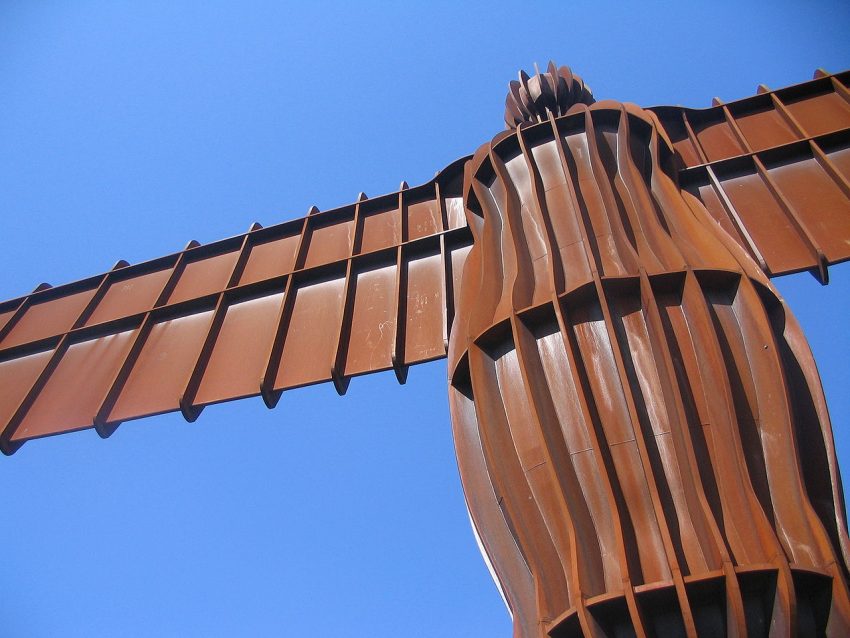
The Angel of the North is a contemporary steel sculpture by Antony Gormley, set on a hilltop in Gateshead, Tyne and Wear, with a position that's deliberately made to be seen-especially from the A1 and surrounding routes. It's one of those rare works of public art that feels both local and universal: a single figure that has become shorthand for arriving in, or returning to, the North East.
Up close, it’s all about scale and texture. The sculpture stands 20 metres high with a wingspan of 54 metres, and the weathering steel gives it that deep rust-red tone that changes subtly with light and rain. Even if you only have 15 minutes, it’s a stop that lands, because you can feel how the site, the open sky, and the sculpture’s “embracing” stance were designed to work together.
Table of Contents
- History and Significance of the Angel of the North
- Things to See and Do in the Angel of the North
- How to Get to the Angel of the North
- Practical Tips on Visiting the Angel of the North
- Where to Stay Close to the Angel of the North
- Is the Angel of the North Worth Visiting?
- For Different Travelers
- FAQs for Visiting Angel of the North
- Nearby Attractions to the Angel of the North
History and Significance of the Angel of the North
The Angel's story begins with place rather than sculpture. In 1990 the site-formerly a colliery pithead baths-was reclaimed and earmarked for a major artwork, a deliberate attempt to turn an industrial landscape into a new kind of landmark. Antony Gormley was selected in 1994, and the Angel was installed in February 1998, quickly becoming a defining symbol of Gateshead and the wider region.
What makes it significant isn’t only the engineering or the headline dimensions, but the civic intention behind it. Gateshead’s brief was to create an ambitious work that captured regional character-something that nodded to the area’s industrial past while looking forward, visible to the everyday commuter as much as the intentional visitor. Its proximity to major roads (and the sheer volume of passing traffic) is a core part of why it’s so widely seen and so firmly embedded in people’s mental map of the North East.
Things to See and Do in the Angel of the North
Start by taking a slow approach rather than walking straight underneath it. The Angel changes character as you move: from some angles it feels almost aerodynamic, from others it looks solid and monumental, like a modern monolith planted into the hill. If you have time, circle it so you see both the front and back, and notice how the wings’ profile shifts against the sky.
Once you’re close, the experience is surprisingly physical: you feel small, you notice the texture of the steel, and you hear the wind more clearly because the site is so open. This is also one of those places where weather adds drama rather than ruining the visit-grey skies can make the sculpture feel cinematic, and low sun can bring out the warm tone of the metal.
If you're building a short itinerary, treat the Angel as a “gateway stop” before heading into Gateshead Quays for culture and river views, or into Newcastle for museums, food, and nightlife. It works particularly well as a quick detour because you don't need tickets, queues, or a timed entry to get the full impact.
How to Get to the Angel of the North
The nearest airport is Newcastle International Airport (NCL), with Durham Tees Valley Airport (MME) a useful alternative depending on routes and prices. For the best deals and a seamless booking experience, check out these flights to Gateshead on Booking.com.
For rail, aim for Newcastle Central Station as the main hub, then continue by bus or taxi toward Gateshead and the A167 corridor, which is the simplest way to reach the site without a long walk from the city centre. Train schedules and bookings can be found on Omio.
By car, the Angel is straightforward to reach via the A1 and A167, with signposted access and an on-site car park that makes this an easy “stop, walk, view, continue” visit.
Practical Tips on Visiting the Angel of the North
- Entrance fee: Free
- Opening hours: 24 hours
- Official website: https://www.gateshead.gov.uk/article/5020/Visit-the-Angel-of-the-North
- Best time to visit: Go around sunrise or sunset for the best light on the steel and fewer people in the frame. Wind can be strong on the exposed hillside, so dress for it even on mild days.
- How long to spend: Allow 20-45 minutes for photos, a short walk around the base, and time to take in the scale from different angles. If you are pairing it with NewcastleGateshead sights, it works well as a quick stop on the way in or out of the city.
- Accessibility: The paths can be uneven and the site is exposed, so expect some gradients and muddy patches after rain. If you need step-free access or are visiting with a stroller, aim for the most direct approach path and take your time in windy conditions.
- Facilities: There are no major on-site facilities, so bring water and plan restrooms and food before you arrive. For a more comfortable visit, combine it with a café stop in Gateshead or Newcastle after you have seen the sculpture.
Where to Stay Close to the Angel of the North
For a culture-heavy itinerary, base yourself on the Newcastle Quayside or near Newcastle Central Station for the best walkability, dining, and transport connections; if your priority is a quieter stay with easy road access, consider Gateshead (including the Quays area) for a calmer base that still keeps you close to the main sights.
For a strong riverside base that's well-placed for both Newcastle and Gateshead, Hilton Newcastle Gateshead is a convenient choice, especially if you like being near the Quays. If you want to stay in Newcastle with easy station access and quick connections for day trips, Crowne Plaza Newcastle - Stephenson Quarter keeps logistics simple while still being close to the city’s main attractions. For something stylish on the river with an easy walk into the centre, Malmaison Newcastle makes a good base for a nightlife-and-food focused stay.
Is the Angel of the North Worth Visiting?
Yes. It’s one of the UK’s rare modern landmarks that delivers instantly: no context required, no ticket required, and the sense of scale is genuinely memorable in person. It also works well as a “first or last stop” on a North East trip because it feels like a symbolic arrival point.
Honest pivot: if you dislike quick roadside-style stops or you’re only interested in attractions with interiors, exhibitions, or guided interpretation, the Angel may feel too brief. In that case, you’re better putting your time into the BALTIC, The Glasshouse, or Newcastle’s museum circuit and treating the Angel as something you simply see from the road.
What Other Travellers Say...

Angel of the North, on Durham Rd in Low Eighton, Gateshead, is a vast rust-coloured sculpture with outstretched wings set on a mound overlooking the countryside; visitors note it's striking both from the nearby motorway and up close, with accessible paths and a small free car park, peaceful grounds often used by walkers, and a memorial garden area that adds quiet reflection.


For Different Travelers
Families with Kids
For families, this is a low-friction win: you can arrive, walk up, get the “wow” factor, and leave without needing to manage tickets or timed slots. It’s also a good stop to break up a longer journey, because the visit naturally fits into a short time window without feeling like you’ve missed anything.
The main practical point is the exposed hilltop setting-wind and rain can be sharper than you expect-so layers make the experience calmer. If you pair it with a more sheltered follow-up (like a riverside walk at Gateshead Quays), you get a balanced half-day without overloading kids with too much walking.
Couples & Romantic Getaways
For couples, the Angel works best as a mood-setter: open sky, big horizon, and a landmark that feels quietly dramatic rather than “theme-park” busy. It’s particularly good at golden hour, when the steel’s colour looks warmer and photos feel less harsh.
Treat it as part of a simple mini-route: the Angel for scale and atmosphere, then Gateshead Quays or the Newcastle waterfront for a long walk, a drink, and dinner. That combination turns a short stop into a day that feels designed rather than improvised.
Budget Travelers
Budget travellers should prioritise the Angel because it’s free, always accessible, and high-impact without any spending pressure. It also sits well with other low-cost North East highlights, especially if you’re happy to build your day around walking and public transport.
To keep costs down, pair it with free viewpoints and riverside walks rather than paid attractions, and use the Quayside area for good-value food options. If you’re travelling by bus, it’s worth timing your visit to avoid long waits, since the stop itself is short and you’ll want the transport to feel efficient.
FAQs for Visiting Angel of the North
Getting There
Tickets & Entry
Visiting Experience
Tours, Context & Itineraries
Photography
Accessibility & Facilities
Food & Breaks Nearby
Safety & Timing
Nearby Attractions to the Angel of the North
- BALTIC Centre for Contemporary Art: A strong modern-art stop in a former industrial building, with an excellent riverside setting at Gateshead Quays.
- The Glasshouse International Centre for Music: A landmark music venue (and great viewpoint) that anchors the cultural cluster on the Tyne.
- Gateshead Millennium Bridge: A striking pedestrian bridge that gives you classic river photos and an easy walk between Gateshead and Newcastle.
- Newcastle Quayside: A lively waterfront stretch for walking, dining, and seeing the Tyne bridges stacked in one view.
- Saltwell Park: One of the UK’s best Victorian parks, ideal for a slower hour with lake views, gardens, and a break from city streets.
The Angel of the North appears in our Complete Guide to Visiting Gateshead!

Moira & Andy
Hey! We're Moira & Andy. From hiking the Camino to trips around Europe in Bert our campervan — we've been traveling together since retirement in 2020!
This website uses affiliate links which may earn a commission at no additional cost to you!
Planning Your Visit
24 hours
Free
Nearby Attractions
- Washington Old Hall (4.8) km
Historic Building - Beamish (5.7) km
Museum - Sage Gateshead (6.0) km
Arts Venue - The Quayside (6.1) km
Area - The Tyne Bridges (6.1) km
Bridge - BALTIC – Centre for Contemporary Art (6.1) km
Gallery - Bessie Surtees House (6.2) km
Historic Building - Life Science Centre (6.2) km
Museum - Newcastle Castle (6.2) km
Castle - Pons Aelius (6.2) km
Roman Site