Exploring Roman Zaragoza
This website uses affiliate links which earn a small commission at no additional cost to you.
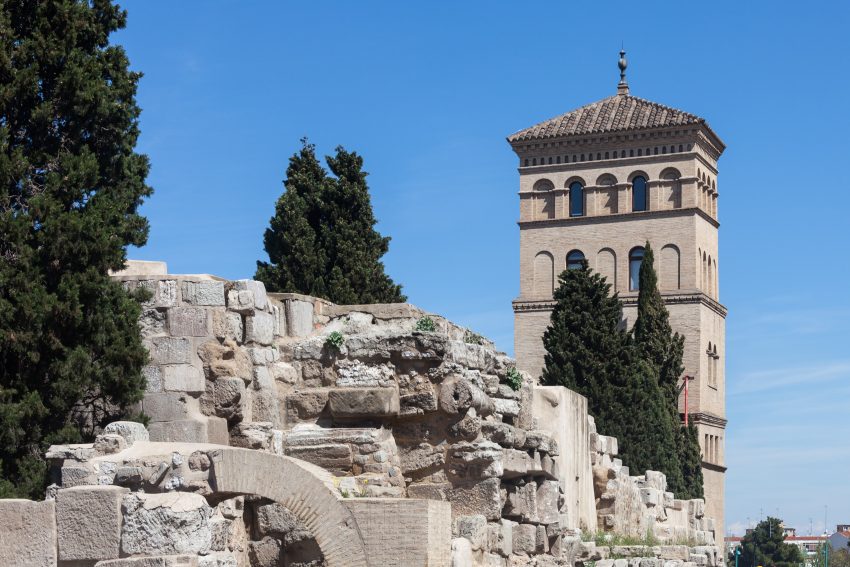
Zaragoza is a city that rewards the curious. On the surface, it's a handsome, walkable Spanish hub defined by grand plazas, Baroque façades, and a legendary tapas culture. But just beneath that everyday rhythm sits Caesaraugusta: a Roman provincial capital that still dictates the city's modern footprint.
What makes Zaragoza unique is how practical the history is. You don't need a half-day excursion to a distant ruin; the Roman layer is woven into the same neighborhoods where you'll find the best cafés and markets.
History of Roman Zaragoza (Caesaraugusta)
Before the Romans arrived, this bend in the Ebro River was Salduie, an Iberian settlement of the Sedetani people. But around 14 BC, the Emperor Augustus saw a strategic masterstroke: a colony for veteran soldiers from the Cantabrian Wars. He didn’t just build a town; he built a statement of Roman permanence.
Zaragoza is one of the few cities in the empire granted the full name of its founder: Colonia Caesaraugusta. This gave the citizens “Roman Right” (status equal to being in Italy itself). The city was laid out on a classic grid-a sharp, disciplined contrast to the winding Iberian paths.
The history of Caesaraugusta is inseparable from the river. In the 1st century AD, the Ebro was much deeper and more navigable. The city became a massive “dry port,” acting as the gateway for gold from the northern mines, olive oil from the valley, and luxury ceramics from across the Mediterranean. This wealth funded the white marble and fine mosaics that you can still see traces of today.
Where to Stay in Zaragoza
To make the most of visiting Zaragoza and this walking tour then you consider stay overnight at the centre. For a Roman Zaragoza focus, the best base is the historic core around the Roman Theatre area, Plaza de España, and the streets running toward the Ebro, because you'll be within an easy walk of the Teatro, the forum and port museums, and the broader Caesaraugusta archaeology cluster without needing taxis or transit. Strong, well-located options in this zone include Catalonia El Pilar, Hotel Alfonso, Vincci Zaragoza Zentro, and Hotel Goya.
If you want a central stay with a slightly calmer, more “new city” feel while still walking distance to the Roman sites, base yourself around Plaza Aragón, Paseo de la Independencia, and the Gran Vía corridor. This area works well if you like larger hotels, easy shopping and dining, and a straightforward stroll into the old town to start the Roman route early. Consider NH Collection Gran Hotel de Zaragoza, Hotel Palafox, Hotel Zaragoza Royal, and Hotel Gran Vía.
If you're arriving by train and want maximum logistical convenience, staying near Zaragoza-Delicias station can make sense, especially for short trips where you'll do one intensive day walking the Roman highlights. You'll typically need a quick taxi, bus, or tram to reach the Roman cluster, but you gain fast check-in/out, easy onward travel, and often better value for room size. Good options here include Eurostars Zaragoza, Exe Plaza Delicias, iStay by NH Zaragoza Sport Hotel, and Hotel Hiberus.
A Tour of Roman Zaragoza – Ruta de Cesar Augusta
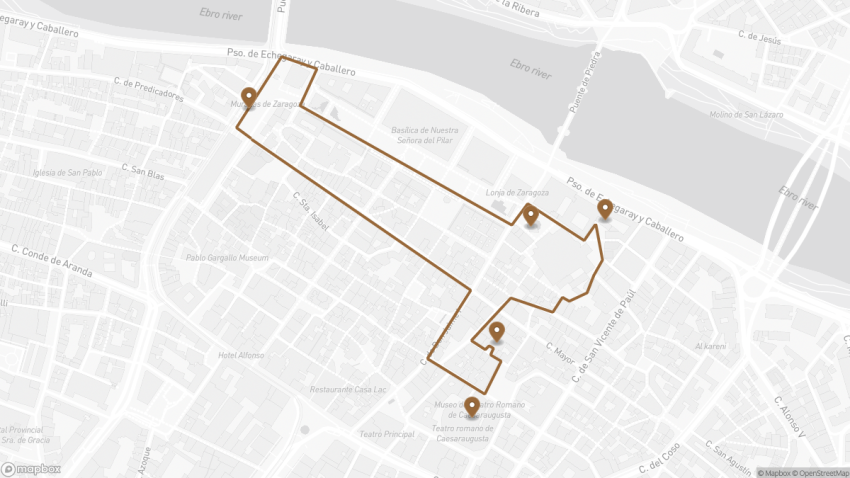
The best way to approach Roman Zaragoza is as a connected system rather than isolated sights. A useful way to package the experience is via the Ruta de Caesaraugusta, the city's walkable archaeological circuit linking four underground museums: the theatre, forum, public baths, and river port. The format is part of the appeal: you descend beneath today's street level to see in-situ remains, then resurface back into contemporary Zaragoza before walking to the next stop. Done in sequence, it's one of the clearest ways to understand how Caesaraugusta functioned as a real city rather than a set of disconnected ruins.
Treat the route as modular. If you’re short on time, prioritise the Roman Theatre and one of the “infrastructure” sites (baths or river port) to balance spectacle with everyday life. If you have longer, the full circuit is still manageable because each museum is compact and designed for focused visits. Between stops, build in café time on purpose-those pauses help you notice the Roman layer in the street grid, distances, and sightlines as you walk.
1. Murallas Romanas de Zaragoza: The Threshold of Caesaraugusta
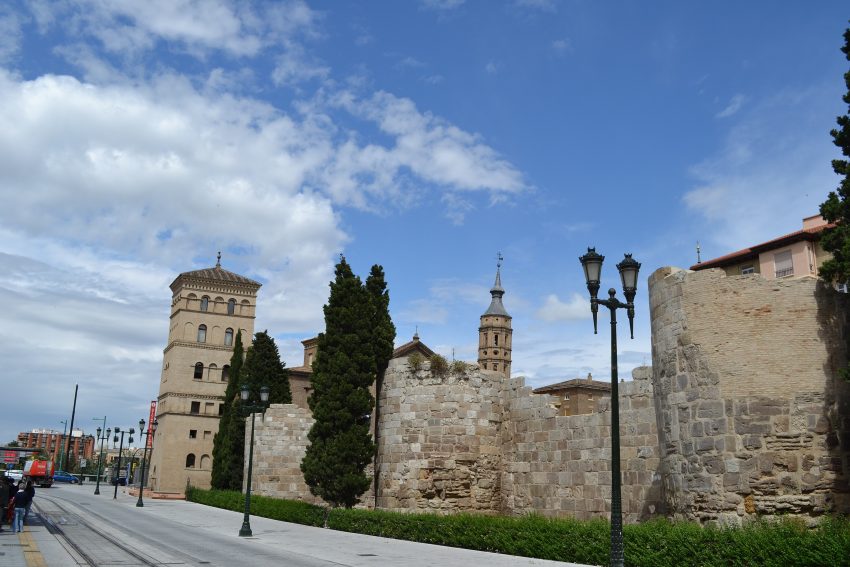
Murallas Romanas de Zaragoza are the quickest way to see Caesaraugusta as a defended, planned city rather than a loose scatter of archaeological fragments. A Roman wall wasn’t just a military feature; it defined the city’s edge, controlled access through gates, and projected a sense of order and permanence. Even in short surviving sections, the walls help you picture the scale of Roman Zaragoza and the idea of an urban “inside” that was protected, administered, and symbolically distinct from the surrounding countryside.
What makes the walls satisfying on a walking day is how they sit in the flow of the modern city. You’re not stepping into a separate “ruins zone”; you’re catching the Roman boundary mid-stride, often with just enough preserved fabric to read construction and thickness. Take a moment to look at how the wall line relates to today’s street pattern and open spaces—these are often the accidental places where the Roman layer survived because later building didn’t completely erase it. It’s also a useful mental map tool: once you’ve seen the wall, you can imagine the footprint of Caesaraugusta and place the theatre, forum, baths, and port within a coherent perimeter.
Practically, treat the walls as a connective stop between museums rather than a standalone destination. They work best when you’ve already seen one or two of the underground sites, because you can start linking “what the city did” (forum, baths, trade) with “how the city was shaped and protected” (defence, controlled entry, defined limits). If you’re photographing, step back far enough to include some modern context in the frame—the contrast is the point, and it reinforces the core pleasure of Roman Zaragoza: the ancient city is still threaded through the everyday one.
Location: Plaza César Augusto, 3, Casco Antiguo, 50003 Zaragoza, Spain | Hours: Monday: Open 24 hours Tuesday: Open 24 hours Wednesday: Open 24 hours Thursday: Open 24 hours Friday: Open 24 hours Saturday: Open 24 hours Sunday: Open 24 hours | Website
2. The Forum Museum: The Pulse of Power
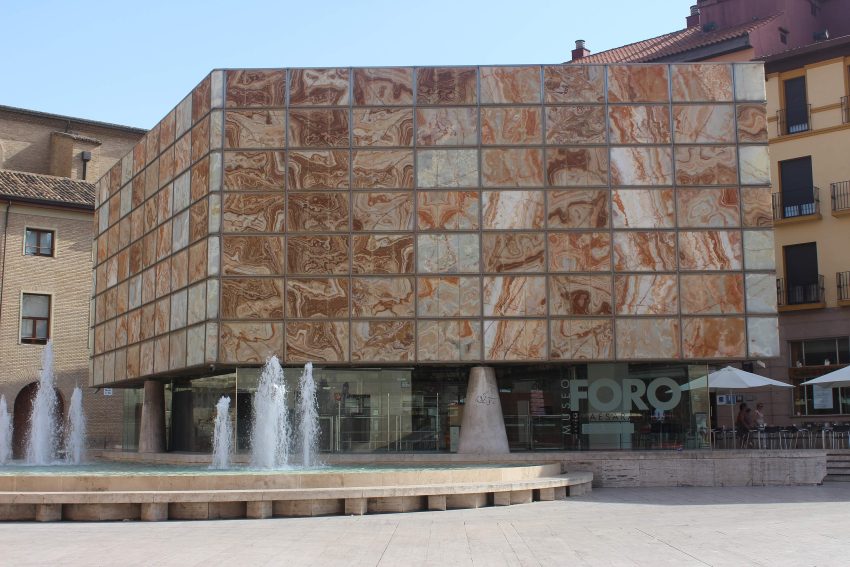
Museo del Foro de Caesaraugusta sits at the heart of what made Caesaraugusta feel like a proper Roman city: a planned civic centre where administration, commerce, and public life overlapped. The forum wasn’t just a “main square” in the modern sense; it was the engine room of the city’s identity, where power was displayed, decisions were made, and daily trade played out in the shadow of official buildings. Visiting this museum is a fast way to understand how Roman Zaragoza organised itself and why the historic centre still feels structured around a few key axes.
The experience works because it’s in-situ and below street level, so you’re looking at the Roman layer exactly where it belonged. You’ll see structural remains and foundations that suggest the scale of the forum complex and its market function, with interpretation that helps you visualise open space, surrounding porticoes, and the practical infrastructure needed to keep a busy civic-commercial zone operating. Pay attention to how the remains hint at movement and control—where people entered, where goods were handled, and how the built environment guided crowds.
As a stop on a walking route, it rewards a short, focused visit rather than a long museum session. Go in thinking about the forum as a “system”: politics and trade in the same footprint, public ceremony alongside everyday transactions. It pairs especially well with the river port museum because the two together connect the supply chain to the civic centre—goods arriving via the Ebro, then moving into the commercial life of the forum—making the Roman city feel coherent rather than fragmented.
Location: Pl. de la Seo, 2, Casco Antiguo, 50001 Zaragoza, Spain | Hours: Tuesday – Saturday: 10:00–14:00 & 17:00–21:00. Sunday: 10:00–14:30. Closed on Monday. | Price: Adults: €4; Reduced: €3; Caesaraugusta Route pass (4 sites): €7; Free entry for eligible visitors and on select free days. | Website

3. The River Port Museum: The Gateway to the World
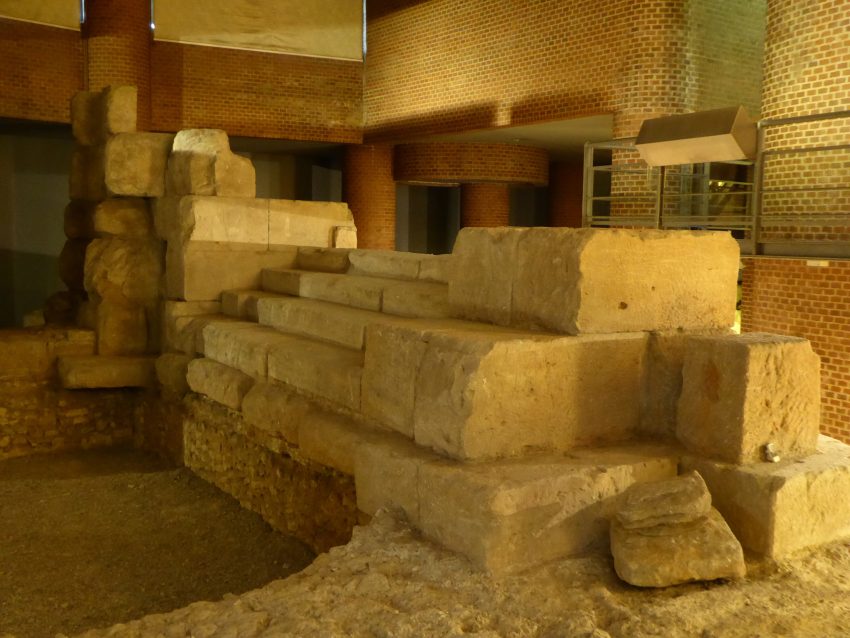
The Museo del Puerto Fluvial de Caesaraugusta is one of the most illuminating Roman stops in Zaragoza because it explains the city through movement and trade, not monuments. In Roman Caesaraugusta, the Ebro wasn’t just a backdrop; it was infrastructure, a commercial corridor, and a reason the city mattered. This museum takes that big idea and makes it legible in a short visit, showing how goods and people were channelled through the riverfront edge of the Roman town.
Inside, you’re looking at in-situ archaeological remains presented below modern street level, so the experience is very much about stepping down into the Roman layer. Expect structural elements tied to port activity and river engineering, supported by clear interpretation that helps you picture loading and unloading, storage, and the day-to-day logistics behind a provincial capital. It’s a great counterbalance to the theatre or forum because it focuses on the practical machinery of the city: supply, distribution, and connectivity.
For a walking day, this is an easy “high-impact” stop because it doesn’t require a big time commitment to be worthwhile. Go in with one question in mind—what would Zaragoza have needed to import, export, and store to function—and the displays click into place quickly. Pair it with the forum museum to connect commerce on the river with commerce in the civic centre, and you’ll start reading the historic centre differently as you walk: not just as streets between sights, but as routes shaped by trade, access, and control.
Location: Pl. de San Bruno, 8, Casco Antiguo, 50001 Zaragoza, Spain | Hours: Tuesday – Saturday: 10:00–14:00 & 17:00–21:00. Sunday: 10:00–14:30. Closed on Monday. | Price: Adults: €3; Reduced: €2; Free for under 16 and 65+; Free entry on the first Sunday of each month. Ruta Caesaraugusta (4 museums): €7; Reduced: €5. | Website
4. Public Baths Museum: The Social Hub
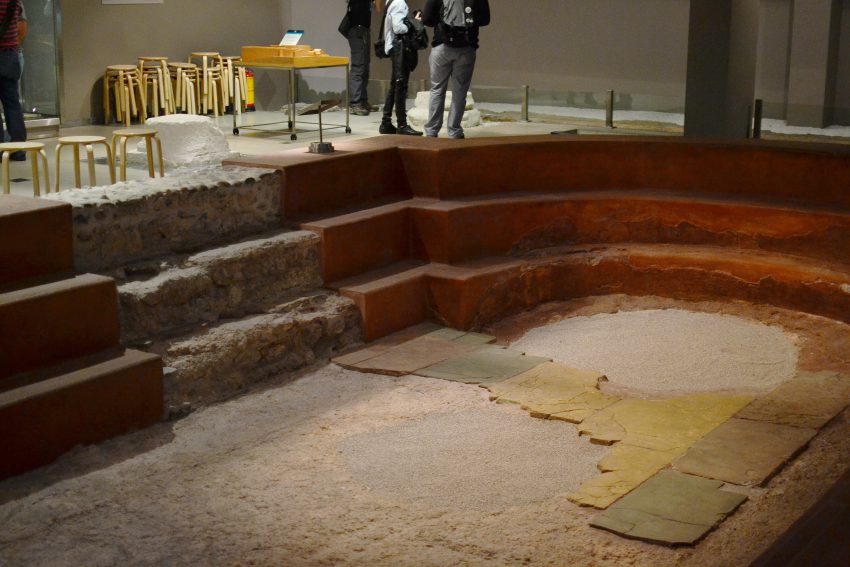
Museo de las Termas Públicas de Caesaraugusta is the best place in Zaragoza to grasp Roman daily life at human scale. Roman baths were not a luxury add-on; they were a social institution tied to hygiene, health, gossip, business, and routine. This museum gives you a grounded sense of how ordinary citizens interacted with the city—less about grand statements of power, more about the habits and infrastructure that made urban life feel Roman.
What you see is the preserved bath complex presented in place, with interpretation that explains how the sequence of rooms and services worked. Even if you’re not an archaeology specialist, it’s easy to follow the logic: controlled movement through spaces, careful engineering, and the sheer practicality of maintaining water and heat at scale. Look for clues in the layout that suggest how people flowed through the baths and how much planning was required to keep them running day after day.
For a self-guided walk, the baths are a smart “reset” stop between bigger headline sites because they change the lens you’re using. After seeing civic spaces like the forum or spectacle spaces like the theatre, the baths make the Roman city feel lived-in—built for routines, not just display. Pair this museum with a slow wander through the surrounding streets afterwards and you’ll start noticing how much of a Roman city’s story is about services and logistics rather than monuments alone.
Location: Museo de las Termas Públicas de Caesaraugusta, Calle de San Juan y San Pedro, Zaragoza, Spain | Hours: Tuesday – Saturday: 10:00–14:00 & 17:00–21:00. Sunday & public holidays: 10:00–14:30. Closed on Monday. | Price: €3 (general); €2 (reduced). | Website
5. The Theatre Museum: The 6,000-Seat Time Machine
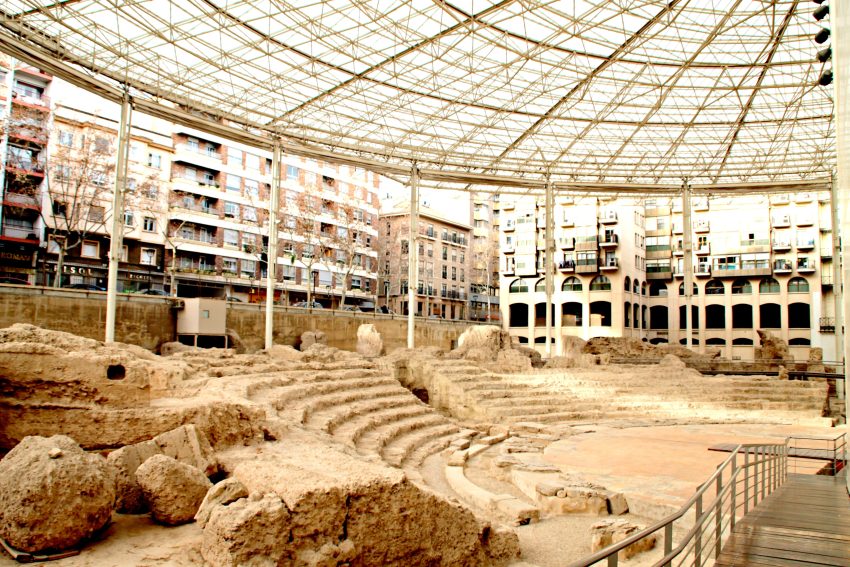
Museo del Teatro de Caesaraugusta is the most immediately impressive Roman site in Zaragoza, because it translates straight into scale: seating, stage area, and the sense of a crowd-focused building designed for performance and public visibility. In Caesaraugusta, the theatre was a statement of urban sophistication and Roman cultural identity, a place where entertainment, status, and civic pride converged. It’s the stop that most quickly convinces you that this was a substantial Roman city, not a minor outpost.
The museum presentation is particularly effective because it helps you understand the building as architecture, not just “ruins.” You’ll be able to read the structure—how the audience was arranged, how sightlines worked, and how the stage complex framed performance—while also getting enough context to imagine the noise, ceremony, and social signalling that came with public spectacles. Spend a moment orienting yourself: where the best seats would have been, how people entered and exited, and what the theatre’s placement says about the city’s planning.
As part of a Roman Zaragoza walking day, the theatre is a natural anchor point: start here to set your mental scale, then move on to the forum, baths, and port to fill in the city’s civic and practical layers. If you visit later in the day, it works just as well as a “finale” because it brings together the idea of Caesaraugusta as a functioning city with public life and shared experiences. Either way, it’s the place where Roman Zaragoza feels most tangible, because you’re standing inside a space designed to be full of people.
Location: C. de San Jorge, 12, Casco Antiguo, 50001 Zaragoza, Spain | Hours: Tuesday – Saturday: 10:00–14:00 & 17:00–21:00. Sunday: 10:00–14:30. Closed on Monday. | Price: Adults: €4; Reduced: €3; Under 16: free; 65+: free. Combined ticket (4 Caesaraugusta museums): €7; Reduced: €5; Free entry on the first Sunday of each month. | Website
Reading Zaragoza Through Its Roman Layer
By the time you finish this route, you'll start “reading” Zaragoza differently. You'll notice how the narrow streets of the Casco Antiguo still follow the lines of the Roman grid, and how the “flow” of people toward the river is a habit thousands of years in the making.

Moira & Andy
Hey! We're Moira & Andy. From hiking the Camino to trips around Europe in Bert our campervan — we've been traveling together since retirement in 2020!
This website uses affiliate links which earn a small commission at no additional cost to you.
Walking Tour Summary
Distance: 2 km
Sites: 5
Walking Tour Map