Ibiza, Spain: The Ultimate Travel Guide 2026

Ibiza Town sits on the island's south-east coast, in the municipality of Eivissa (Vila), and it's the main hub for shopping, dining, and nightlife on Ibiza in the Balearic Islands. It works well as a base because you can do a lot on foot: the harbour promenade, the old streets above it, and the beach areas all link together without needing constant taxis. If you’re arriving by ferry, you step straight into the most walkable part of town.
For sightseeing without getting bogged down in history, focus on the contrast between the waterfront and the upper town. Browse the marina and the old port for cafés and people-watching, then climb up to Dalt Vila for the views and atmospheric lanes (go earlier in the day or near sunset to avoid the harsh heat on the steep sections). If you want a simple beach option close to town, head toward Figueretes for a swim and an easy seaside stroll.
Evenings are where Ibiza Town really clicks: start with a relaxed dinner in the old town or around the port, then decide whether you want cocktails and bars in town or a bigger night out nearby. It's also one of the easiest places on the island for practical logistics-car hire, buses, boat trips, and day tours-so you can keep your days flexible and build plans around weather and mood rather than fixed schedules.
Table of Contents
- History of Ibiza
- Ibiza Town Before the Phoenicians
- Ibiza Town Under Phoenician and Carthaginian Influence
- Ibiza Town in the Roman and Late Antique Periods
- Ibiza Town During the Islamic Era
- Ibiza Town After the Catalan Conquest
- Ibiza Town and the Age of Fortifications
- Ibiza Town in the Bourbon and Modernising Centuries
- Ibiza Town in the 20th Century
- Ibiza Town in the 21st Century
- 11 Best places to See in Ibiza
- 7 Best Day Trips from Ibiza
- Where to Stay in Ibiza
- Best Time to Visit Ibiza
- How to get to Ibiza
History of Ibiza
Ibiza Town Before the Phoenicians (Prehistory–9th Century BCE)
Long before it became a walled town and port city, the area that would become Ibiza Town was part of a wider prehistoric landscape of farming, seafaring, and small coastal communities. Archaeological evidence across the island points to long-term settlement and trade contacts, setting the conditions for Ibiza Town’s later role as a strategic maritime node.
Ibiza Town Under Phoenician and Carthaginian Influence (9th Century BCE–123 BCE)
Ibiza Town’s urban story begins with Phoenician colonisation, when the settlement developed into a busy mercantile centre tied into Mediterranean networks. Under Carthaginian influence it expanded its commercial reach, exporting goods and acting as a stepping-stone between larger powers, with religious and cultural practices that left a lasting imprint on local identity.
Ibiza Town in the Roman and Late Antique Periods (123 BCE–8th Century CE)
After Roman control was established, Ibiza Town continued as a functioning urban centre within an imperial system that prioritised shipping lanes, taxation, and regional production. Over the following centuries, political fragmentation in the western Mediterranean reshaped governance and security, but the settlement’s maritime role kept it relevant through changing rulers and shifting trade patterns.
Ibiza Town During the Islamic Era (8th Century–1235)
With the arrival of Islamic rule, Ibiza Town entered a period of renewed administrative organisation and agricultural development across the island, supported by improved water management and new crops. The town’s built fabric and defensive logic evolved in step with broader western Mediterranean dynamics, as alliances and rivalries repeatedly tested coastal settlements.
Ibiza Town After the Catalan Conquest (1235–15th Century)
Following the conquest in 1235, Ibiza Town was integrated into new political and ecclesiastical structures, with land redistribution and the consolidation of authority around fortified and religious institutions. Medieval Ibiza Town balanced local life with periodic insecurity, and its civic rhythm was shaped by both commerce and the need to protect the population during unstable periods.
Ibiza Town and the Age of Fortifications (16th–17th Centuries)
The early modern centuries transformed Ibiza Town’s silhouette. Intensifying maritime conflict and the threat of raids drove major defensive works, and the town’s fortifications were strengthened into the recognisable bastioned system that still defines its upper town today. These upgrades were as much about deterrence and control as they were about withstanding attack, reflecting Ibiza Town’s value within wider regional strategy.
Ibiza Town in the Bourbon and Modernising Centuries (18th–19th Centuries)
As Mediterranean politics stabilised compared to earlier periods, Ibiza Town’s development became less dominated by emergency defence and more by administration, trade, and gradual civic change. The town’s economy remained closely tied to maritime connections and local production, while social life and public spaces evolved in line with broader Spanish reforms and 19th-century modernisation trends.
Ibiza Town in the 20th Century (1900–1999)
The 20th century brought the biggest lifestyle and economic shift in Ibiza Town’s history: the move toward tourism and international cultural visibility. Waves of visitors, artists, and entrepreneurs reoriented the town’s services, nightlife, and infrastructure, while restoration and planning efforts began to treat the historic core as an asset to be protected as well as lived in.
Ibiza Town in the 21st Century (2000–Present)
In recent decades, Ibiza Town has managed the constant tension between preservation and popularity. Recognition of the historic core’s cultural value strengthened conservation efforts, while the contemporary economy has continued to revolve around hospitality, events, and seasonal rhythms. The result is a town that markets its heritage and atmosphere, while continually adapting to the pressures of crowding, housing, and sustainable tourism.

Moira & Andy
Hey! We're Moira & Andy. From hiking the Camino to trips around Europe in Bert our campervan — we've been traveling together since retirement in 2020!
Visiting Ibiza for the first time and wondering what are the top places to see in the city? In this complete guide, I share the best things to do in Ibiza on the first visit. To help you plan your trip, I have also included an interactive map and practical tips for visiting!
This website uses affiliate links which earn a small commission at no additional cost to you.
11 Best places to See in Ibiza
This complete guide to Ibiza not only tells you about the very best sights and tourist attractions for first-time visitors to the city but also provide insights into a few of our personal favorite things to do.
This is a practical guide to visiting the best places to see in Ibiza and is filled with tips and info that should answer all your questions!
1. Monographic Museum of Puig des Molins

Location: Via Romana, 31, 07800 Eivissa, Illes Balears, Spain | Hours: Tuesday – Thursday: 09:00–15:00. Friday: 09:00–15:00 & 17:00–20:00. Saturday: 09:00–14:00. Sunday: 10:00–14:00. Closed on Monday. | Price: Free. | Website | Distance: 0.8km

2. Plaza del Sol

Location: Plaça del Sol, 7, 07800 Eivissa, Illes Balears, Spain | Hours: Daily: 10:00–01:00. | Price: Free. | Website | Distance: 1.2km
3. Baluard de Sant Bernat

Location: 07800 Eivissa, Balearic Islands, Spain | Hours: 24 Hours. | Price: Free. | Distance: 1.3km
4. Baluard de Sant Joan

Location: Unnamed Road, 07800, 07800 Eivissa, Illes Balears, Spain | Hours: 24 Hours. | Price: Free. | Website | Distance: 1.3km
5. Teatro Pereyra

Location: C. del Comte de Rosselló, 3, 07800 Eivissa, Illes Balears, Spain | Hours: Tuesday – Saturday: 08:00–23:00. Sunday: 10:00–23:00. Closed on Monday. | Price: Prices vary by show. | Website | Distance: 1.3km
6. Puerto de Ibiza

Location: Puerto de Ibiza, Spain | Hours: 24 Hours. | Price: Free. | Website | Distance: 1.3km
7. Castle of Ibiza

Location: Carrer Bisbe Torres Mayans, 14, 07800 Eivissa, Illes Balears, Spain | Hours: 24 Hours. | Price: Free. | Website | Distance: 1.4km
8. Portal de ses Taules

Location: 07800 Eivissa, Balearic Islands, Spain | Hours: 24 Hours. | Price: Free. | Distance: 1.4km
9. Saint Mary of Ibiza Cathedral

Location: Plaça de la Catedral, 1, 07800 Eivissa, Illes Balears, Spain | Hours: Check official website. | Price: Free; donations appreciated. | Website | Distance: 1.4km
10. Archaeology Museum

Location: Plaça de la Catedral, 5, 07800 Eivissa, Illes Balears, Spain | Hours: Monday: Closed. Tuesday – Thursday: 09:00–15:00. Friday: 09:00–15:00 & 17:00–20:00. Saturday: 09:00–14:00. Sunday: 10:00–14:00. | Price: Check official website. | Website | Distance: 1.4km
11. Baluard de Santa Llúcia
Location: Carrer Santa Llúcia, s/n, 07800 Eivissa, Illes Balears, Spain | Hours: 24 Hours. | Price: Free. | Distance: 1.6km
Best Day Trips from Ibiza
A day trip from Ibiza offers the perfect opportunity to escape the urban rhythm and discover the surrounding region's charm. Whether you're drawn to scenic countryside, historic villages, or cultural landmarks, the area around Ibiza provides a variety of easy-to-reach destinations ideal for a one-day itinerary. If you are looking to rent a car in Spain I recommend having a look at Discover Cars, first, as they compare prices and review multiple car rental agencies for you.
1. Platja des Cavallet

Location: Platja des Cavallet, 07818, Balearic Islands, Spain | Hours: 24 Hours. | Price: Free. | Distance: 7.6km
Visiting Platja des Cavallet
2. Playa de Ses Salines

Location: Platja de ses Salines, Spain | Hours: 24 Hours. | Price: Free. | Distance: 7.7km
Visiting Playa de Ses Salines
3. Torre de ses Portes

Location: 07818 Sant Josep de sa Talaia, Balearic Islands, Spain | Hours: 24 Hours. | Price: Free; donations appreciated. | Distance: 8.4km
Visiting Torre de ses Portes
4. Santa Gertrudis de Fruitera

Location: 07814 Santa Gertrudis de Fruitera, Balearic Islands, Spain | Hours: 24 Hours. | Price: Free. | Distance: 10.2km
Visiting Santa Gertrudis de Fruitera
5. Iglesia Es Cubells

Location: Plaça Pere Francc Palau i Quer, Es, 07839 Es Cubells, Illes Balears, Spain | Hours: Daily: Open 24 hours. | Price: Free; donations appreciated. | Website | Distance: 13.2km
Visiting Iglesia Es Cubells
6. Denia
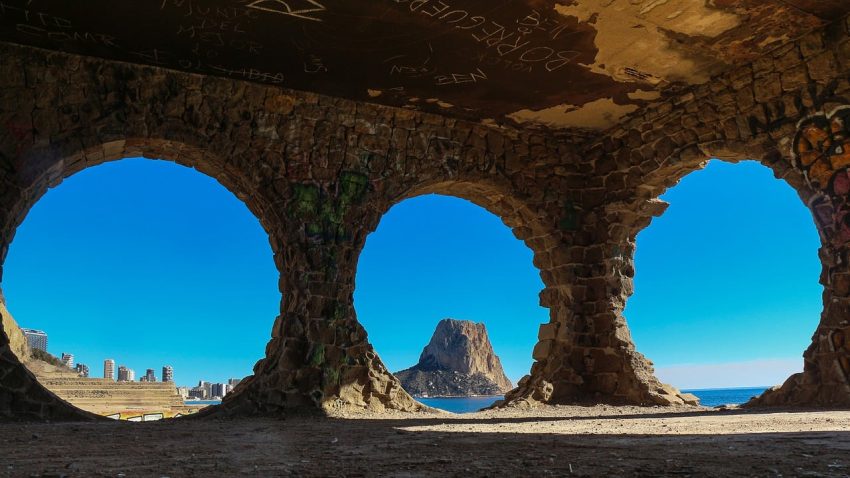
Visiting Denia
7. Palma de Mallorca
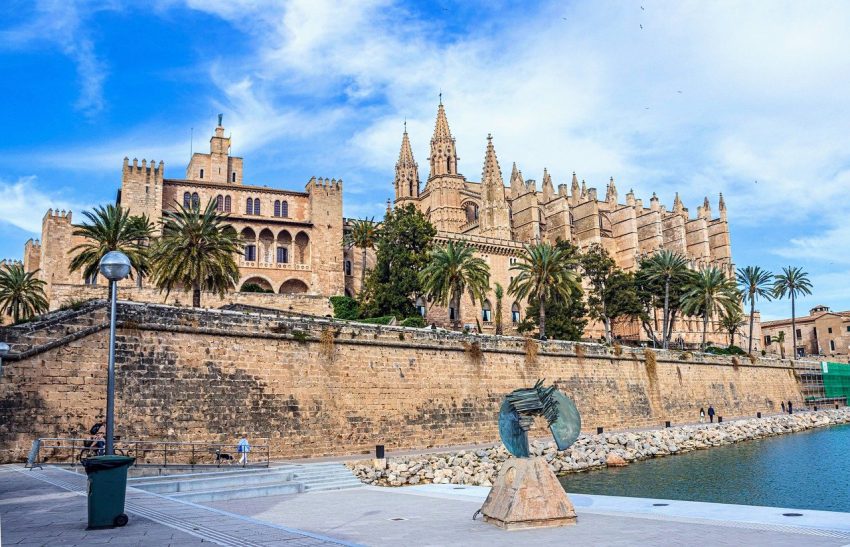
Visiting Palma de Mallorca
Where to Stay in Ibiza
If you want to be able to walk everywhere and have the most “Ibiza Town” atmosphere at your doorstep, stay around Dalt Vila, the old town lanes, and the Vara de Rey/port area. This keeps you close to the harbourfront restaurants, the evening buzz, and the hilltop viewpoints, without needing taxis for every meal. For a high-end, quiet stay right in the historic core, Hotel Mirador de Dalt Vila is ideal because it’s tucked away from the nightlife noise but still minutes from the port on foot. If you want a classic, central base that puts cafés, shops, and the waterfront within a short stroll, Montesol Experimental and The Standard, Ibiza both work well, with a more “in-town” feel and easy access to dinners and late-night spots.
If you prefer a slightly more polished, resort-adjacent vibe (and quick access to beach clubs and the marina scene), look at Marina Botafoch / Talamanca. You’ll typically get larger rooms, more facilities, and a calmer daytime pace, while still being a short taxi (or longer walk) from the old town. For a waterfront spa-style option in that zone, Ibiza Corso Hotel & Spa is a strong pick because it’s comfortable for downtime and still well-positioned for nights out. If you want something more relaxed and good-value while staying walkable to the centre, the Figueretes seafront edge is a smart compromise; THB Los Molinos suits travellers who want a quieter sleep, sea views, and straightforward access into Ibiza Town on foot.
Using the our Hotel and Accomodation map, you can compare hotels and short-term rental accommodations in Ibiza. Simply insert your travel dates and group size, and you’ll see the best deals for your stay.
Ibiza Accommodation Map
Best Time to Visit Ibiza
Ibiza Town in Spring (March–May) (Best)
Spring is the most comfortable all-round season for Ibiza Town: warm, bright days without the peak-summer humidity, and far fewer crowds than July–August. It’s ideal if you want to walk Dalt Vila without feeling rushed, eat well without fighting for tables, and still have plenty of atmosphere in the evenings. Prices are generally more reasonable than mid-summer, especially if you book before late April.
Spring is also when the season “switches on.” If you like nightlife but don’t want peak congestion, this is when the first big weekends and reopening momentum arrive, including events around late April. The International Music Summit (IMS) runs 22–24 April 2026, which noticeably lifts the energy in and around town.
For culture, the headline is the Ibiza Town Medieval Fair in Dalt Vila (7–11 May 2026), which fills the old streets with market stalls, street performance, and a festival feel that suits daytime sightseeing as much as evenings out.
Ibiza Town in Summer (June–August)
Summer is the loudest, busiest, and most expensive time to visit Ibiza Town. If your priorities are beach time, long nights, and a constant buzz, June through August delivers; if you prefer space and quieter evenings, it can feel intense. Expect higher accommodation costs, more traffic, and the need to reserve restaurants and boat trips earlier.
Festival-wise, Ibiza Town hosts Ibiza Pride in early-to-mid June 2026 (6–14 June), bringing parades, shows, and a concentrated week of events. It’s a strong choice if you want a social, celebratory trip with plenty happening in town each night.
Mid-summer also brings two classic local dates: the Virgen del Carmen celebrations on 16 July (with maritime processions and harbour events) and Sant Ciriac on 8 August, when the port fireworks at midnight are the main spectacle and the town is packed with viewers.
Ibiza Town in Autumn (September–November)
Early autumn (especially September and early October) keeps a lot of summer’s advantages—warm sea, long daylight, active restaurants and bars—without the same level of crowding. For many travellers, it’s the “smart summer” option: you still get beach and nightlife, but with shorter queues, easier reservations, and slightly softer prices.
As the season winds down, the party calendar shifts toward closing parties and fewer midweek options, while the daytime experience remains strong. If you like a balanced itinerary (sightseeing, swimming, good food, plus a couple of nights out), September is the most reliable autumn month.
Later in autumn, Ibiza Town becomes more local and relaxed. You’ll trade some high-energy nightlife for calmer streets, better-value stays, and a more authentic feel in cafés, galleries, and neighbourhood restaurants.
Ibiza Town in Winter (December–February)
Winter is quiet and practical: fewer visitors, lower accommodation prices, and a slower pace that suits sightseeing, photography, and food-focused trips. Many tourism-driven venues reduce hours or close, so it’s not the best season if your trip depends on a full nightlife schedule or constant “summer resort” activity.
The upside is how easy the town becomes. You can explore the old quarter without crowds, get tables last-minute, and see day-to-day island life rather than the seasonal peak version. If you’re comfortable trading beach-and-party intensity for calm exploration, winter can be a very good fit.
Weather is typically mild rather than hot, so pack for cooler evenings and occasional rain. The trip works best if you plan for flexible days (walks, museums, long lunches) rather than a tightly scheduled outdoor itinerary.
Annual Weather Overview
- January 15°C 62°F
- February 15°C 62°F
- March 16°C 64°F
- April 19°C 69°F
- May 22°C 75°F
- June 27°C 85°F
- July 30°C 89°F
- August 30°C 90°F
- September 27°C 84°F
- October 23°C 77°F
- November 19°C 69°F
- December 16°C 64°F
How to get to Ibiza
Getting to Ibiza Town by air
Nearest airport: Ibiza Airport (IBZ) is the only commercial airport on the island and the standard arrival point.
Airport to Ibiza Town: The simplest option is a taxi from the terminal to Ibiza Town (journey time varies with traffic). There are also public buses linking the airport with Ibiza Town; they're slower than a taxi but reliable and cost-effective. If you're carrying luggage or landing late, taxi is usually the least hassle.
Getting to Ibiza Town by train
Ibiza has no rail network, so the “train” part is really “train on the mainland, then ferry.” In practice, you take a train to a coastal port such as Barcelona or Valencia, then continue by ferry to Ibiza.
Train operators (mainland Spain):
Renfe (Spain): https://www.renfe.com/
Ouigo Spain: https://www.ouigo.com/es/
iryo: https://iryo.eu/
From station to ferry: On the mainland, plan extra time to transfer from the rail station to the ferry terminal (especially in larger cities), and aim to arrive early for check-in if you’re travelling in peak months.
Getting to Ibiza Town by Car
You can't drive to Ibiza Town from the mainland without a ferry. The standard approach is to drive to a mainland port, take a car ferry to Ibiza, then drive onward into Ibiza Town. If you are looking to rent a car in Spain I recommend having a look at Discover Cars, first, as they compare prices and review multiple car rental agencies for you.
Parking and access: In the historic core, some streets are steep, narrow, or access-restricted, so it’s often easier to park outside the old town and walk in. If you’re staying central, check whether your accommodation provides parking or guidance on the closest public car parks.
Travelling around Ibiza Town
Ibiza Town is walkable for most visitors: the port area, the old town approaches, and the main dining/nightlife streets are easiest on foot. For longer hops (beaches, viewpoints, or neighbouring resorts), taxis are plentiful in-season, and local buses cover the main corridors. If you're day-tripping around the island, a rental car or scooter gives the most flexibility, but for a stay focused on Ibiza Town itself, walking plus taxis/buses is usually enough.