Ciutadella de Menorca, Spain: The Ultimate Travel Guide 2026

Ciutadella de Menorca is the kind of place that makes you slow down without trying. It sits on the far western side of Menorca in Spain's Balearic Islands, and it’s compact enough to explore on foot while still feeling properly “town-like” with its grand stone façades, little squares, and a harbour that pulls you down to the water again and again. If you’re building a Menorca itinerary, this is one of the best places to base yourself for a mix of scenery, food, and easy evening atmosphere.
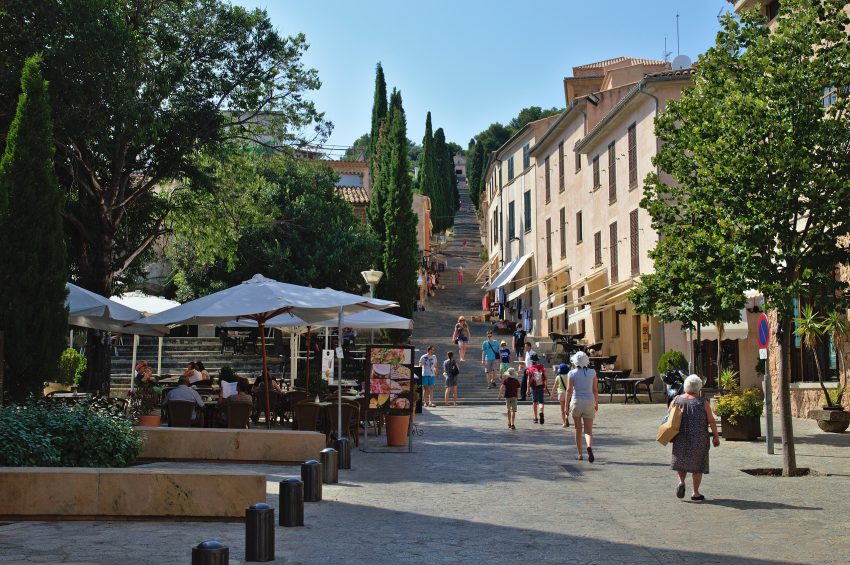
The simplest way to enjoy Ciutadella is to treat it like a self-guided walking tour: start around Plaça des Born, drift through the old-town lanes, and follow the natural downhill flow until you reach the port. The joy is in the small moments-arched passages, quiet corners, and the changing light on the limestone-so leave gaps in your day for spontaneous stops, a coffee, and the occasional detour when a street looks too good not to follow.
Time your visit for late afternoon into sunset if you can. The harbourfront is at its best then, with a gentle buzz and that classic Mediterranean feeling of the day shifting into evening; it's a perfect time for photos, an aperitif, and an unhurried dinner. If you're using Ciutadella as a base, it also pairs well with short drives or bus trips to western Menorca's coves and viewpoints-then you're back in town for the easiest kind of night: a stroll, a good meal, and no need for a plan.
Table of Contents
- History of Ciutadella de Menorca
- Ciutadella de Menorca in the Talayotic and Early Mediterranean Era
- Ciutadella de Menorca under Roman Rule and Late Antiquity
- Ciutadella de Menorca during the Islamic Period
- Ciutadella de Menorca after the Catalan-Aragonese Conquest
- Ciutadella de Menorca in the Age of Corsairs and the 1558 Catastrophe
- Ciutadella de Menorca amid Imperial Rivalries and the Capital Shift
- Ciutadella de Menorca in the 19th Century
- Ciutadella de Menorca in the 20th Century to the Present
- Best things to do and See in Ciutadella de Menorca
- Ciutadella de Menorca: Old Town loop from Plaça des Born to the harbour
- Ciutadella de Menorca: Cathedral-Basilica of Santa Maria
- Ciutadella de Menorca: Can Saura, Museu de Ciutadella
- Ciutadella de Menorca: Lithica
- Ciutadella de Menorca: Naveta des Tudons
- Ciutadella de Menorca: Cova de S’Aigua
- Ciutadella de Menorca: Torre de San Nicolás
- Ciutadella de Menorca: Sa Farola lighthouse walk
- Ciutadella de Menorca: Punta Nati lighthouse for sunset
- Ciutadella de Menorca: Swim coves and cliff pools
- 3 Best Day Trips from Ciutadella de Menorca
- Where to Stay in Ciutadella de Menorca
- Best Time to Visit Ciutadella de Menorca
- How to get to Ciutadella de Menorca
History of Ciutadella de Menorca
Ciutadella de Menorca in the Talayotic and Early Mediterranean Era (c. 2000 BCE–123 BCE)
Long before written records, the story of Ciutadella de Menorca begins in the island’s prehistoric Talayotic world, when communities built monumental stone structures and developed a landscape-based way of life that still shapes the wider region’s identity. While the most famous prehistoric sites sit outside the town’s later urban core, this period matters because it established the deep-time human presence and the cultural continuity that Menorca is known for today.
As Mediterranean trade networks expanded, the island moved from isolation to interaction. Seafaring routes brought new materials, ideas, and economic ties, and even when settlement patterns shifted, the broader area around Ciutadella de Menorca became part of a wider maritime system where coastal access and local resources shaped power and opportunity.
Ciutadella de Menorca under Roman Rule and Late Antiquity (123 BCE–7th century)
Roman control brought a new administrative order and tighter integration with Mediterranean commerce. The town’s early urban development belongs to this era, when Roman patterns of governance, infrastructure, and trade helped formalise settlement into a more recognisable civic centre. It’s also when the rhythms of port life—movement of goods, people, and information—became a defining feature of the local economy.
In late antiquity, as Roman authority weakened, the town’s fortunes rose and fell with shifting regional powers. Christianity spread and institutions evolved, but stability was uneven. What matters about this period is less a single dramatic event and more the gradual transition: a town adapting to changing rulers while retaining its importance as a local focal point.
Ciutadella de Menorca during the Islamic Period (8th–13th centuries)
With Islamic rule, Ciutadella de Menorca entered a period of new governance and cultural influence that reshaped administration, agriculture, and the island’s connections across the western Mediterranean. Systems of land management, water use, and local organisation evolved, and the town functioned within a broader framework that emphasised coastal networks and regional exchange.
This era also set up many of the later medieval dynamics: fortified thinking, negotiated power, and the strategic value of ports and towns. Even as the details of daily life changed, Ciutadella de Menorca remained a place where wider Mediterranean currents met local needs.
Ciutadella de Menorca after the Catalan-Aragonese Conquest (1287–15th century)
The conquest of 1287 marked a major turning point, bringing the town into the orbit of the Crown of Aragon and reshaping institutions, landholding, and religious life. A Latin Christian civic structure strengthened, and Ciutadella de Menorca developed as the island’s principal centre, with growing emphasis on ecclesiastical authority and urban status.
Over the following centuries, the town’s identity deepened around a medieval core: churches, civic spaces, and a hierarchy of noble and clerical influence. This is the foundation for the architectural character people associate with the historic centre today—less about a single “founding” moment and more about steady consolidation.
Ciutadella de Menorca in the Age of Corsairs and the 1558 Catastrophe (16th–17th centuries)
The 16th century brought heightened vulnerability as Mediterranean conflict, privateering, and raiding intensified. The defining trauma for Ciutadella de Menorca was the Ottoman raid of 1558, when the town was attacked, sacked, and many inhabitants were taken captive. It’s hard to overstate the impact: it reshaped demographics, memory, and defensive priorities for generations.
Recovery was gradual. The town rebuilt physically and socially, but the experience reinforced a defensive mindset and a sharper awareness of maritime risk. This period also contributed to the solemn undercurrent that sits beneath later celebrations and civic traditions—history remembered not only through monuments, but through communal identity.
Ciutadella de Menorca amid Imperial Rivalries and the Capital Shift (18th century)
In the 18th century, Menorca became entangled in major European power struggles, and control changed hands between competing empires. For Ciutadella de Menorca, the most consequential outcome was political and administrative: the island’s capital functions shifted away, favouring the strategic harbour of Maó/Mahón under new rulers.
That change mattered because it altered the town’s trajectory. Ciutadella de Menorca retained prestige, ecclesiastical weight, and a strong civic identity, but it no longer held the same administrative primacy. The result was a town that remained culturally significant even as political gravity moved elsewhere.
Ciutadella de Menorca in the 19th Century (1800s)
The 19th century was shaped by modernisation pressures, changing trade patterns, and social transformation across Spain. In Ciutadella de Menorca, local elites and institutions continued to influence civic life, while economic activity increasingly depended on adaptable local industries and links beyond the island.
This was also an era when the town’s built environment and urban habits settled into the form many visitors recognise: a mature historic centre, a strong local identity, and a civic culture that balanced tradition with gradual change rather than sudden reinvention.
Ciutadella de Menorca in the 20th Century to the Present (1900s–Today)
The 20th century brought the disruptions of modern Spanish history and, later, the profound shift of tourism-driven economics. For Ciutadella de Menorca, tourism didn’t simply “arrive”; it changed how the town used its spaces, how the waterfront functioned, and how local life negotiated seasonality and growth.
In recent decades, Ciutadella de Menorca has leaned into what it does best: preserving a strong sense of place while accommodating visitors. The town’s identity today is shaped by that balance—heritage as lived reality, not museum display—supported by traditions, civic pride, and a steady focus on keeping the historic character meaningful in everyday life.

Moira & Andy
Hey! We're Moira & Andy. From hiking the Camino to trips around Europe in Bert our campervan — we've been traveling together since retirement in 2020!
Visiting Ciutadella de Menorca for the first time and wondering what are the top places to see in the city? In this complete guide, I share the best things to do in Ciutadella de Menorca on the first visit. To help you plan your trip, I have also included an interactive map and practical tips for visiting!
This website uses affiliate links which earn a small commission at no additional cost to you.
Best things to do and See in Ciutadella de Menorca
1. Ciutadella de Menorca: Old Town loop from Plaça des Born to the harbour
If you do one thing in Ciutadella de Menorca, make it an unstructured wander through the old town, letting the lanes pull you from small squares to grand façades and then down toward the water. The best “route” is the simplest: start around Plaça des Born, drift past the cathedral area, then follow the natural downhill flow until you hit the harbour.
What makes this walk special is the way the town changes mood street by street. In the daytime it’s all bright limestone and quiet corners; by late afternoon, the same lanes feel warmer and more theatrical, with balconies catching the light and cafés spilling into the open.
Plan to do the loop twice if you can: once in the morning when it’s calm, and again at sunset when the harbour starts to hum. Even if you’re not normally a “walk around” person, Ciutadella de Menorca is the kind of place where the walking is the point.
2. Ciutadella de Menorca: Cathedral-Basilica of Santa Maria
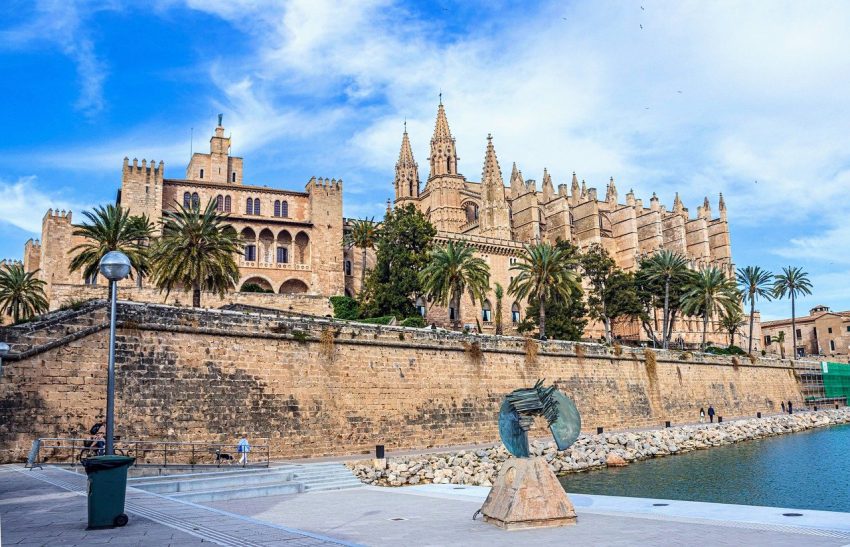
The cathedral is one of those places that instantly anchors your sense of the town. Even if you only step inside briefly, it adds depth to your walk because it connects the surrounding lanes into a clear “heart” of Ciutadella de Menorca, and it’s a good reset point if you’re meandering without a plan.
If you do the paid visit, keep expectations tuned to atmosphere rather than spectacle: cool stone, height, and a quiet pause from the busy streets outside. It’s best enjoyed slowly, especially on a hot day when you’ll appreciate the shade and stillness.
Entrance fee: typically around €6–€7 (often combined with adjoining spaces, depending on the ticket on the day). Opening hours: the church is commonly open daily around 08:00–13:00 & 18:00–20:00, while paid visitor hours tend to be more limited and seasonal (often concentrated in late morning to afternoon). Check the posted timetable at the entrance when you arrive.
3. Ciutadella de Menorca: Can Saura, Museu de Ciutadella
Can Saura is the best place in Ciutadella de Menorca to add context to what you’re seeing outside. It’s set in a handsome historic house and feels curated for curious travellers: you can dip in for an hour and come out with a clearer sense of the town’s layers, without needing to commit to a full museum day.
What I like about visiting here is how it sharpens your “street reading” afterwards. Details you might otherwise miss—how the town’s traditions are woven into everyday life, or why certain parts of the built environment look the way they do—start to pop once you return to the lanes.
Entrance fee: €5 (many categories are free, including under 18s, over 65s/pensioners, students with ID, and Wednesdays). Opening hours: Tuesday–Saturday 10:30–13:30 & 17:30–21:00. Closed Sunday–Monday.
4. Ciutadella de Menorca: Lithica (Pedreres de s’Hostal)
Lithica is one of the most distinctive places near Ciutadella de Menorca: a former stone quarry turned into an outdoor art-and-landscape space. It’s part sculpture park, part geology lesson, and part “wow” factor—especially when you step into the quarry walls and realise how dramatically the stone has been cut and shaped.
Go when the light is good, because the whole experience is about shadows and scale. Late afternoon is excellent, but even mid-morning can be beautiful if you like crisp contrast and you’re comfortable in the sun.
Entrance fee: €10 (general), €7 (reduced), free for under 15s. Opening hours: February–March Monday–Sunday 09:00–14:00; April–October Monday–Saturday 09:00–dusk and Sunday 09:00–14:00 (dusk varies by month); November–December Monday–Sunday 09:00–14:00; January closed.
5. Ciutadella de Menorca: Naveta des Tudons
This is the prehistoric stop that actually feels “close enough” to do casually from Ciutadella de Menorca—no big logistical commitment, just a short drive or taxi and a brief walk from the parking area. It’s compact, but it lands hard: you’re looking at a structure that belongs to a completely different scale of time than the town’s elegant streets.
The best way to experience it is to go early, before the day warms up and before you’ve filled your head with too many other sights. Give yourself a few quiet minutes to circle it, notice the stonework, and let the simplicity do its job.
Entrance fee: €2 (general), €1.20 (reduced); free for children under 8, and Mondays are free entry. Opening hours: Tuesday–Sunday 09:00–15:15; Monday free entry.
6. Ciutadella de Menorca: Cova de S’Aigua
If you want something genuinely different within easy reach of Ciutadella de Menorca, Cova de S’Aigua is the “left turn” that works. It’s a guided underground visit centred on cool air, stone, and a small, atmospheric subterranean lake—exactly the kind of place that feels like a bonus discovery, especially in warmer months.
Because it’s guided, it’s also a good option when you want structure for an hour: you turn up, follow the pace, and emerge feeling like you’ve experienced something you wouldn’t have found by wandering streets alone.
Entrance fee: free for under 8s; €5 (ages 8–15); €10 (ages 15+); €6 (65+ and pensioners); €5 (disabled visitors with certification). Opening hours (box office/tickets): Monday–Tuesday 09:00–15:15; Wednesday–Sunday 09:30–15:45 (with closures around Sant Joan dates).
7. Ciutadella de Menorca: Torre de San Nicolás (watchtower visit)
The Torre de San Nicolás is a satisfying “small but memorable” sight: a defensive tower that’s close enough to reach on foot from the centre of Ciutadella de Menorca, and far enough that it feels like you’ve intentionally gone somewhere. It’s especially good if you like places that come with sea air and big horizons.
This is a great late-day stop, because you can fold it into a waterfront walk and then continue toward the harbour area for dinner. It’s also one of those places that photographs well in simple ways—stone, sky, and clean lines—without needing any special effort.
Entrance fee: free. Opening hours: May–October Tuesday–Saturday 16:00–20:00. Closed Sunday–Monday.
8. Ciutadella de Menorca: Sa Farola lighthouse walk
Sa Farola is the easy “no ticket, no schedule” excursion when you want a change of scene without leaving Ciutadella de Menorca far behind. The walk out is part of the appeal: it’s a simple coastline stretch where you can clear your head, catch breezes, and watch the town soften into the landscape.
It’s best either early in the morning when everything feels fresh, or in the last hour of daylight when the sky starts doing its thing. Bring water, and treat it like a gentle stroll rather than a big hike—this is more about mood than mileage.
Entrance fee: free. Opening hours: open-access viewpoint area at all times.
9. Ciutadella de Menorca: Punta Nati lighthouse for sunset
Punta Nati is the classic “go for the view” spot near Ciutadella de Menorca. The landscape feels stark and open, and that emptiness is exactly why sunset works here: you get huge sky, clean horizons, and a sense of space that’s hard to find in the town’s tighter lanes.
The main trick is timing and access. In peak periods, there can be traffic management, and some seasons use shuttle-style options around sunset hours, so it’s worth deciding whether you want to drive, take a taxi, or look into any local bus arrangements.
Entrance fee: free. Opening hours: open-access viewpoint area at all times.
10. Ciutadella de Menorca: Swim coves and cliff pools (Cala Santandria, Cala Blanca, Cala en Brut, Cala en Forcat)
Within a short radius of Ciutadella de Menorca, you can mix “proper beach” coves with dramatic swim spots, which is exactly what makes basing yourself here so easy. Cala Santandria and Cala Blanca are the straightforward choices when you want sand, easy entries, and a classic cove shape that feels safe and relaxed.
For a more adventurous swim, head toward the cliffy inlets like Cala en Brut and Cala en Forcat, where the draw is clear water, rock platforms, and that exhilarating jump-in energy. These places feel more like a local summer ritual than a traditional beach day.
All of them work best early or late, when the light is softer and you’ll find a bit more space. If you only have one afternoon, do town first, then finish with a swim and return for dinner in Ciutadella de Menorca while you’re still salty and sun-warmed.