Barcelona Self-Guided Walking Tour (2026): From Columbus Monument to Gaudí
This website uses affiliate links which earn a small commission at no additional cost to you.
Barcelona is a city that rewards slow travel: a few blocks can take you from medieval stonework to Modernisme façades that look like they've been sculpted rather than built. This self-guided route is designed to feel like a natural story of the city, starting at the waterfront landmark of Mirador de Colom, cutting through the buzz of La Rambla and La Boqueria, and then unfolding into the Gothic Quarter's quieter lanes around Plaça Nova and Barcelona Cathedral.
From there, the walk shifts from old Barcelona to its more polished, turn-of-the-century showpieces, with Palau de la Música Catalana as a highlight before you reach Plaça de Catalunya. Once you step onto Passeig de Gràcia, the tone changes again: this is where the “greatest hits” of Catalan Modernisme line up almost back-to-back, and you'll see why this stretch is often considered one of the best things to see in Barcelona for architecture lovers.
The final leg builds toward Gaudí’s most famous work, moving from Casa Lleó Morera, Casa Amatller, Casa Batlló and Casa Milà into the Eixample grid and on to La Sagrada Família. Do the tour at your own pace-treat it as a sightseeing walk with photo stops, or plan ahead to go inside key sites (especially Sagrada Família, which is far easier with timed tickets). Either way, you’ll end with a clear sense of how Barcelona’s streets evolved from Roman and Gothic foundations into a city defined by bold, modern design.
Table of Contents
- How to Get to Barcelona
- Where to Stay in Barcelona
- Your Self-Guided Walking Tour of Barcelona
- Christopher Columbus monument
- La Rambla
- Palau Guell
- Mercat de la Boqueria
- Placa Nova
- Catedral de Barcelona
- Palau de la Musica Catalana
- Placa de Catalunya
- Passeig de Gracia
- Casa Lleo Morera
- Casa Amatller
- Casa Batllo
- Casa Mila
- La Sagrada Familia
- La Monumental
- Arc de Triomf
- Ciutadella Park
- El Born Centre de Cultura i Memòria
- Basílica de Santa Maria del Mar
How to Get to Barcelona
By Air: Barcelona is served by Barcelona-El Prat Airport (BCN), the main international gateway around 12-15 km southwest of the city centre. The easiest public-transport option is the Aerobús (A1/A2) to Plaça de Catalunya, which is usually the most convenient drop-off for hotels and onward metro connections; alternatively, the metro (L9 Sud) links the airport to the wider network via interchanges, and local trains (R2 Nord) connect to major stations depending on the terminal. Taxis and rideshares are plentiful and can be good value for groups, late-night arrivals, or heavy luggage. For the best deals and a seamless booking experience, check out these flights to Barcelona on Booking.com.
By Train: Long-distance services arrive at Barcelona Sants (the main hub) and, on some routes, França Station or Passeig de Gràcia, with high-speed AVE and international connections (notably via France) making rail a strong option from many European cities. From Sants, you can reach most neighbourhoods quickly via the metro (L3/L5), local trains, or a short taxi ride, and it's generally the best arrival point if you want to start sightseeing without dealing with airport transfers. If you're continuing onward in Spain, Sants is also the most practical station for onward connections. Train schedules and bookings can be found on Omio.
By Car: Driving into Barcelona is straightforward via major motorways, but the centre is not car-friendly: expect congestion, limited parking, and restricted-traffic zones that can trigger fines if you enter incorrectly. For a smoother arrival, aim to park once-either at your accommodation (confirm parking in advance) or in a secure garage near the edge of the central districts-then rely on walking and public transport. If you're coming from the coast or nearby regions for a day trip, park-and-ride options and garages near metro stops can save time and stress. If you are looking to rent a car in Spain I recommend having a look at Discover Cars, first, as they compare prices and review multiple car rental agencies for you.
By Bus: Barcelona has extensive long-distance coach links from across Spain and nearby countries, with many services using Barcelona Nord (Estació del Nord) as the primary terminal. Coaches are often cheaper than rail, and they can be convenient on routes where train connections are limited; once you arrive, the metro and local buses make it easy to reach the Gothic Quarter, Eixample, or Plaça de Catalunya without needing a car. [bus]
Where to Stay in Barcelona
To make the most of visitng Barcelona and this walking tour then you consider stay overnight at the centre. If you want the easiest “walk-out-the-door” base with fast access to both the Old Town and the elegant boulevards, aim for Plaça de Catalunya and the streets just off it; you'll be able to join the route quickly and keep breaks (coffee, siesta, dinner) simple. Good picks here include Olivia Plaza Hotel and Hotel Jazz, with Yurbban Passage Hotel & Spa slightly east if you like a quieter feel while still staying very central.
For a more “Barcelona” feel with wide sidewalks, Modernista architecture, and easy strolling between major sights, base yourself in Eixample (especially around Passeig de Gràcia/Diagonal). It's comfortable for walking, well-lit at night, and typically calmer than the old lanes while still being close enough to dip into the Gothic Quarter on foot. Consider H10 Casa Mimosa, Hotel Praktik Bakery, or Hotel Granvia if you want classic-central positioning without being right on the busiest tourist corridors.
If your walking tour is heavy on medieval streets, plazas, and cathedral-era Barcelona, staying in the Gothic Quarter (or just by Port Vell) puts you in the middle of the atmosphere-great for early starts and late evenings when day-trippers clear out. It's also the most “doorstep convenient” for anything that begins in the old city, but rooms can be smaller and streets can be noisier in peak season. Strong options include Hotel Neri Relais & Châteaux, Serras Barcelona, and Hotel 1898 for a central base with a very direct line into the historic core.
If you prefer a slightly trendier, food-and-bar-forward base (and you like being close to the Picasso Museum / Santa Maria del Mar side of the old city), El Born is ideal: it’s still walkable to Gothic highlights, but feels more local in the evenings and is generally easier for finding casual dining. Look at Hotel Ciutadella Barcelona, Hotel REC Barcelona, or K+K Hotel Picasso El Born if you want quick access to the old town without being in the tightest lanes.
For better value while staying close enough to walk into the centre (and with excellent metro backup if your tour runs long), consider the Sant Antoni / Poble-sec edge near Paral·lel. It’s practical for getting around, usually less congested, and works well if you’re planning a mix of the walking tour plus evenings out. A reliable choice here is Hotel Barcelona Universal, which keeps you within a straightforward stroll of the old city while staying slightly removed from the densest tourist foot traffic.
Your Self-Guided Walking Tour of Barcelona
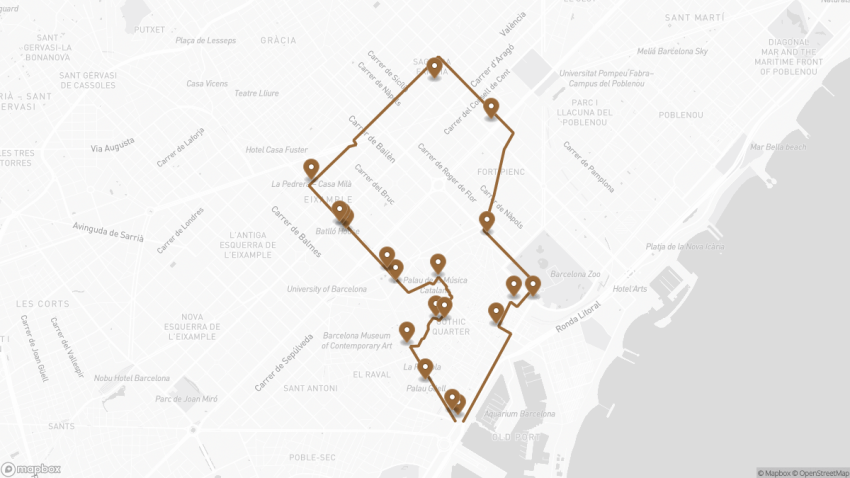
Discover Barcelona on foot with our walking tour map guiding you between each stop as you explore its waterfront promenades, medieval streets, grand plazas, and Modernista masterpieces. Because this is a self guided walking tour, you're free to skip any sights that don't interest you, linger longer where you love the vibe, and take coffee stops whenever you want.
1. Christopher Columbus monument
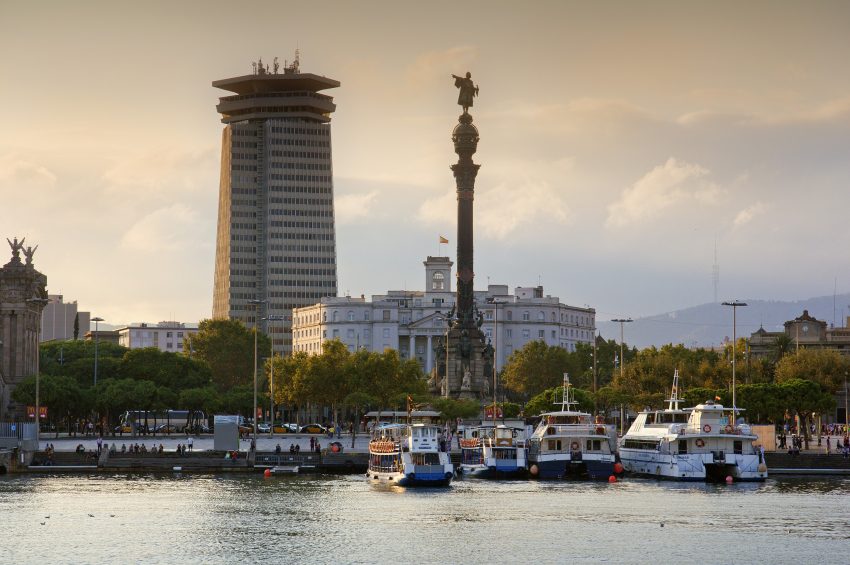
The Christopher Columbus monument or Mirador de Colom rises at the foot of La Rambla where the city meets the port, built for the 1888 Universal Exposition as a statement of Barcelona’s maritime identity. The monument celebrates Christopher Columbus and, more broadly, Spain’s age of exploration, at a time when Barcelona was presenting itself as modern, outward-looking, and economically ambitious. Its mix of sculpture and ironwork is very much late-19th-century civic showmanship.
At ground level, take a slow lap around the base to read the narrative in stone: allegorical figures, reliefs, and decorative details that frame Columbus as a heroic symbol rather than a complicated historical figure. The column itself is the spectacle, designed to draw your eye upward from the bustle of the port. It’s also a useful landmark for orienting yourself between the waterfront, the lower Ramblas, and the start of the Gothic Quarter’s lanes.
If the lift is operating, the main “what to see” is the view: a compact panorama that connects the old city grid to the sea, with Montjuïc on one side and the Eixample’s sweep on the other. Even without going up, the area around it is lively—street performers, passing traffic, and the constant movement between the port and the city center. It’s best treated as a short, punchy stop that sets the scene for what Barcelona is about: streets, skyline, and sea.
Location: Plaça Portal de la Pau, s/n, Ciutat Vella, 08002 Barcelona, Spain | Hours: Daily: 08:30–14:00. | Price: Adults: €6; Reduced: €4 (children 4–12, seniors 65+, groups 10+); Under 4: free. | Website

2. La Rambla
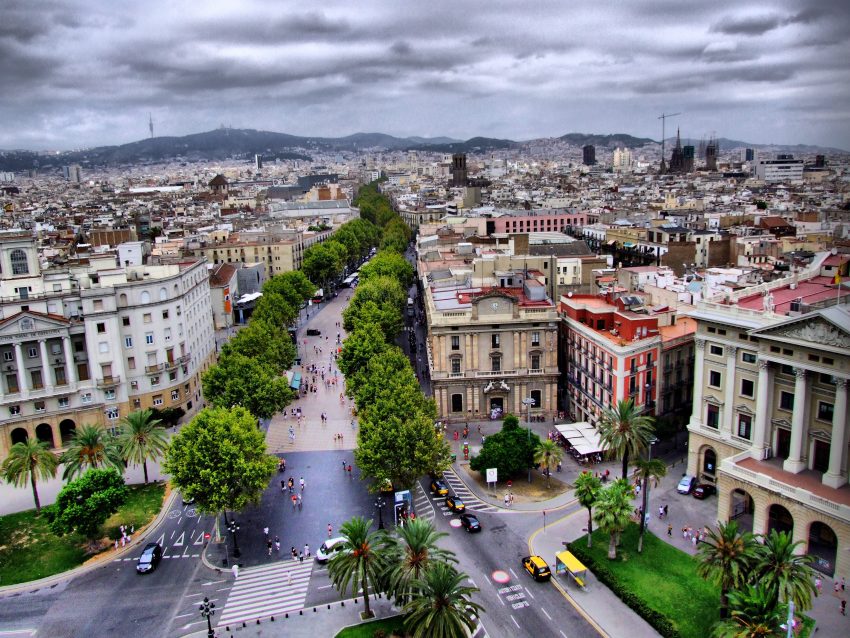
La Rambla began as a natural watercourse outside the medieval walls and gradually became the city’s most famous promenade—part artery, part stage. Over centuries it evolved into a place where locals and visitors mixed: markets, theatres, cafés, political gatherings, and daily strolling. Its history is less about a single monument and more about how Barcelona has always used public space as social life.
What to see is often in the details between the plane trees: kiosk-lined stretches, historic façades, and the rhythm of side streets that peel off toward the Gothic Quarter and El Raval. Keep an eye out for surviving old signage and ironwork balconies, and notice how quickly the mood changes from block to block. The promenade’s constant flow is the point—La Rambla is meant to be walked, not “done.”
For a better experience, dip in and out rather than marching straight down the center. Explore a side passageway for a quieter angle, then rejoin the crowd when you want the buzz again. Early morning shows a calmer Rambla with deliveries and locals; evenings bring energy, performances, and the sense that the street itself is an event.
Location: La Rambla, Barcelona, Spain | Hours: 24 Hours. | Price: Free. | Website
3. Palau Guell

Palau Guell is one of Antoni Gaudí’s earliest major commissions in Barcelona, built in the late 19th century for industrialist Eusebi Güell. It sits near the edge of the old city where money, politics, and culture overlapped, and it reflects a moment when Catalan patrons were using architecture to project confidence and modernity. Unlike Gaudí’s later, more organic work, this palace feels controlled and urban—designed to impress guests arriving in carriages.
Inside, the building is a lesson in how Gaudí orchestrated space: tight, darker entry sequences that open into a dramatic central hall. Look for the interplay of stone, iron, and wood, the inventive structural solutions, and the way light is pulled down through the interior. The palace is also about craftsmanship—metalwork, ceilings, and subtle motifs that reward slow looking.
The rooftop is a highlight, where Gaudí’s chimneys become sculptural characters rather than pure utilities. From up there you’ll get a city view and, more importantly, a preview of Gaudí’s later obsession with skyline silhouettes and playful forms. It’s a compact visit that gives you Gaudí’s ideas in an early, more formal register—less fantasy, more controlled theatricality.
Location: Carrer Nou de la Rambla, 3-5, Ciutat Vella, 08001 Barcelona, Spain | Hours: (Summer) April 1 – October 31; Tuesday – Sunday: 10:00–20:00. (Winter) November 1 – March 31; Tuesday – Sunday: 10:00–17:30. Closed on Monday. | Price: Adults: €12; Students & 65+: €9; Ages 10–17: €5; Under 10: free. | Website
4. Mercat de la Boqueria
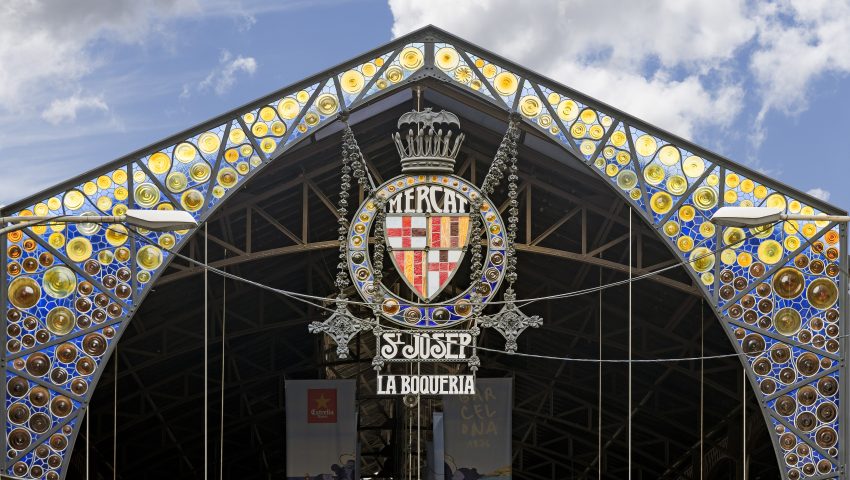
Mercat de la Boqueria grew from informal street selling into a formal market structure, becoming one of Barcelona’s most iconic food halls. Its roots go back centuries, but the market as we recognize it today reflects the city’s expansion and the drive to organize commerce under civic oversight. It’s also part of the story of Catalan food culture: seasonal produce, seafood, cured meats, and a strong market-to-table tradition.
What to see is the sensory abundance: bright fruit, glistening fish displays, piles of peppers and mushrooms, and stalls that are mini-institutions in their own right. The best moments come from looking beyond the most obvious tourist clusters to find specialist vendors—charcuterie, cheeses, olives, or Catalan sweets. Pay attention to the architecture too: the iron-and-glass entry signals the classic European market ideal of light, order, and spectacle.
To make the visit feel authentic, go earlier and treat it as a working market rather than a single snack stop. Walk the full interior loop, note what locals are buying, and then choose one or two targeted tastings. Even if you don’t purchase much, Boqueria is a living museum of daily Barcelona: fast, loud, colorful, and intensely edible.
Location: La Rambla, 91, Ciutat Vella, 08001 Barcelona, Spain | Hours: Monday – Saturday: 08:00–20:30. Closed on Sunday. | Price: Free. | Website
5. Placa Nova

Placa Nova sits at the gateway to the Gothic Quarter beside the cathedral, a space that layers Roman Barcelona beneath medieval and modern city life. This is one of the best places to feel how the city keeps reusing the same strategic ground: entrances, meeting points, and civic circulation. The square also frames the tension between the ancient and the contemporary—ruins and museums alongside everyday pedestrian flow.
The headline “what to see” is the Roman wall and towers that mark the old city’s perimeter, a tangible reminder of Barcino’s defensive edge. Look closely at the stonework and the way later buildings were stitched onto earlier foundations. The square’s openness makes it easier to read the urban geometry of the Gothic Quarter before you get lost in its lanes.
Placa Nova is also a practical starting point: from here, streets radiate into narrow medieval corridors with quick access to key sites nearby. If you pause for a few minutes, you’ll notice the square’s changing use through the day—tour groups gathering, locals cutting through, occasional markets or cultural activity. It’s less a “destination” than a hinge between eras.
Location: Plaça Nova, Ciutat Vella, 08002 Barcelona, Spain | Hours: 24 Hours | Price: Free. | Website
6. Catedral de Barcelona
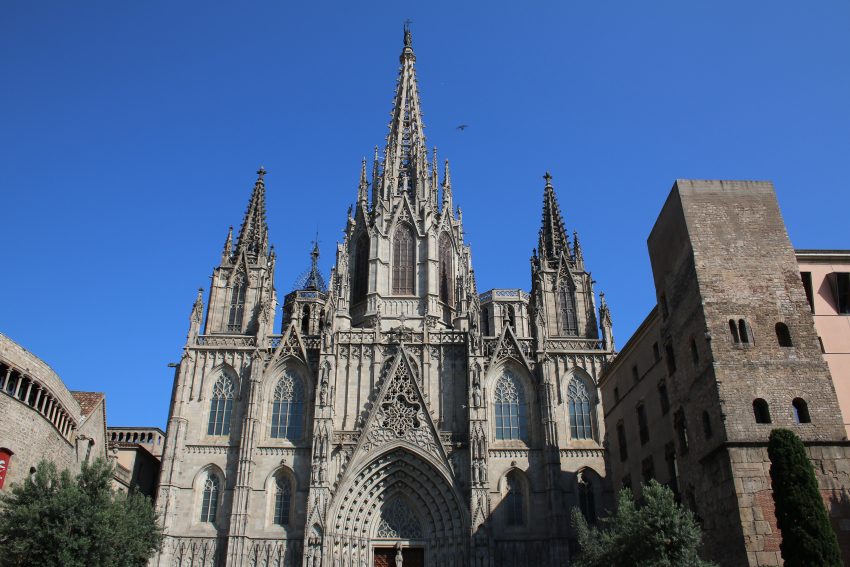
The Cathedral of Barcelona is a Gothic landmark that reflects the city’s medieval power and religious ambition, largely built from the 13th to 15th centuries on older sacred ground. Its soaring interior and fortress-like presence belong to an era when the church was central to civic identity and urban prestige. The later neo-Gothic façade, completed much more recently, adds another layer to the story: how Barcelona curated its medieval image for the modern age.
Inside, what to see includes the vertical drama of the nave, side chapels with distinct patrons, and the choir area, which is richly detailed and historically significant. Move slowly and let your eyes adjust—Gothic churches are designed for atmosphere: filtered light, shadow, and height. The cathedral also contains small details that connect to local traditions and saints important to Barcelona’s identity.
Don’t skip the cloister, a quieter counterpoint to the main church where you can appreciate the calm geometry of Gothic courtyard design. The cloister’s garden and fountain create a sense of enclosure that feels worlds away from the busy streets outside. If rooftop access is available, the terraces add perspective on the Gothic Quarter’s roofscape and the cathedral’s own architectural complexity.
Location: Pcta. de la Seu, s/n, Ciutat Vella, 08002 Barcelona, Spain | Hours: Monday – Friday: 09:30–18:30. Saturday: 09:30–17:15. Sunday: 14:00–17:00. | Price: Adults: €16; Students (up to 25): €14; Groups: €8; Visitors with disability (from 33%): free. | Website
7. Palau de la Musica Catalana
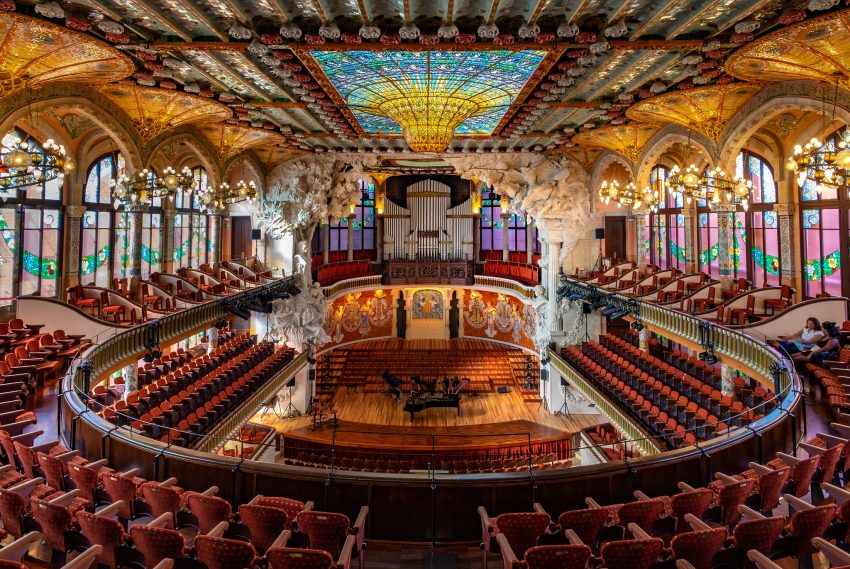
Palau de la Musica Catalana is a masterpiece of Catalan Modernisme built in the early 20th century, closely tied to a cultural renaissance that emphasized the Catalan language, arts, and identity. Commissioned as a home for choral music, it isn’t just a concert hall—it’s an architectural manifesto about creativity, craftsmanship, and civic pride. The building’s exuberance makes sense when you see it as a public celebration, not private luxury.
What to see begins before you enter: the façade’s decorative program is dense, full of sculptural and mosaic details that feel almost musical in rhythm. Inside, the main hall is the knockout—especially the stained-glass skylight that floods the space with natural light, unusual for a performance venue. Every surface seems animated: columns, mosaics, sculptural groupings, and the way ornament flows into structure.
If you can attend a performance, the building makes the music feel embedded in the room itself. If not, a guided visit is still rewarding because it helps decode the symbolism and the craft techniques. Look for the contrast between delicacy and boldness—this is a place that wants to overwhelm you, but in a disciplined, highly designed way.
Location: C/ Palau de la Música, 4-6, Ciutat Vella, 08003 Barcelona, Spain | Hours: Monday – Saturday: 08:30–21:00. Sunday: 08:30–15:30. | Price: Guided tour: Adults €24; Seniors (65+) €20; Under 35 €20; Under 10: free; Residents of Catalonia €14 (box office prices may be higher). | Website
8. Placa de Catalunya
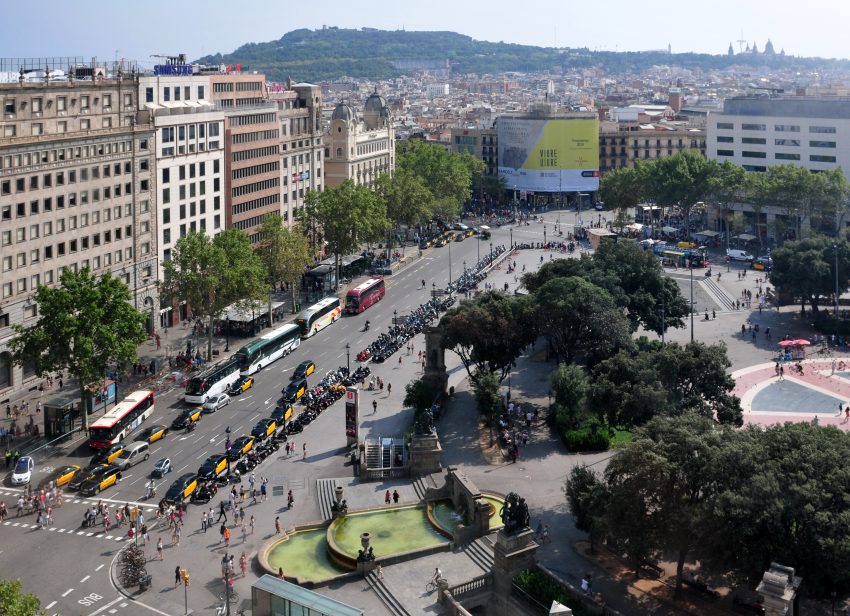
Placa de Catalunya is the symbolic and practical center point where the old city meets the Eixample, shaped largely in the early 20th century as Barcelona modernized and expanded. Historically, it represents a boundary becoming a bridge: medieval density on one side, rational grid planning on the other. It’s also where commerce, transit, and civic life overlap at full volume.
What to see here is less about a single monument and more about the choreography of the city: fountains, statuary, and open space used as a meeting place and launchpad. Notice how many major routes funnel through it—shopping streets, avenues, metro entrances, and pedestrian streams. The square is a live diagram of Barcelona’s urban priorities.
Treat it as a navigation anchor and a people-watching stop rather than a long visit. From here you can step directly into the elegance of Passeig de Gracia, head down toward La Rambla, or peel off toward cultural venues and neighborhoods. It’s especially useful for resetting your mental map after wandering the Gothic Quarter’s maze.
Location: Plaça de Catalunya, Eixample, 08002 Barcelona, Spain | Hours: Open 24 hours. | Price: Free. | Website
9. Passeig de Gracia
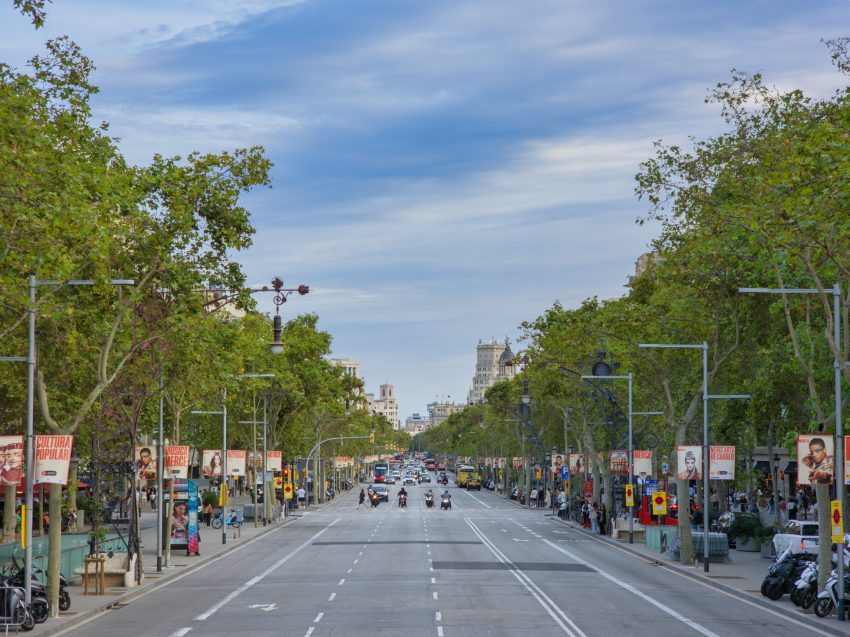
Passeig de Gracia grew from a connecting road into Barcelona’s premier boulevard as the Eixample developed, becoming a showcase for wealth, modern design, and civic ambition. In the late 19th and early 20th centuries, the city’s elite competed here through architecture, commissioning bold façades that turned residential buildings into status symbols. The boulevard still reads as Barcelona’s open-air gallery of Modernisme and urban refinement.
What to see starts with the streetscape itself: broad sidewalks, high-end storefronts, and a steady sequence of striking buildings. Keep your eyes up—balconies, stone carvings, and ironwork tell you far more than the shop windows do. The street’s gentle slope and long sightlines make it ideal for appreciating how architecture shapes the feel of a city.
Plan to walk it slowly and in sections, pausing at key façades rather than trying to absorb everything at once. The best experience comes from contrasts: ornate Modernisme beside more restrained styles, residential detail beside commercial gloss. Even if you don’t enter any buildings, Passeig de Gracia communicates Barcelona’s design DNA in a single stroll.
Location: Pg. de Gràcia, Barcelona, Spain | Hours: 24 Hours. | Price: Free.
10. Casa Lleo Morera

Casa Lleo Morera is one of the standout Modernisme buildings on Passeig de Gracia, remodeled in the early 20th century during the period when Barcelona’s bourgeois families expressed identity and taste through architectural patronage. It’s part of a famous cluster of competing showpiece façades, illustrating how design became a public language of prestige. The building’s story is tied to that civic moment: confidence, creativity, and the belief that modern life deserved modern art.
What to see is the façade’s refined ornamentation—less flamboyant than some neighbors but exceptionally crafted. Look for sculptural details, floral motifs, and the integration of decorative arts into the building’s skin. Modernisme is about total design, so even exterior elements hint at the interiors’ original richness.
Access can be limited compared to other headline sites, so for many visitors the main “visit” is careful observation from the street. If you do get inside via a tour or special access, focus on how multiple crafts combine: stained glass, ceramics, carved wood, and metalwork acting as one cohesive aesthetic. Either way, it’s an essential piece of the boulevard’s architectural conversation.
Location: Pg. de Gràcia, 35, Eixample, 08007 Barcelona, Spain | Hours: Check official website. | Price: Check official website. | Website
11. Casa Amatller
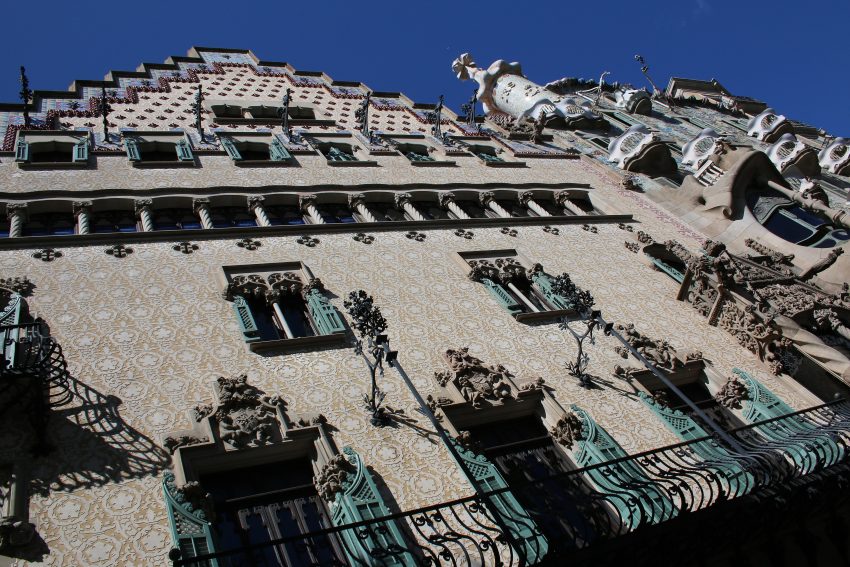
Casa Amatller, also on Passeig de Gracia, is a Modernisme-era residence associated with a prominent family, shaped by the same wave of early 20th-century cultural ambition. Its design reflects a blending of local Catalan identity with broader European influences, typical of Barcelona’s outward-looking artistic climate at the time. The building’s presence contributes to the sense that this street was an arena where architecture was both art and social statement.
What to see begins with the distinctive silhouette and façade details that set it apart from its neighbors. Pay attention to the textures and the way ornament is organized—Modernisme can be exuberant, but it’s rarely random. The building is also celebrated for interior design elements that show how wealthy households treated everyday living as an aesthetic project.
If you can enter, look for the “total artwork” approach: furniture, lighting, decorative panels, and spatial planning all aligned to a single vision. The contrast between public-facing showiness and private domestic spaces is part of the fascination. Even from outside, it’s worth stopping long enough to see why this cluster of buildings became a shorthand for Barcelona’s design golden age.
Location: Pg. de Gràcia, 41, Eixample, 08007 Barcelona, Spain | Hours: Daily: 10:00–21:00. | Price: Adults (13–64): €15.50 (Monday – Friday, except Tuesday); €13.00 (Tuesday); €19.00 (weekends & holidays). Reduced: from €10.00; Junior (7–12): from €10.00; Under 7: free. | Website
12. Casa Batllo
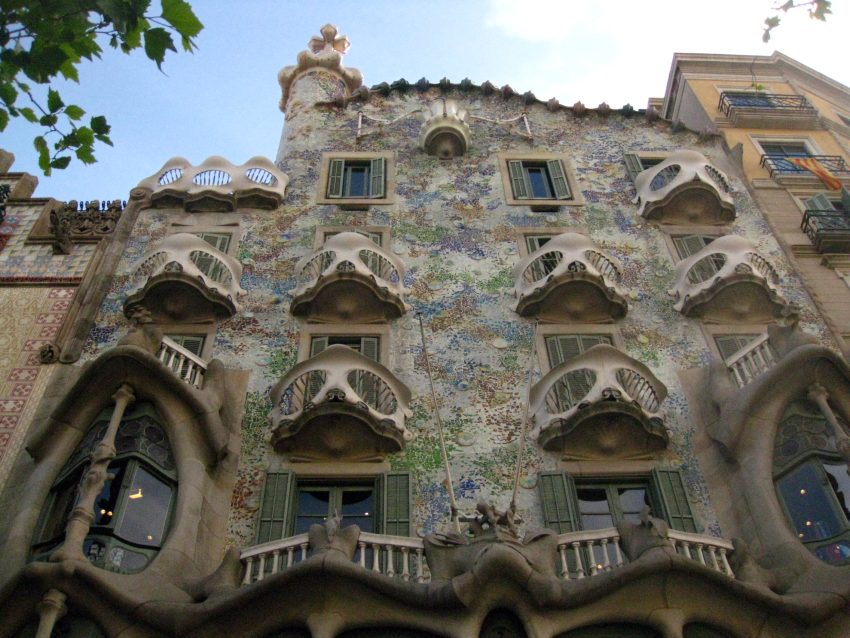
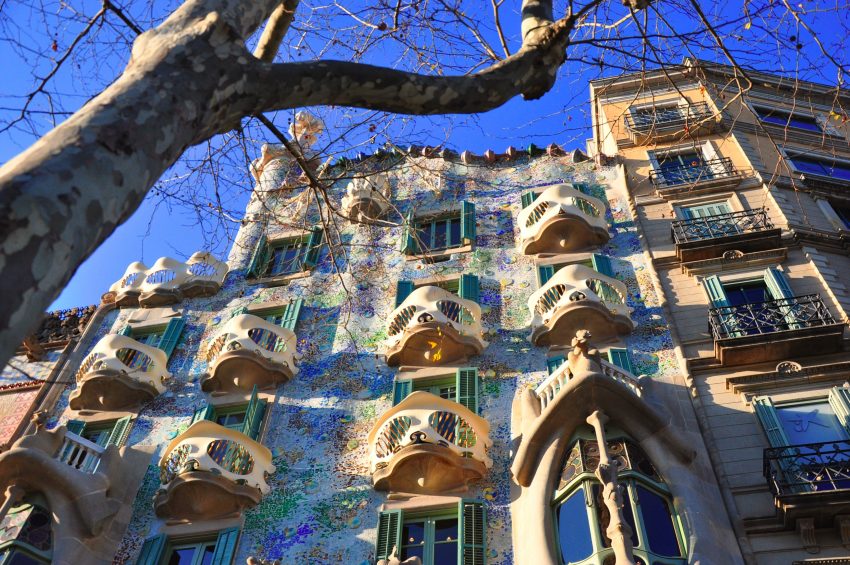
Casa Batllo is one of Gaudí’s most imaginative works, a radical remodel that turned a conventional building into a signature piece of Barcelona’s Modernisme era. Created during the city’s early 20th-century cultural surge, it embodies a confidence in experimentation—architecture as art, not just construction. Its history is tied to that moment when patrons allowed architects to be boldly expressive in the heart of the city.
What to see is the façade’s sense of movement and its layered symbolism, often interpreted through natural and mythic references. Inside, the experience is about flow: curved lines, organic transitions, and light that shifts as you move. Look closely at how functional elements—windows, stairs, ventilation—are treated as design features rather than hidden necessities.
The roof is a major payoff, where sculptural forms turn the skyline into a kind of inhabited landscape. From up there, you understand how Gaudí designed not only for street impact but for the building’s own internal world. Casa Batllo is best approached as a sequence of surprises: the more slowly you move, the more the building reveals.
Location: Pg. de Gràcia, 43, Eixample, 08007 Barcelona, Spain | Hours: (Summer) April 1 – September 30; Daily: 09:00–21:00. (Winter) October 1 – March 31; Daily: 09:00–18:30. | Price: From €25 (General Visit); Night Visit from €39; Children (0–12) free. | Website
13. Casa Mila
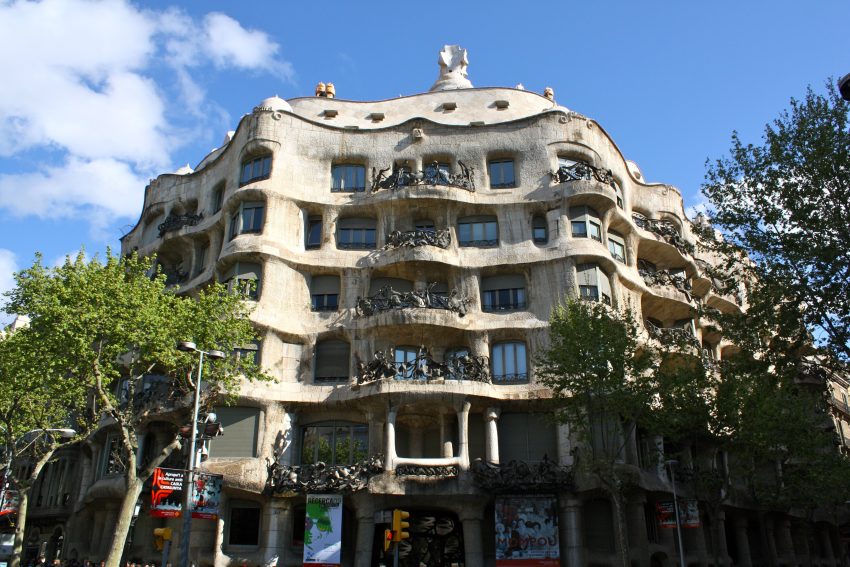
Casa Mila, often called La Pedrera, was built in the early 20th century as a statement of modern urban living, pushing structural and aesthetic boundaries in a way that startled contemporaries. It belongs to Barcelona’s Modernisme peak, when the city’s growth and wealth created a market for daring architecture. Its history includes controversy: it challenged expectations of what a respectable residential building should look like.
What to see starts with the exterior’s wave-like stonework and the way the façade seems to breathe rather than sit still. Inside, pay attention to how light enters through courtyards, and how circulation is designed to feel fluid. The building is also a milestone in architectural thinking—form, structure, and function are interlocked, not layered separately.
The rooftop is legendary, with chimneys and ventilation towers that feel like a sculpture garden with a view. Beyond the photo appeal, it’s a lesson in how Gaudí turned building systems into expressive forms. If you explore the attic spaces, you’ll also get a clearer sense of the engineering logic behind the visual drama.
Location: Pg. de Gràcia, 92, Eixample, 08008 Barcelona, Spain | Hours: (Winter) November 10, 2025 – March 5, 2026; Monday – Sunday: 09:00–18:30. (Summer) March 6, 2026 – November 1, 2026; Monday – Sunday: 09:00–20:30. | Price: From €25 (standard daytime visit; other experiences cost more). | Website
14. La Sagrada Familia
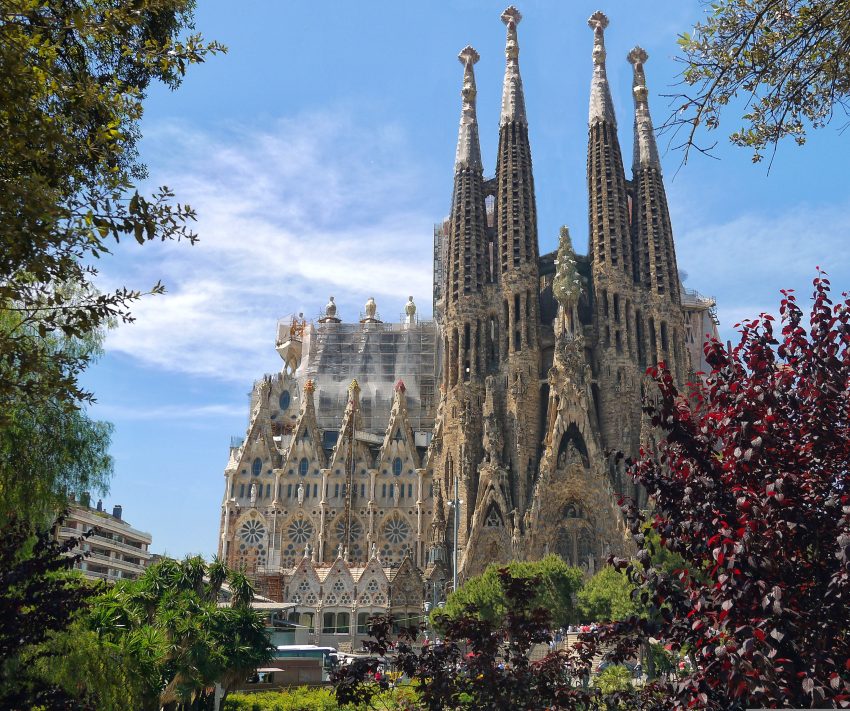
La Sagrada Familia is Barcelona’s defining basilica and one of the most ambitious church projects in modern history, begun in the late 19th century and shaped decisively by Antoni Gaudí. Its long construction timeline is part of its identity: a living project that has moved through generations, technologies, and historical upheavals. The building reflects both religious purpose and a uniquely Catalan artistic vision, turning faith into an architectural language.
What to see is the contrast between the façades, each with distinct storytelling and emotional tone. Inside, the space is designed to feel like a forest of stone, with columns branching and light filtering through colored glass to create shifting atmospheres. Take time to stand still and look upward—the interior is less about individual details and more about the total, immersive effect.
If you go up a tower (when available), the city view is impressive, but the more interesting perspective is seeing the basilica’s geometry up close: textures, angles, and the interplay of old and new work. Even the exterior rewards repeated looking because so much is narrative-driven and symbol-heavy. It’s not a quick checklist site; it’s a place where time spent directly translates into what you notice.
Location: Carrer de Mallorca, 401, Eixample, 08013 Barcelona, Spain | Hours: (Summer) April 1 – September 30; Daily: 09:00–20:00. (Winter) November 1 – February 28; Monday – Saturday: 09:00–18:00. Sunday: 10:30–18:00. | Price: Adults: €26 (includes audioguide app); With towers: €36; Guided tour: €30; Guided tour with towers: €40; Under 11: free. | Website
15. La Monumental
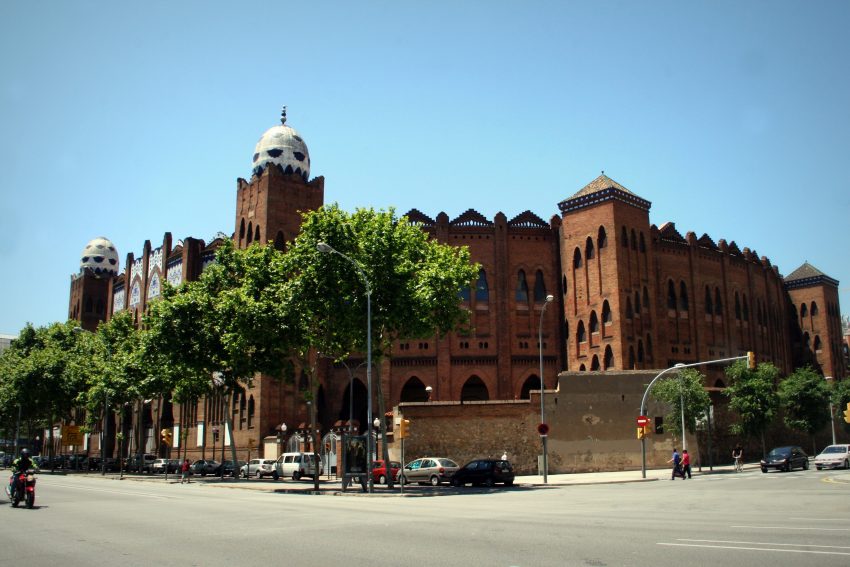
La Monumental is Barcelona’s most famous bullring, opened in 1914 and expanded in 1916 with a striking Neo-Mudéjar and Byzantine-influenced look that echoes Moorish revival styles found in arenas across Spain. It became a major venue during the early 20th century when bullfighting was embedded in popular entertainment, but its modern story is defined by Catalonia’s shift away from the tradition. After years of protests and political debate, bullfighting in Catalonia was effectively ended in 2012, and La Monumental’s identity shifted from active arena to contested landmark and cultural relic.
Architecturally, what you’re really coming for is the exterior: the red-brick façade, horseshoe arches, patterned tilework, and domed corner details that make it instantly recognizable from the street. Walk the perimeter and look for the layered decorative bands and the way the building’s mass reads differently from each angle—part sports venue, part civic monument. Even if you don’t go inside, it’s one of the most visually distinctive early-1900s structures in the Eixample area and a good contrast to the nearby Modernisme highlights.
If the interior is accessible via tours or events, focus on the scale of the ring, the steep seating tiers, and the utilitarian spaces that reveal how these venues functioned behind the spectacle. The arena layout makes it easy to imagine the crowd dynamics and staging, and you’ll often find interpretive material that frames the building within Barcelona’s social history rather than romanticizing it. It’s a worthwhile stop if you’re interested in the city’s layered cultural identity—what Barcelona celebrated in one era, and what it chose to leave behind in another.
| Hours: Daily: 15:00–23:00. Hours vary by event; check the programme before you go. | Price: Varies by event (often from around €9–€15 for Monumental Club-style events). | Website
16. Arc de Triomf

The Arc de Triomf was built as the ceremonial gateway for the 1888 Universal Exposition, and unlike many triumphal arches in Europe, it isn’t a monument to military victory. Instead, it’s an announcement of modern Barcelona: industrious, confident, and culturally ambitious. Its red-brick Neo-Mudéjar style stands out in a city more commonly associated with Gothic stone and Modernisme curves, making it immediately recognizable and easy to place in the late-19th-century civic project.
What to see is in the carved program: reliefs and decorative motifs that speak to progress, arts, and commerce rather than conquest. Stand back far enough to read the arch as an urban framing device—its proportions are designed to pull you forward along the long promenade that leads toward Parc de la Ciutadella. Up close, the details reward a slower look, especially the contrast between warm brick and pale stone ornamentation.
The surrounding boulevard, Passeig de Lluís Companys, is part of the experience. It’s a wide pedestrian corridor where the arch functions as a focal point, with a steady flow of walkers, cyclists, and street activity. Come in the late afternoon for softer light and a livelier atmosphere, then continue straight into Ciutadella Park to see how both sites were shaped by the same 1888 moment in Barcelona’s history.
Location: Passeig de Lluís Companys, Ciutat Vella, 08003 Barcelona, Spain | Hours: 24 Hours. | Price: Free.
17. Ciutadella Park
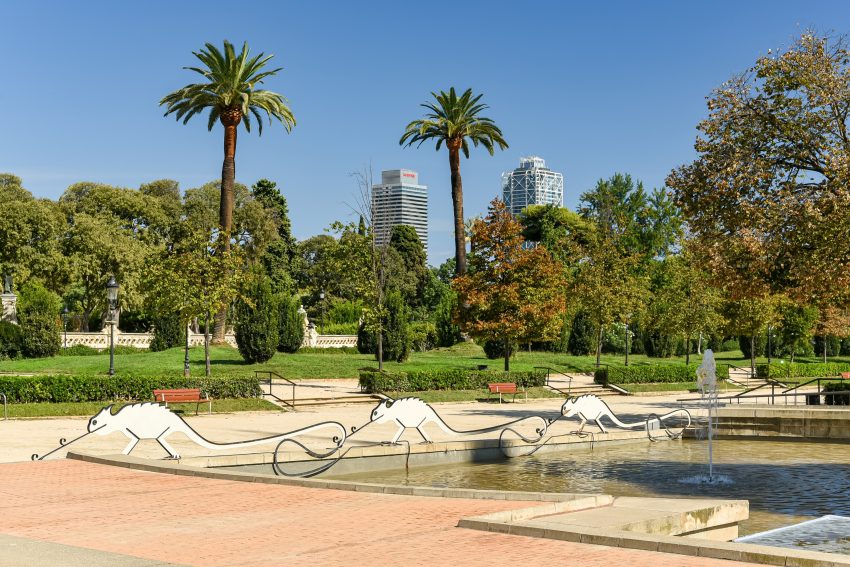
Parc de la Ciutadella began as something far less welcoming: a military citadel built after Barcelona’s defeat in 1714, intended to control the city rather than serve it. Over time, the fortress was dismantled and the land was transformed into a public park, with the most important redesign tied to the 1888 Universal Exposition. That shift—from coercive military space to civic green space—makes the park one of Barcelona’s clearest examples of the city reshaping its own history.
What to see starts with the monumental fountain-cascade, a theatrical centerpiece designed in the late 19th century with a baroque sense of drama. Around it, the park mixes broad promenades, palms, and formal plantings with open lawns that locals use for picnics and lazy afternoons. The boating lake is a classic stop, not because it’s unique, but because it captures the park’s purpose: leisure in the middle of an otherwise dense, busy city.
Ciutadella is also where you can stitch together several “big Barcelona” sites in one walk. The Parliament of Catalonia sits within the grounds, giving the park political weight as well as recreational appeal, and nearby cultural institutions add depth if you want more than scenery. The best way to experience it is to slow down, take a full loop, and treat it as a breathing space between architectural highlights.
Location: Passeig de Picasso, 21, Ciutat Vella, 08003 Barcelona, Spain | Hours: Daily: 7:00 AM – 10:30 PM | Price: Free to enter the park; you only pay for specific attractions inside (for example, the zoo or boat rental on the lake). | Website
18. El Born Centre de Cultura i Memòria

El Born Centre de Cultura i Memòria occupies a former 19th-century market hall, the Mercat del Born, whose iron-and-glass structure reflects the era when Barcelona was modernising its infrastructure and public spaces. The building took on a very different role after archaeological excavations revealed extensive remains of the early-18th-century city underneath. That discovery anchored the site to one of Barcelona’s most defining historical ruptures: the 1714 siege and the aftermath of the War of the Spanish Succession, when parts of the neighbourhood were demolished and reshaped under the new Bourbon order.
What to see begins with the archaeological zone itself: streets, foundations, and household traces preserved in situ under the soaring market canopy. The power of the visit is the scale—this isn’t a single ruin behind glass, but an entire slice of urban fabric you can read like a map. As you walk the perimeter platforms, look for how the remains outline everyday life (homes, workshops, small lanes) and how interpretation panels connect individual structures to broader political change.
Beyond the ruins, the centre’s exhibitions and programming frame the site as a place of memory rather than a neutral museum. You’ll typically find displays on Barcelona’s civic identity, language, and social history, often linking 18th-century events to later struggles and cultural movements. Even if you keep it focused on “history and what to see,” this is a site where the story is inseparable from the idea of the city remembering itself—architecture above, city beneath, and narrative tying them together.
Location: El Born Centre de Cultura i Memòria, Plaça Comercial, Barcelona, Spain | Hours: Summer (March – October): Tuesday – Sunday: 10:00–20:00. Winter (November – February): Tuesday – Saturday: 10:00–19:00; Sunday: 10:00–20:00. Closed on Monday. Closed on 1 January, 1 May, 24 June, 25 December. | Price: Free entry to the centre and archaeological site; some exhibitions and guided visits are ticketed (often around €4.40–€7.80 depending on the activity). | Website
19. Basílica de Santa Maria del Mar

Santa Maria del Mar is one of the purest expressions of Catalan Gothic, built largely in the 14th century during a period when Barcelona’s maritime trade helped fund ambitious civic and religious projects. Unlike many cathedrals shaped over centuries, this basilica is notable for the relative unity of its construction, which gives it an unusually coherent interior. Its identity is closely tied to the seafaring and mercantile community of medieval Barcelona, and it’s often described as a “people’s church” in contrast to more courtly or episcopal monuments.
What to see is the interior’s sense of space: tall, slender columns set wide apart, creating a feeling of openness and calm rather than heavy enclosure. Look at how light enters—especially when stained glass catches the sun—and how the proportions pull your gaze down the nave with minimal visual clutter. The building’s restraint is the point; decoration doesn’t dominate, so structure and geometry become the experience.
If rooftop or tower access is available, it’s worth doing for a different read of the church: you’ll see the buttresses, roofline, and the surrounding El Born streets from above, which makes the basilica’s relationship to the neighbourhood feel immediate. On the exterior, pause long enough to notice the Gothic detailing on portals and the overall massing—solid, maritime, and grounded. Santa Maria del Mar rewards slow attention because its drama is architectural, not ornamental: light, space, and a quietly confident medieval design.
Location: Plaça de Santa Maria, 1, Ciutat Vella, 08003 Barcelona, Spain | Hours: Monday – Sunday: 10:00–20:30. Monday – Saturday: 10:00–18:00. Sunday: 13:30–17:00. | Price: Interior temple + tribunes museum space + crypt: €5 per person. | Website

Moira & Andy
Hey! We're Moira & Andy. From hiking the Camino to trips around Europe in Bert our campervan — we've been traveling together since retirement in 2020!
This website uses affiliate links which earn a small commission at no additional cost to you.
Walking Tour Summary
Distance: 9 km
Sites: 19
Walking Tour Map